
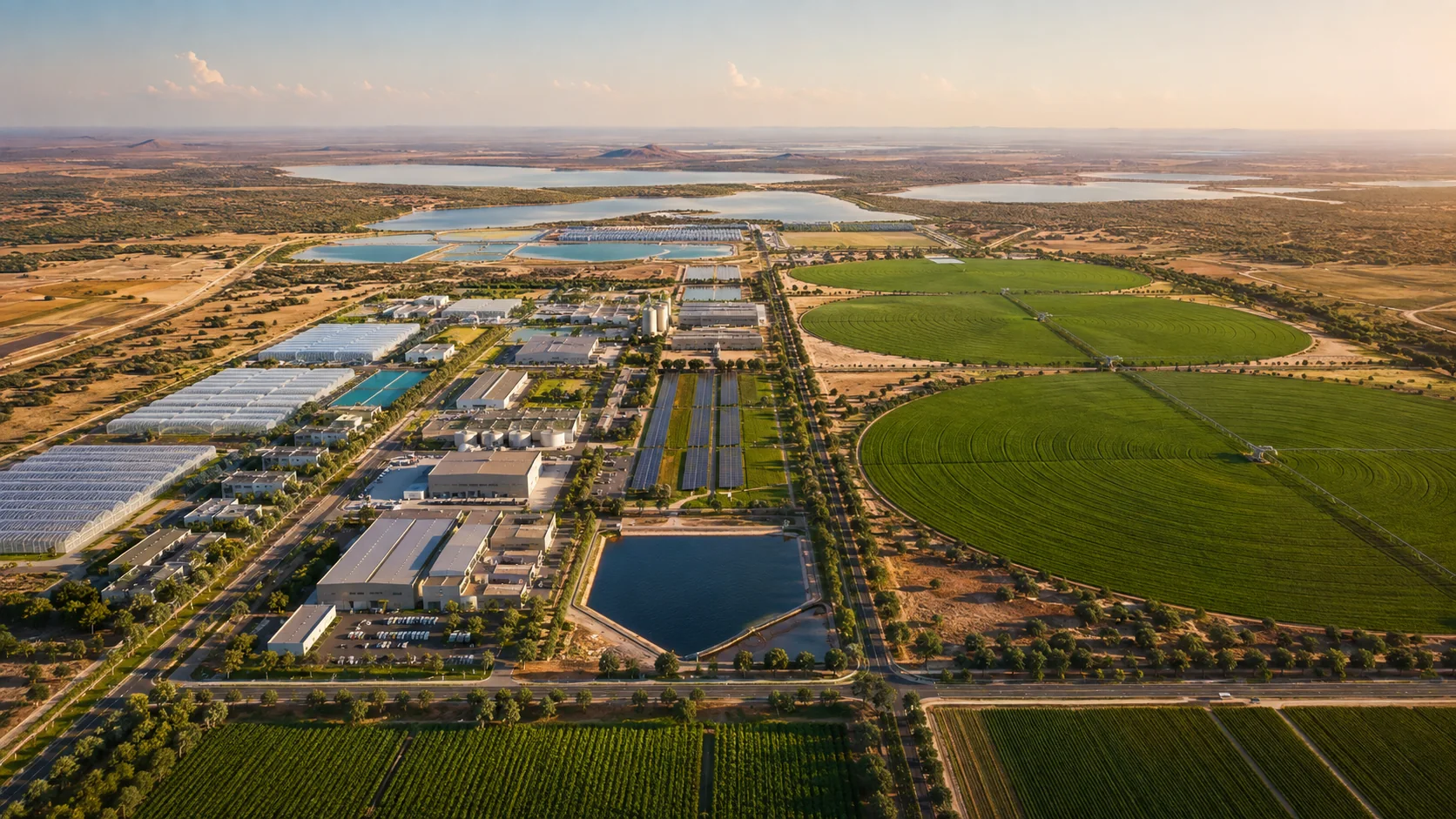
KGATLENG AGROPARK
Integrated 50,000 ha
Integrated 50,000 ha
Food-Industrial Ecosystem
Kgatleng District • Mochudi Interface • Botswana
A controlled platform that converts production into branded, shelf-ready, tradeable and export-capable food products.
01 / EXECUTIVE SNAPSHOT
A national-scale food economy platform
The proposition combines agricultural production, processing, trade, logistics, utilities, digital control and export readiness in one coordinated development envelope.
THE CORE THESIS
Not merely an agricultural estate — a food-industrial operating system.
Production is linked directly to Food Trade City, PackMat™, LogisticsGrid™, WaterGrid™, EnergyGrid™, DataGrid™, MobilityGrid™, FoodSafe™, CircularLoop™, FarmerConnect™ and an air-cargo gateway.
STRATEGIC RATIONALE
Designed to solve the structural weaknesses of the food system.
The platform model tackles resilience, industrial depth, logistics efficiency and market access simultaneously.
Food-security resilience
Build domestic production and processing capacity that reduces exposure to imported food.
Agro-industrialisation
Convert raw agricultural outputs into higher-value packaged, branded and processed products.
Trade infrastructure
Create a structured Food Trade City for wholesale markets, commodity districts and B2B trade.
Feedstock assurance
Secure predictable supply for processing, cold-chain, feed mills and distribution channels.
Export readiness
Embed quality, cold-chain, cargo handling and certification systems required for regional markets.
Investor-grade control
Manage CAPEX, OPEX, cash flow, risk, traceability and bankability through measurable platforms.
DEVELOPMENT VISION
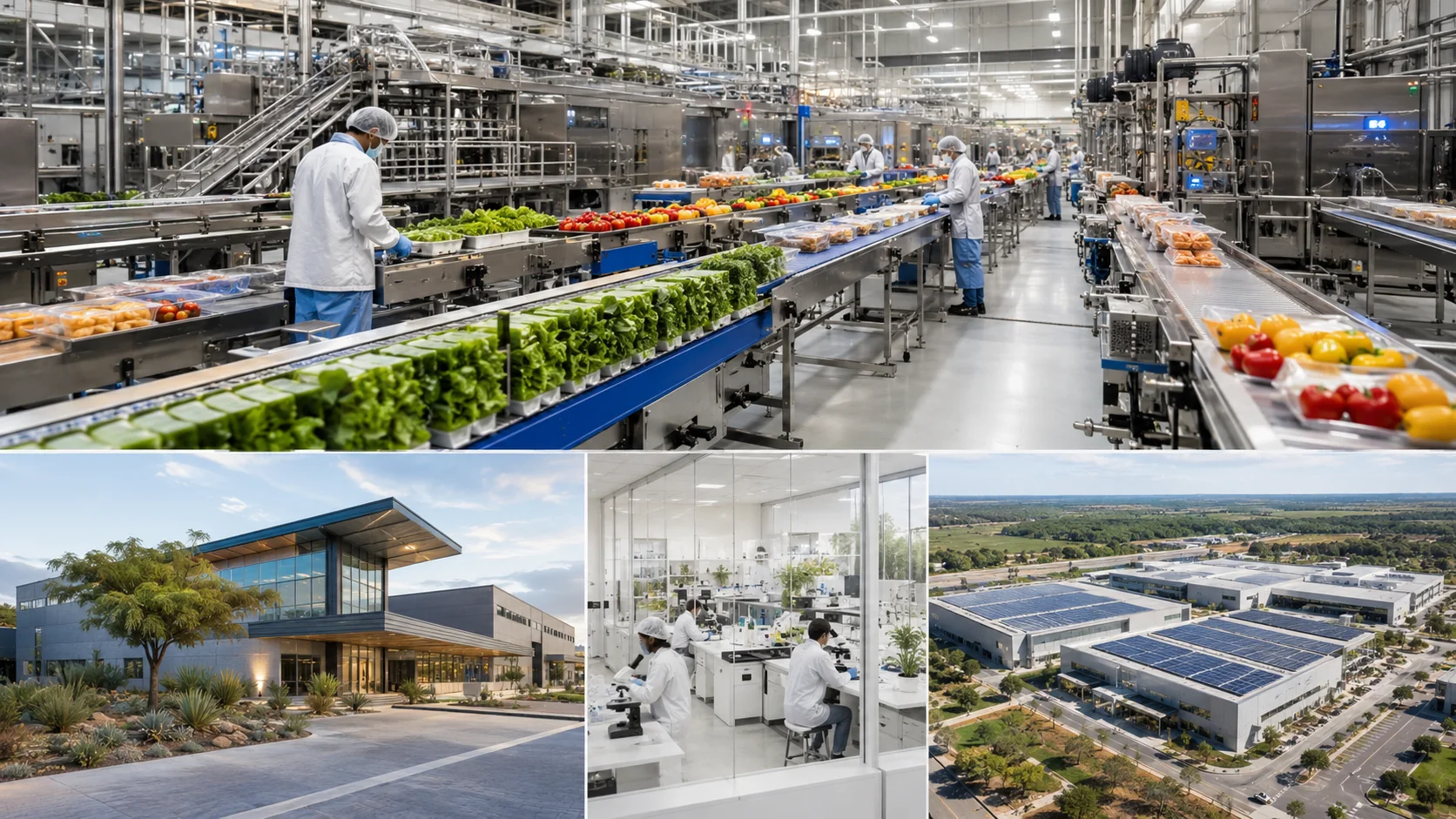
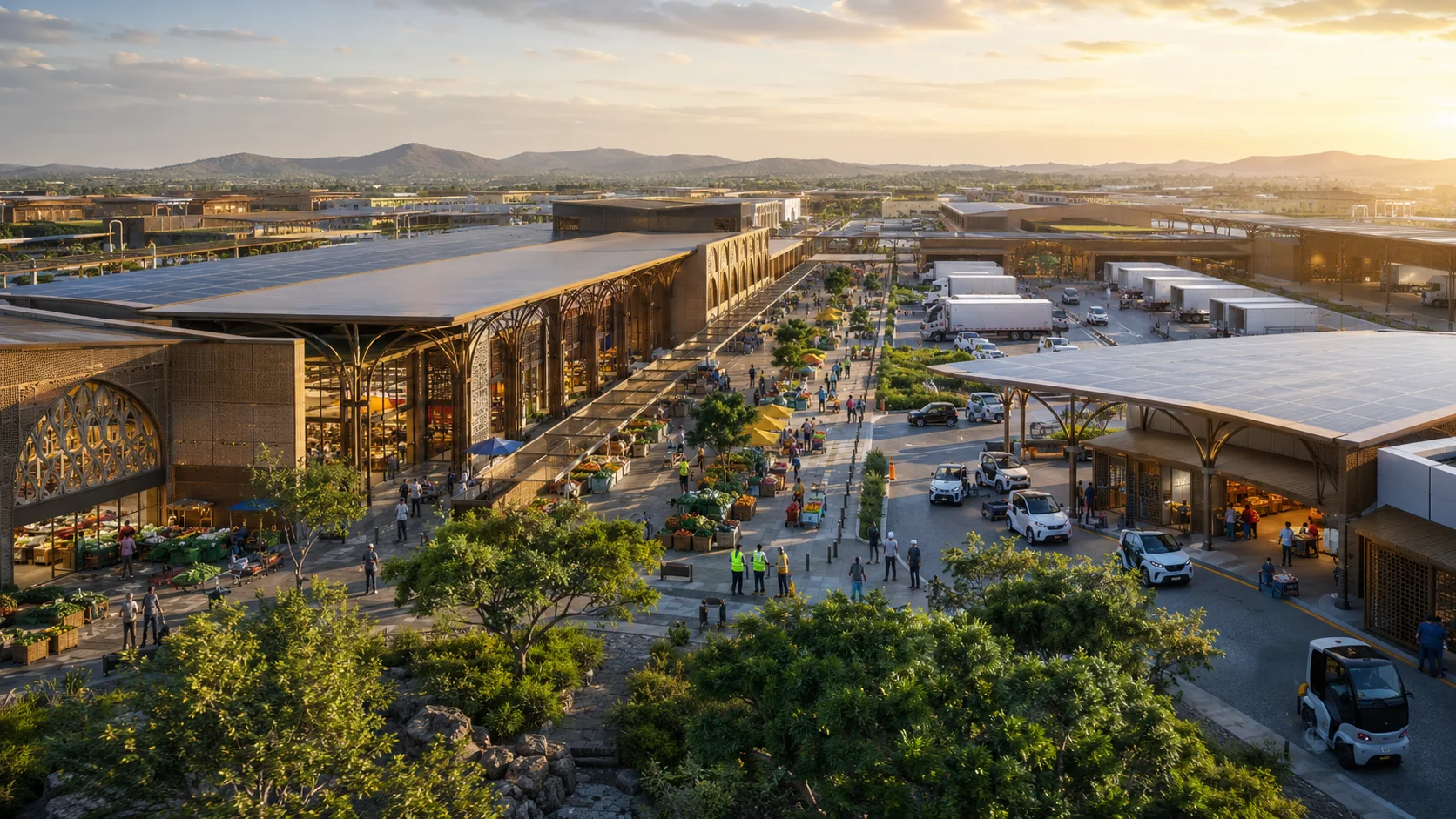
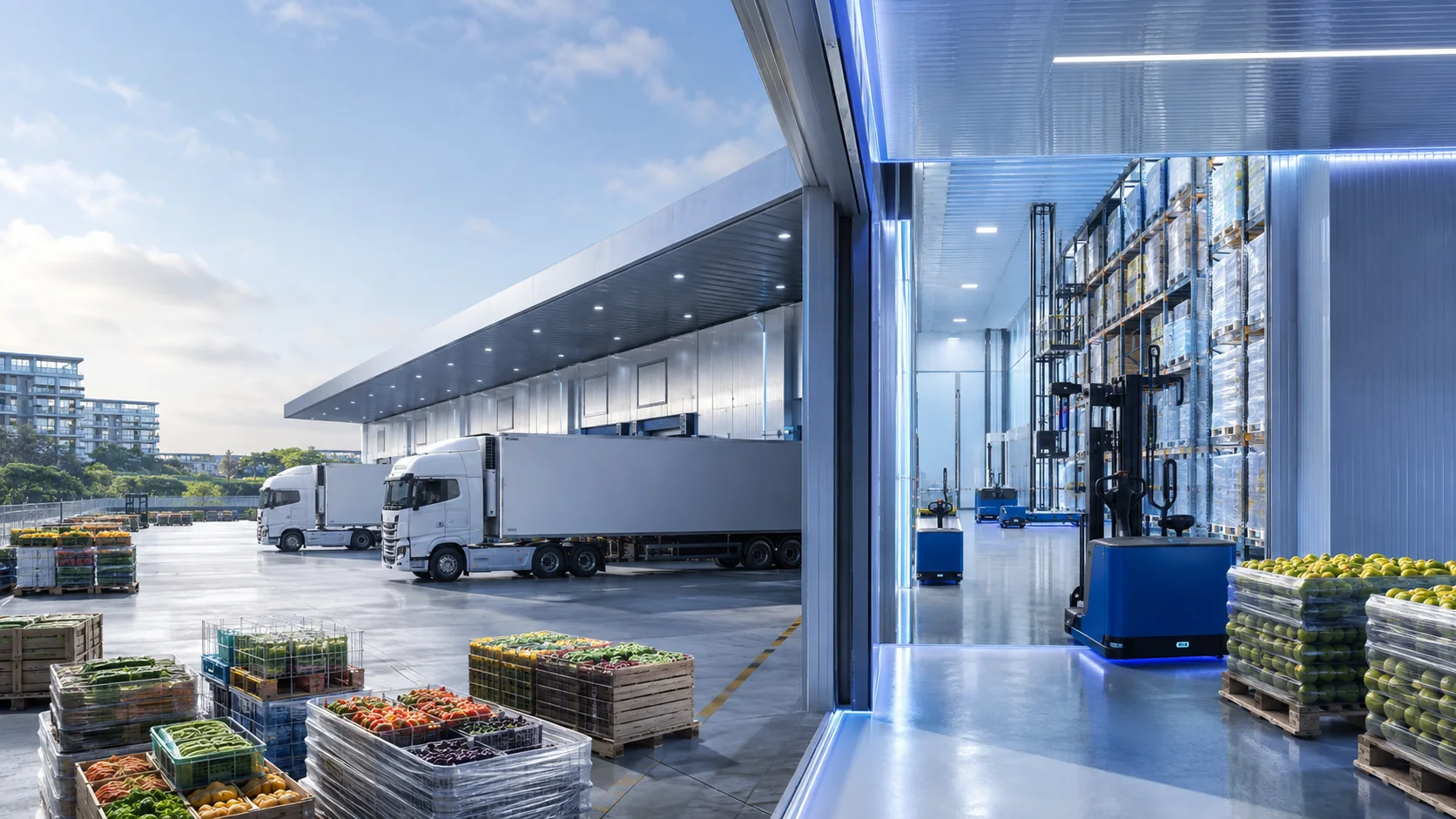
From farmgate produce to an integrated food economy.
The Agropark is designed to produce, aggregate, process, brand, package, trade, move, certify and export food products at scale.
OUTPUT PORTFOLIO
- Fresh retail packs
- Frozen foods
- Sauces & condiments
- Dehydrated produce
- Staples & milled products
- Pulses & canned foods
- Dairy & protein products
- Bakery & ready meals
- Beverages
- Animal feed & fodder
- Export-ready commodities
PLATFORM LOGIC
One controlled production-to-market flow.
Every platform removes a constraint that normally weakens agricultural projects: water risk, energy risk, logistics bottlenecks, weak processing, quality inconsistency or poor market access.
PRODUCTION→AGGREGATION→FOOD SAFETY→PACKHOUSE→PROCESSING→PACKAGING→COLD CHAIN→FOOD TRADE CITY→LOGISTICS→MARKETS
CONTROL PRINCIPLEFeedstock → utilisation → quality → packaging → temperature → dispatch → market release are controlled as one operating chain.
02 / MASTERPLAN SYSTEM
50,000 ha organised as one controlled development envelope.
The masterplan is structured around the operating logic of the food economy: upstream production, value addition, wholesale trade, common utilities, movement systems, workforce support and export connectivity are spatially coordinated rather than planned as isolated plots.
CONCEPTUAL SPATIAL CONTROL PLAN50,000 HANot a surveyed masterplan
ProductionControlled agricultureSkills / workforceIndustrial / logisticsExport / cargoCommon grid spine
Production districts
Irrigated horticulture, staples, fodder, controlled agriculture and FarmerConnect™ production blocks.
Upstream volume + feedstock controlFood-industrial core
Processing, cold chain, PackMat™, FoodSafe™, warehousing, dispatch and industrial services.
Value addition + utilisationFood Trade City
Wholesale markets, B2B trading, commodity districts, price discovery and export aggregation.
Demand + market interfaceCommon grid spine
WaterGrid™, EnergyGrid™, MobilityGrid™ and DataGrid™ planned as estate-wide enabling infrastructure.
Utility + movement assuranceSkills + workforce districts
Skills Campus, R&D, workforce accommodation and labour-support systems positioned alongside productive districts.
Talent + operating resilienceAir Cargo Gateway
Perishables handling, temperature-controlled cargo, inspection, customs interfaces and executive access.
Regional + export connectivitySPATIAL CONTROL PRINCIPLEPlan the estate around the operating chain.
Production→Aggregation→Processing→Cold Chain→Trade→Logistics→Export
03 / PLATFORM ARCHITECTURE15 interconnected operating platforms.
15 interconnected operating platforms.
One controlled ecosystem.
Each platform removes a failure point that commonly weakens large agricultural projects: fragmented supply, unsecure utilities, poor logistics, limited processing, weak quality control, limited market access and low margin capture.
KGATLENG AGROPARKSpecialised operating platforms are coordinated through one master-developer control environment.
Capital governance and PPP structuring sit above the operating platforms rather than being treated as a sixteenth operating platform.
04 / UPSTREAM ENGINE
Production Base
KGA-AGP-PROD-CON-001
Production Base
18,000 ha
A controlled upstream production platform engineered for fresh produce security, processing feedstock assurance and industrial supply reliability.
EXECUTIVE VIEWPRODUCTION CONTROL
CONTROL LOGICFarm → packhouse → processing → market
WHY THIS PLATFORM MATTERSControl the supply.
Control the supply.
Protect the downstream economy.
Without controlled supply, downstream assets remain exposed. The Production Base protects packhouse utilisation, processing throughput, food-trade volumes and export reliability by governing crop planning, volume, quality, timing and traceability.
01Fresh produce security02Processing feedstock assurance03Industrial feedstock control
STRATEGIC RATIONALE
From fragmented farming to production-controlled agro-industrialisation.
Production is planned against demand, water, processing capacity, quality requirements and market commitments rather than unmanaged spot-market planting.
Import resilience
Increase domestic food availability and substitute imports with planned local production.
Industrial utilisation
Secure throughput for processing lines, packhouses, feed mills and cold-chain assets.
Market reliability
Align planting and harvest programmes with Food Trade City, retail, institutional and export demand.
Farmer inclusion
Use FarmerConnect™ to integrate outgrowers, cooperatives and emerging commercial farmers.
Margin capture
Route output into packing, processing, cold-chain and trade-linked value pools beyond the farmgate.
Bankability
Phase production against confirmed water, offtake, processing capacity and investor-grade operating controls.
CORE OBJECTIVEYEAR-ROUND SUPPLY + QUALITY CONSISTENCY + PROCESSING FEEDSTOCK + TRACEABILITY
18,000 HA PRODUCTION ARCHITECTUREFive production blocks.
Five production blocks.
One coordinated supply system.
Each block solves a different production problem while feeding the same downstream market infrastructure.
PRODUCTION BASE18,000ha100% controlled allocation
Vegetables, premium produce, fresh retail packs and processing feedstock.
Grains, legumes, oilseeds and staples for milling, processing and food-security supply.
Silage, hay, feed grains and protein-feed inputs supporting dairy, livestock and feed mills.
Greenhouses, hydroponics, propagation and premium off-season production.
Contract farming, aggregation, mechanisation, extension, traceability and market access.
CLASS 1 SPATIAL CONTROL
Production Base overall block plan.
18,000 haCONCEPT / CLASS 1 CONTROLNot for construction
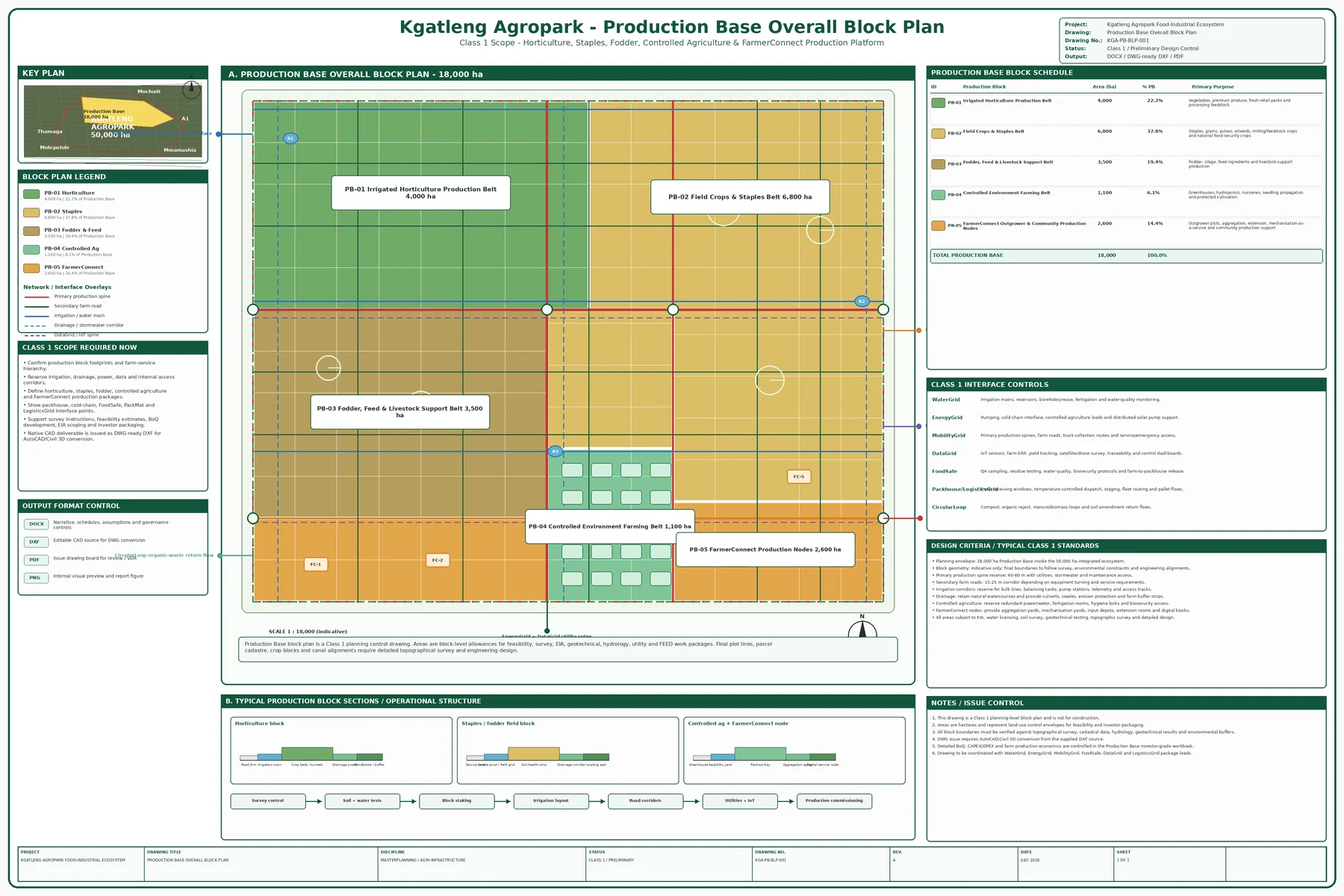
The block plan provides planning-level spatial control for feasibility, survey, EIA, geotechnical, hydrology, utility and FEED work packages. Final plot lines, parcel cadastre, crop blocks and canal alignments remain subject to detailed design and approvals.
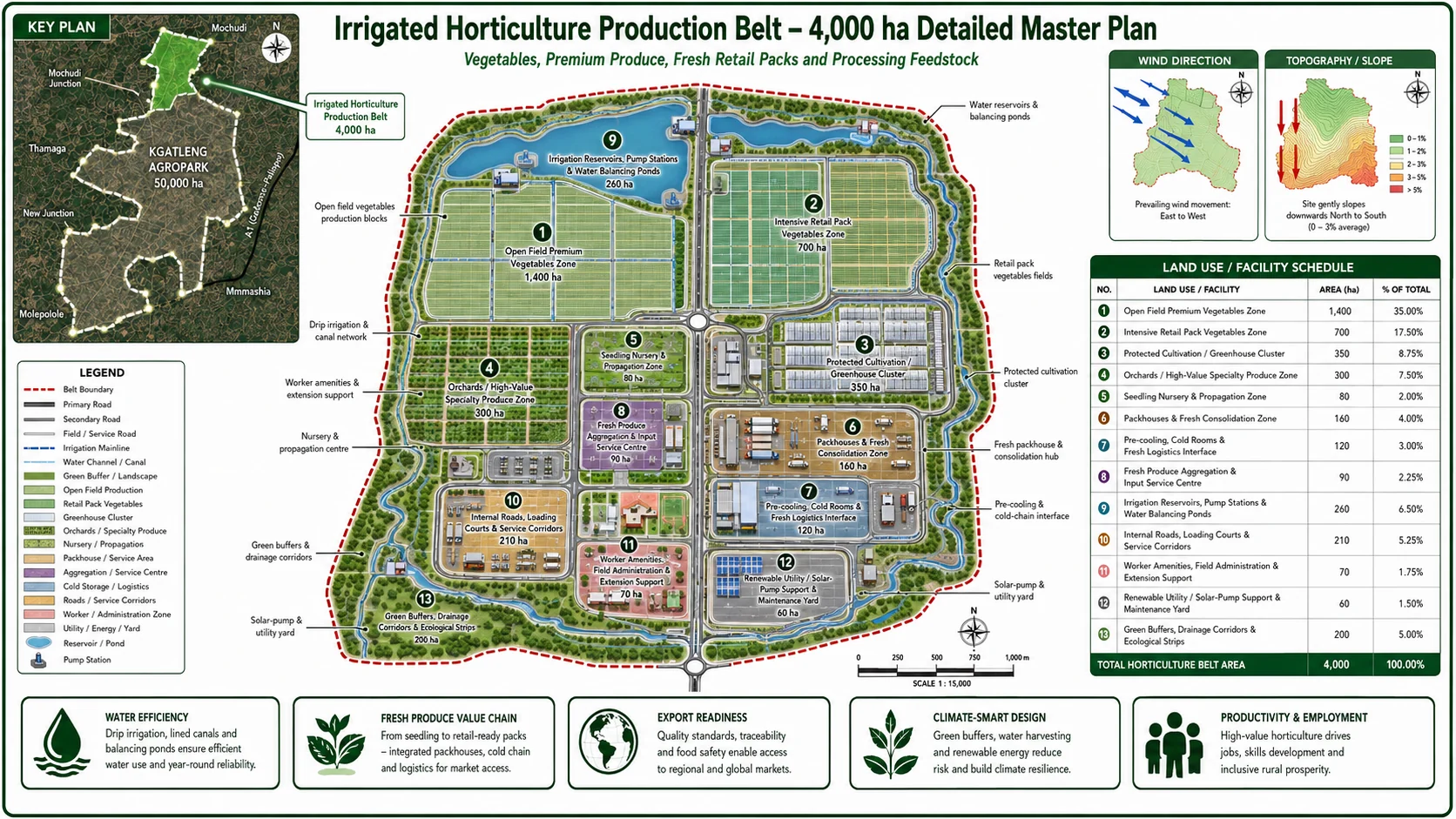
PB-01 / HORTICULTURE
Irrigated Horticulture 4,000 ha
The fresh-produce engine: vegetables, herbs, premium produce, retail packs and processing-grade feedstock.
DIRECT INTERFACESPackhouses + gradingCold rooms + pre-coolingFoodSafe™ inspectionLogisticsGrid™ distribution
Open detailed horticulture masterplan ↗
PB-02 / STAPLES
Field Crops & Staples 6,800 ha
The bulk commodity backbone for milling, staples, legumes, edible oils and feed systems.
2,000 haMaize + Sorghum900 haBeans + Cowpeas + Pulses1,000 haSoybean + Sunflower + Oilseeds500 haWheat + Rotation Blocks800 haMechanised Irrigation Areas600 haSilos + Drying + Staging650 haField Roads + Conservation350 haExtension + Water / Drainage
INDUSTRIAL LOGICProduce is planned against processing-line demand, commodity inventory targets and feed requirements — not simply planted for spot-market sale.
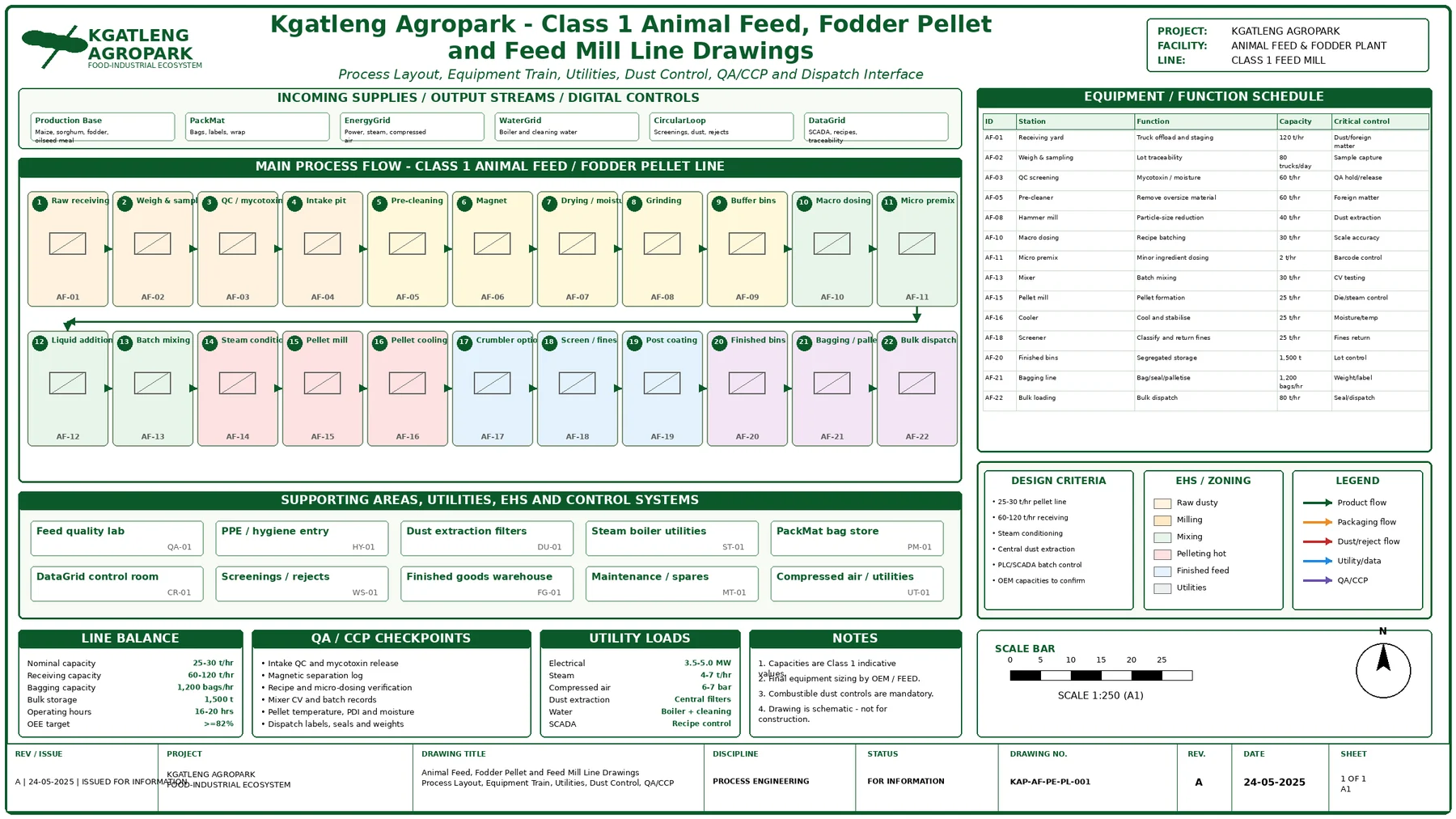
PB-03 / FEEDSTOCK
Fodder, Feed & Livestock Support 3,500 ha
Feed security reduces imported input exposure and improves predictability across dairy, livestock and protein value chains.
Silage maizeHigh-volume energy feedFodder sorghumDryland / resilient fodderLucerne / hayProtein-rich roughageFeed grainsMill formulation inputsProtein mealOilseed by-product integrationLivestock supportDairy + protein supply systems
Open Class 1 feed / fodder line interface ↗
PB-04 / CONTROLLED AGRICULTURE
Controlled Environment Farming 1,100 ha
Climate-buffered production protects premium supply, nursery capacity and off-season market commitments.
PROTECTED PRODUCTION CAMPUS
GreenhousesHydroponicsPropagationHigh-value crops
WaterGrid™ • EnergyGrid™ • DataGrid™ • climate control • sensors • traceability01Year-round production02Premium crop economics03Nursery control04Climate resilience05R&D platform
PB-05 / FARMER INCLUSION
FarmerConnect™ 2,600 ha
The Production Base extends beyond estate farming through contract production, aggregation and shared services.
Contract farmingProduction agreementsAggregationCollection + gradingInput distributionSeed • fertiliser • crop protectionMechanisationShared equipment servicesExtensionAgronomy + production protocolsTraceabilityDigital grower + batch recordsPaymentsSettlement + market accessCommunity nodesCooperatives + emerging farmers
OPERATING PRINCIPLEFarmers connect to the platform through services and standards — not simply through land ownership.
Grower registration + production plan→Input / mechanisation support→Quality + water protocols→Offtake where standards are met→Graded payment + traceable settlement
PRODUCTION-TO-MARKET OPERATING LOGIC
Demand governs the crop calendar.
The objective is to avoid unmanaged production surpluses, processor under-utilisation and market supply gaps.
01Production planning→02Input supply→03Planting→04Irrigation + crop care→05Harvest→06Field collection→07Aggregation + grading→08Packhouse / processing allocation→09Cold-chain / storage→10Trade / retail / export
DEMAND GOVERNANCE LOOPCrop calendarPlanting windowYield targetWater allocationHarvest specificationBuyer commitmentProcessing slotLogistics capacity
POST-HARVEST
Fresh produce does not stop at harvest.
Packhouse, grading, pre-cooling and cold-chain interfaces protect quality and convert field output into market-ready product.
Packhouse + Fresh Consolidation Zone 160 ha
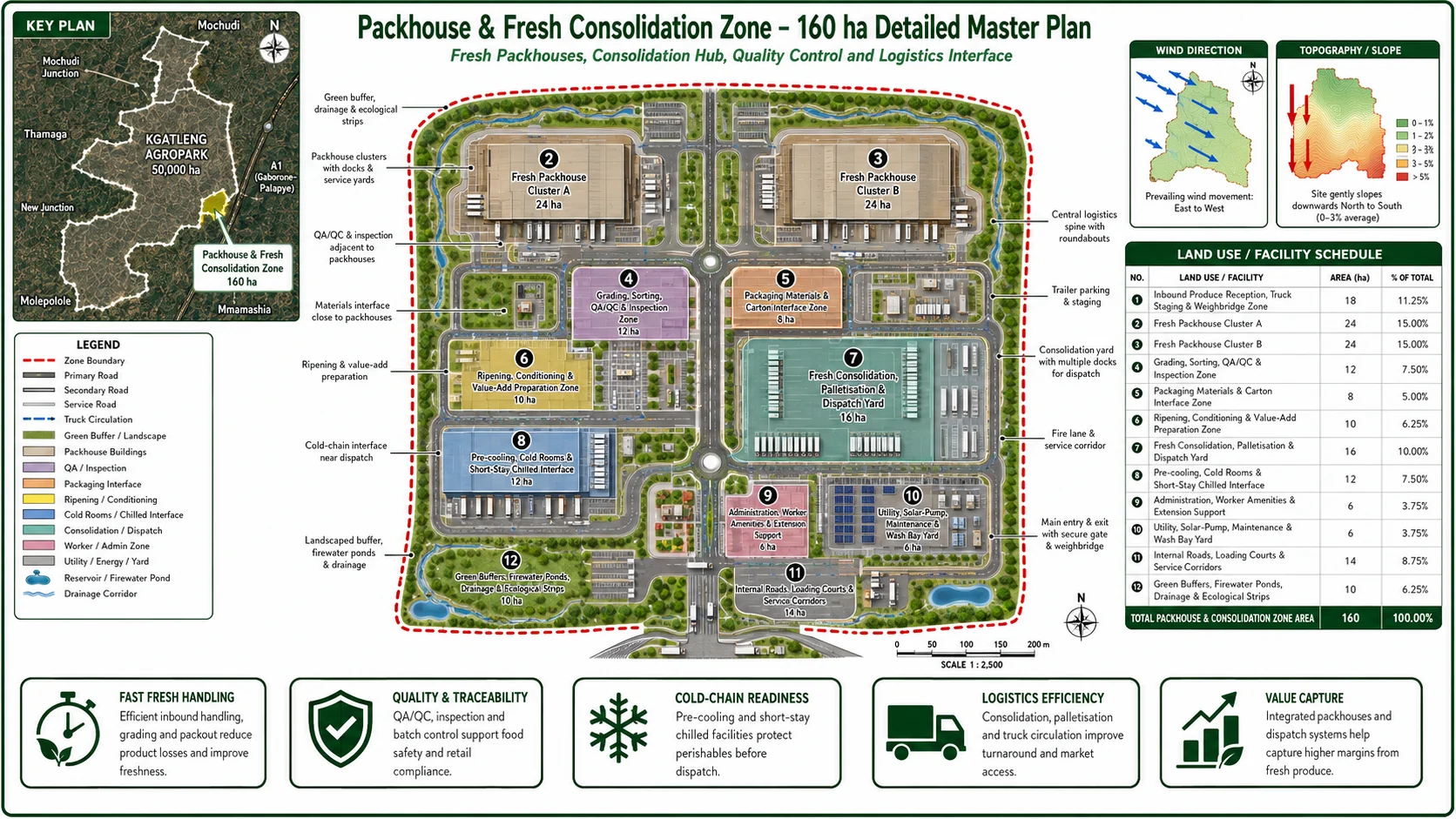
Fresh Packhouse Cluster A — Cold-Chain Interface 8-stage flow
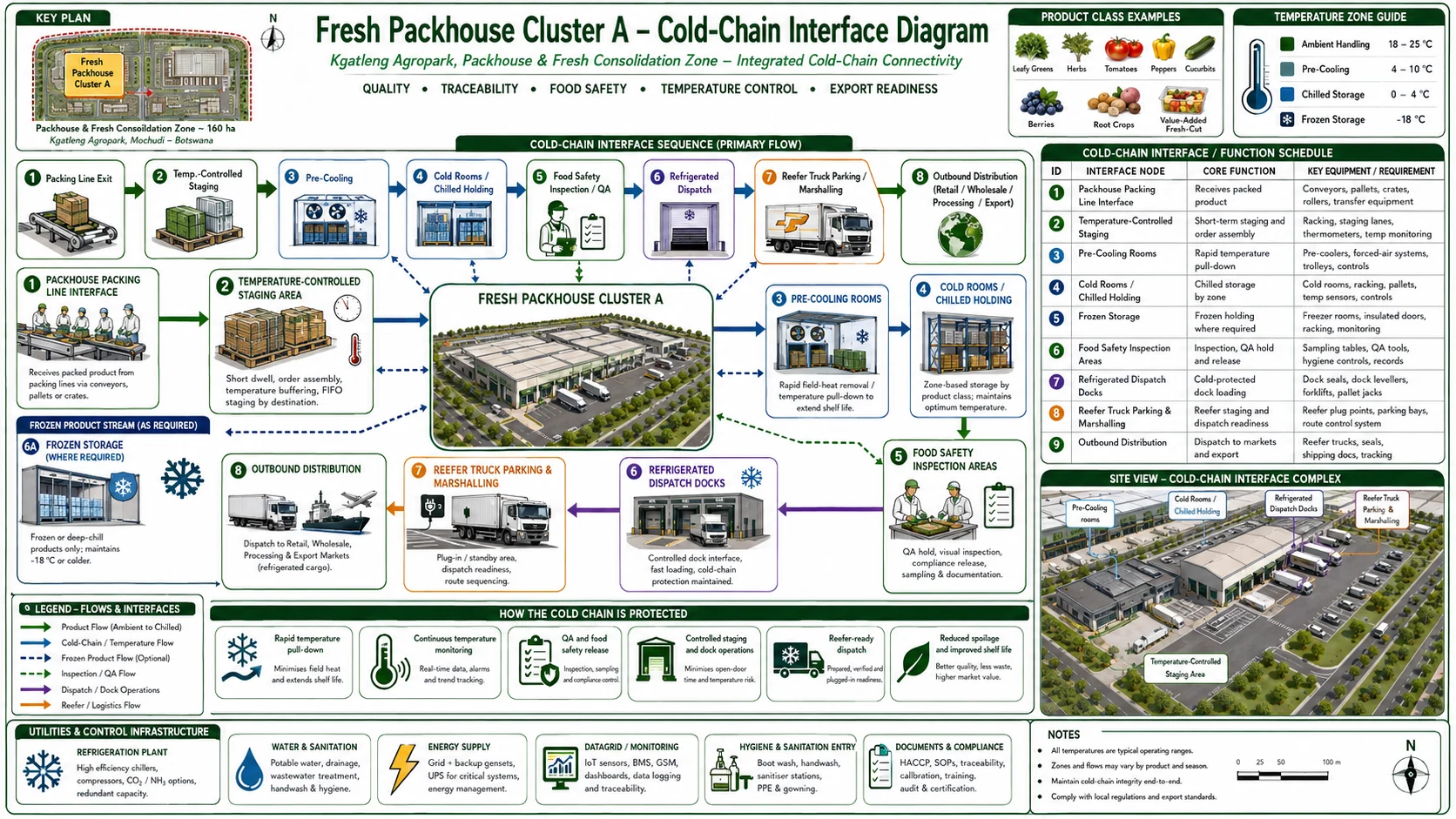
PLATFORM INTERFACESPRODUCTION BASE18,000 ha
WaterGrid™Irrigation • storage • qualityEnergyGrid™Pumps • greenhouse • cold chainDataGrid™Crop plans • IoT • traceabilityAgri-Inputs & MachineryInputs • repair • mechanisationFoodSafe™QA/QC • residue • certificationPackhouseGrading • packing • pre-coolingProcessing PlatformSauces • frozen • staples • feedLogisticsGrid™ + Food Trade CityCold chain • wholesale • export
REVENUE ARCHITECTURE
Capture value beyond raw produce.
The strongest economics come from controlled supply into downstream value pools.
Bar lengths indicate strategic revenue-pool importance, not audited revenue shares.
BANKABILITY / INDICATIVE ADJUSTED CASEBWP 12.6bnGross CAPEX BWP 9.5bnProduction SPV CAPEX BWP 10.2bnMaturity revenue BWP 3.66bnEBITDA • 35.9% 1.95×Minimum DSCR 2035Debt balance → BWP 0
Phased CAPEX + common-infrastructure carve-out + debt-service capacity.
2027First EBITDA / PBT-positive yearBWP 176.2mMinimum closing cash floor
Indicative adjusted-case model values from the Production Base concept presentation; subject to feasibility, market studies, water confirmation, Class 1/2 engineering and investment diligence.
RISK CONTROL
Risk is managed at platform level.
Diversification, controlled infrastructure, contractual demand and data-driven operations reduce upstream volatility.
PHASING
Four-phase route to full maturity.
Scale is earned through proof of production, commercial expansion, industrial integration and system optimisation.
Priority horticulture • FarmerConnect pilot • initial staples + fodder • nursery • basic irrigation • early offtake
PROOFExpanded production • mechanisation centres • processing feedstock contracts • controlled-ag pilots • QA expansion
SCALEFull processing integration • Food Trade City scheduling • advanced greenhouses • export certification • trade finance
INTEGRATEOptimised 18,000 ha • full WaterGrid™ / EnergyGrid™ / DataGrid™ integration • contracted supply chains • DFI-grade reporting
OPTIMISEPRIORITY CLASS 1 WORKSTREAMS
The next gate is technical validation.
Land, water, crop suitability, infrastructure, processing interfaces and commercial control are validated before full-scale mobilisation.
MATURITY OUTCOMES
What success looks like.
A Production Base measured by supply reliability, processing utilisation, farmer participation and market value capture.
✓ Reliable fresh-produce supply✓ Secured processing feedstock✓ Reduced import dependence✓ Higher farm productivity✓ Farmer participation✓ Food safety + traceability✓ Feed + fodder security✓ Employment + skills✓ Bankable upstream foundation
NEXT GATEClass 1 technical validation → bankable production packages → phased mobilisation
05 / COMMERCIAL HEART
12core trade functions
4market channels
1controlled release rule
4specialised market districts
KGATLENG AGROPARK • FOOD TRADE CITY
Food Trade City
The commercial operating system of Kgatleng Agropark — combining wholesale, B2B trade, aggregation, price discovery, logistics, market intelligence and settlement in one controlled market environment.
EXECUTIVE THESISThe market is the monetisation layer.
Aggregate supply. Aggregate demand. Create transparent markets. Move food efficiently.
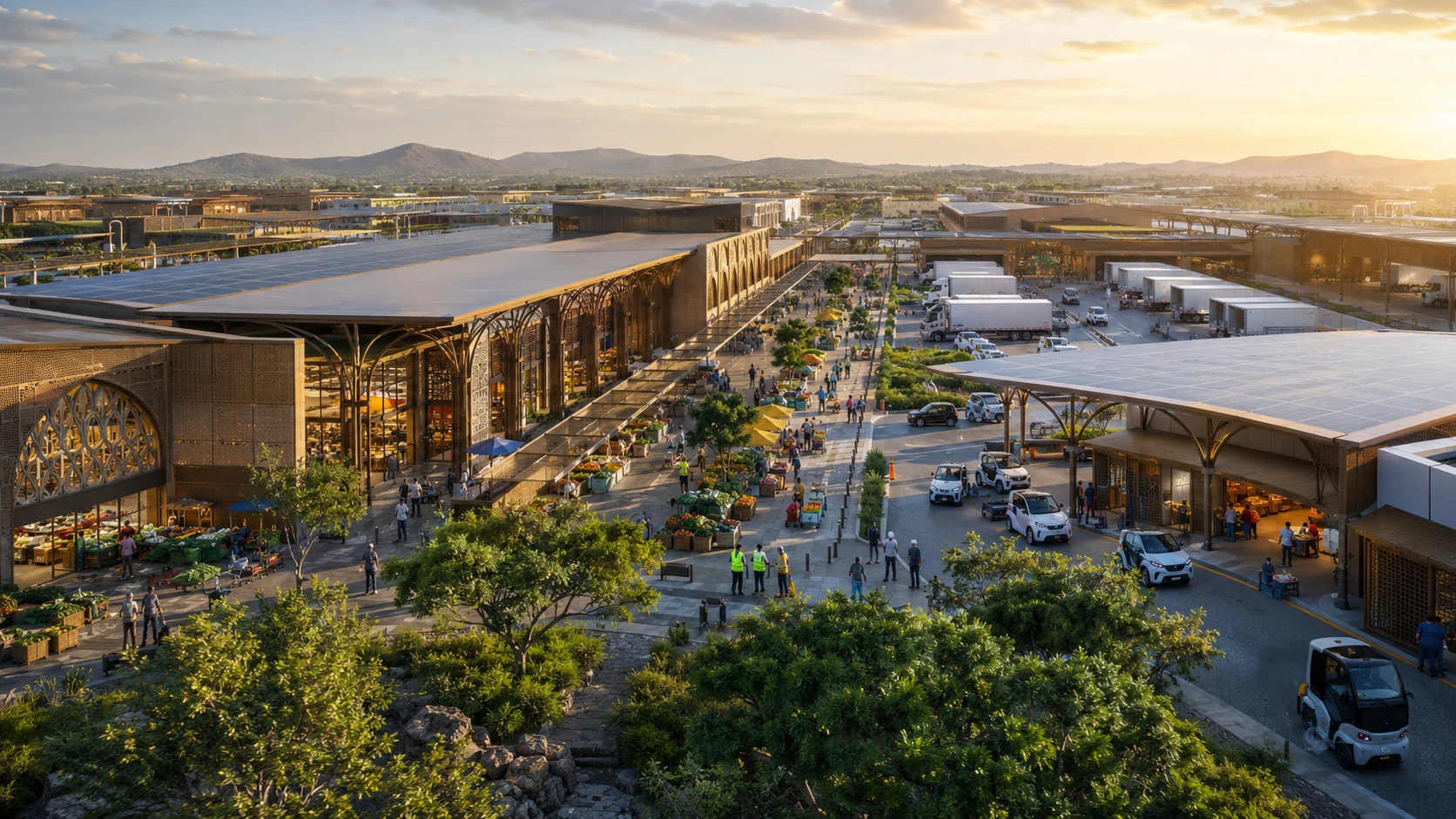
Fresh produce • grains • fodder • proteins • finished processing output
Wholesale • B2B • aggregation • price discovery • controlled release
Domestic • regional • institutional • export
OPERATING ARCHITECTURE
12 functions. 4 channels. 1 release rule.
A deliberately simple control architecture makes a complex food market legible, governable and scalable.
01 Wholesale02 Commodity trade03 Export aggregation04 Buyer matching
05 Market services06 Trader logistics07 Digital market08 FoodSafe™ release
09 Price discovery10 Inventory visibility11 Market intelligence12 Trade settlement
CONTROLLED RELEASEINTAKE→VERIFY→CLASSIFY→RELEASENo product enters an approved market channel without validated release status.
MARKET DISTRICTS
Four trading environments. One integrated market.
Distinct districts optimise infrastructure, compliance and transaction models for different food categories while sharing one operating and intelligence layer.
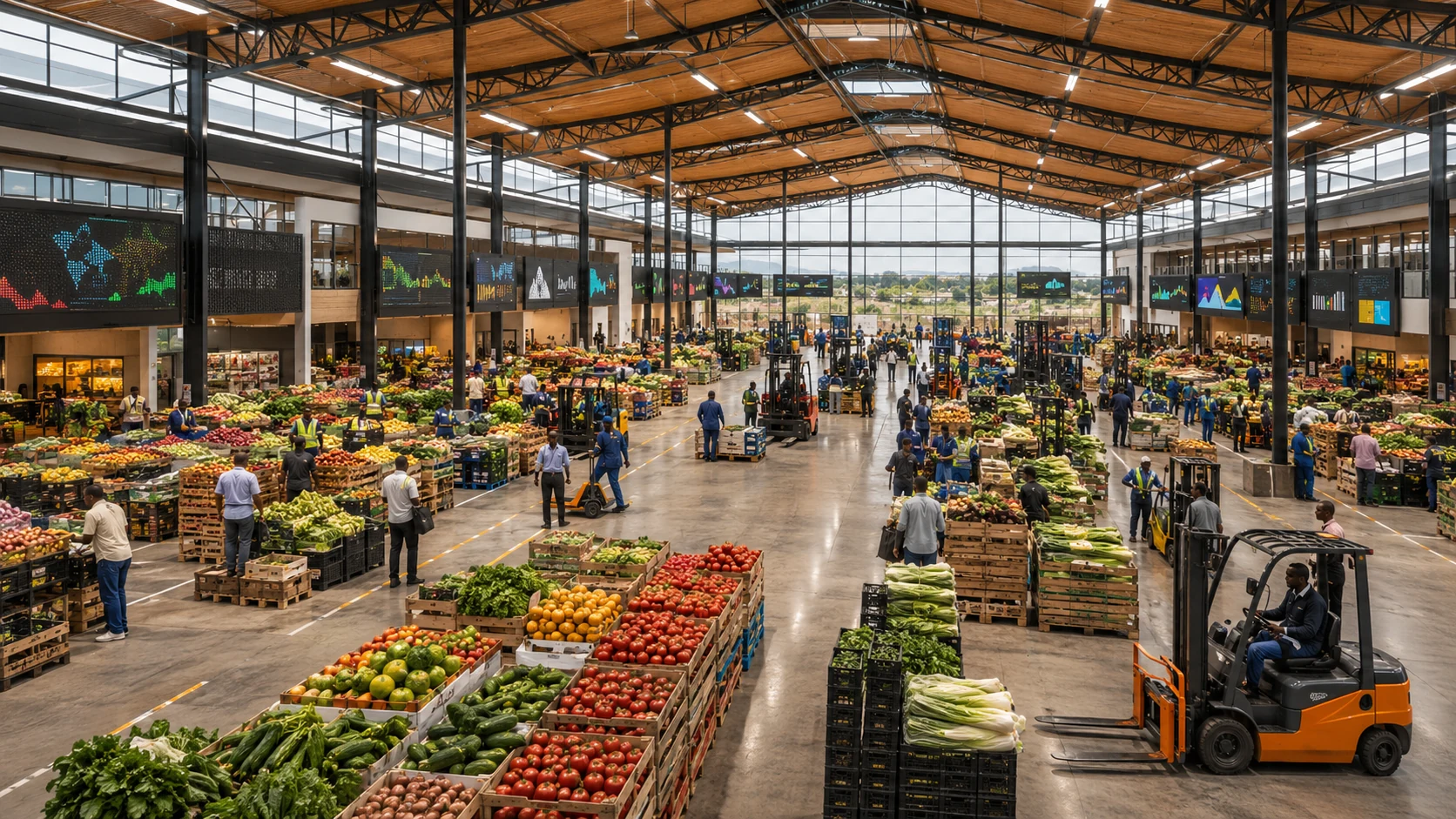
01FRESH PRODUCEFresh Produce Market
Vegetables • herbs • fruit • fresh-cut
Auction / spot trade • retail & wholesale fulfilment • pre-cooling • grading • trader logistics • digital listingsGrains • pulses • legumes • oilseeds • feed
Bulk tradeForward contractsInstitutional tendersWarehouse visibilityPrice benchmark
Cold-chain trading for temperature-sensitive food categories.
Temperature assuranceFoodSafe™ batch releaseHygiene zoningReefer dock schedulingShelf-life + recall control
Branded, shelf-ready and value-added food products.
Frozen foodsSauces + condimentsBakery + ready mealsBeveragesPackaged staples + private label
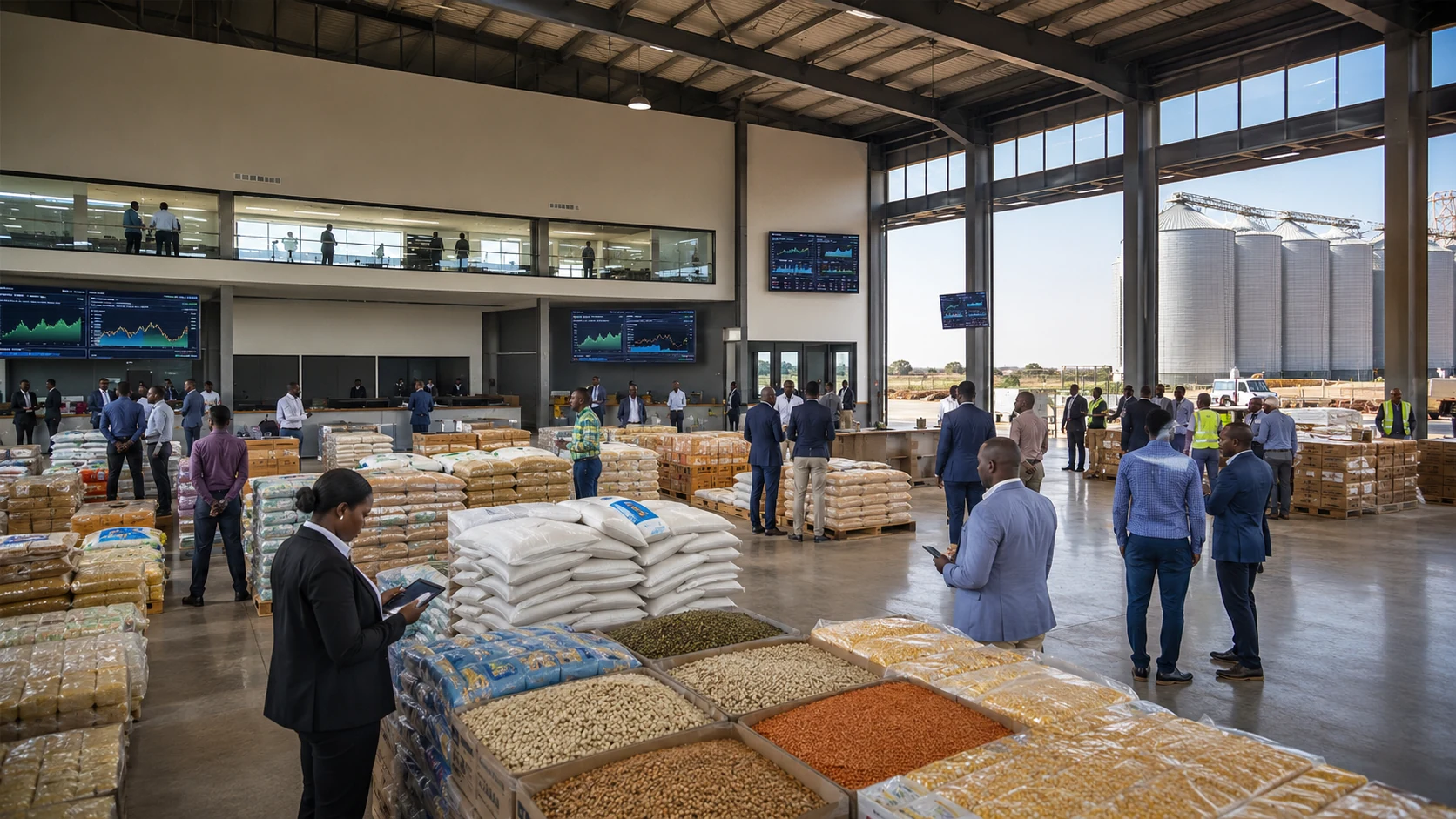
MARKET DISTRICT 02Structured commodity trade + transparent price formation
MARKET DESIGNFresh Produce
Commodities
Protein + Dairy
Processed Foods
Commercial velocity without losing control.
Reduce time from harvest to buyer while preserving grade, freshness and traceability.
Use bulk lots, forward contracts, institutional procurement and warehouse visibility to deepen liquidity.
Protect temperature, hygiene, shelf life and batch-release integrity across the cold chain.
Connect processing capacity directly to wholesale, retail, institutional and export demand.
FOODSAFE™ CONTROL
One controlled release logic.
Food safety is embedded directly into market access. Release status determines the commercial channel available to each batch.
01Product intake→02Batch ID→03Quality inspection→04Food-safety verification→05Traceability→06Grade→07Release decision→08Market listing
SUPPLY INTEGRATION
A continuously updated supply book.
Production Base and FarmerConnect™ feed the market with expected harvests, available stock and processing output.
WHAT IS PLANTEDCrop + hectaresWHEN IT MATURESHarvest windowEXPECTED QUANTITYForecast volumeAVAILABLE STOCKReady inventoryPROCESSING OUTPUTFinished productBUYER COMMITMENTSReserved demandUNSOLD INVENTORYOpen market supply
DEMAND ARCHITECTURE01 DOMESTICRetail • wholesale • hospitality • processorsScale domestic substitution
02 REGIONALDistributors • chains • traders • processorsCross-border growth
03 INSTITUTIONALSchools • hospitals • mines • governmentPredictable base-load demand
04 EXPORTImporters • global retailers • trading housesForeign-market expansion
Four channels create diversified market depth.
DIGITAL MARKETPLACE
Buyer–seller matching engine.
Product, grade, quantity, price, delivery date, packaging and logistics are matched before trade execution.
LISTING→MATCH→QUOTE→NEGOTIATE→CONTRACT→ALLOCATE→DISPATCH→SETTLE
MATCHING VARIABLESProductGradeQuantityPriceLocationDelivery dateCertificationPackagingLogistics cost
COMMERCIAL OUTCOMEFaster matching • lower search cost • higher fulfilment • more transparent trade
TRANSACTION DESIGN
Multiple mechanisms for different market conditions.
Fixed-price saleNegotiated tradeAuctionForward contractOfftake contractInstitutional tenderSpot market
The mechanism is selected by perishability, standardisation, market depth and buyer structure.
PRICE DISCOVERY
Market transparency becomes a platform capability.
Opening / closingWeighted averageVolume tradedGrade differentialSeasonalityGeographic spread
DATA → REFERENCE PRICE → BETTER DECISIONSCLOSED-LOOP INTELLIGENCE
Market data reshapes the next production cycle.
Demand, pricing, stock and logistics signals flow back into crop planning and processing decisions through DataGrid™.
DemandBuyer requirements→ProductionCrop plan→HarvestAvailable volume→TradeTransactions→Market dataPrice + stock→Re-planNext cycle
PHYSICAL TRADE CITY
Wholesale infrastructure engineered for flow.
Market halls, loading interfaces and trader services are designed to minimise handling time, congestion and product loss while separating people, produce, vehicles and high-risk flows.
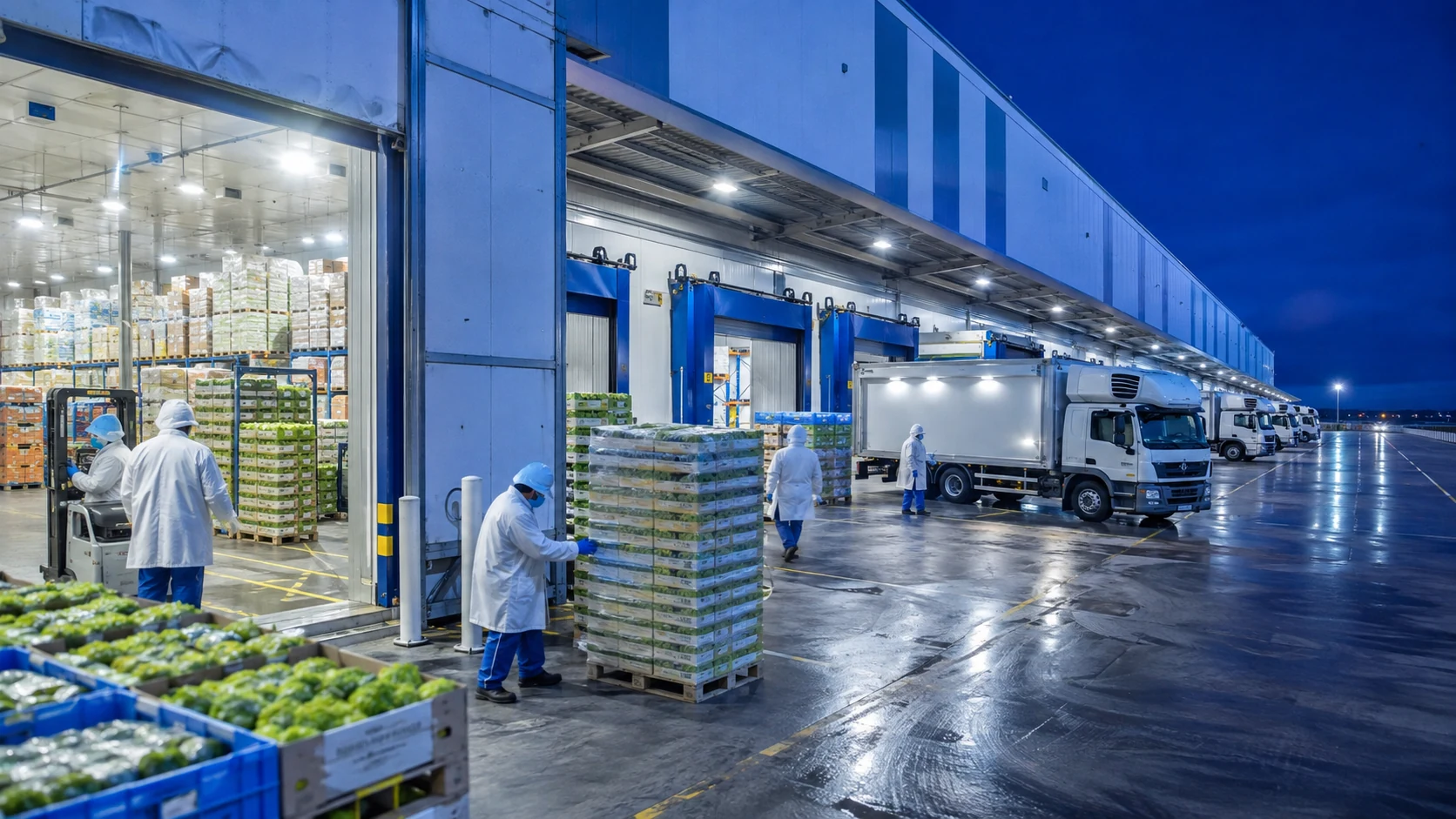
LOGISTICSGRID™ + COLD CHAINTruck appointments • yard management • cross-dock • chilled • frozen • reefer • temperature data
TRADER ECOSYSTEM
Build a professional food-trading community.
Trader officesSecure storesSample roomsMeeting roomsTrading terminalsMarket data
MARKET SERVICESBankingInsuranceLogistics brokerageCustomsCertificationLaboratory testingLegalAccountingTrade documentationDispute resolution
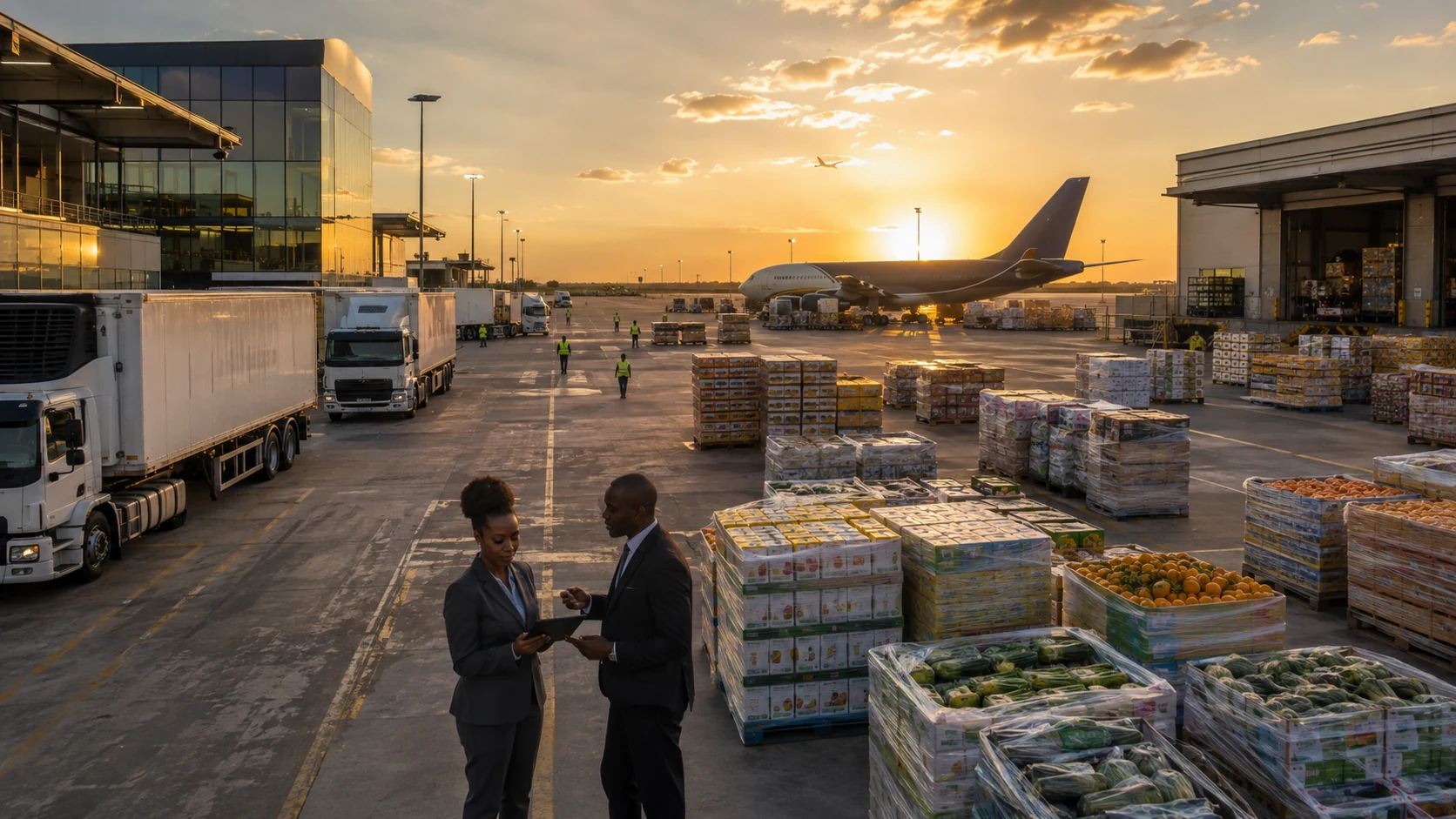
EXPORT AGGREGATION
Aggregate to export scale.
Multiple producers and processors consolidate into buyer-ready, certified consignments.
Producer→Aggregation→FoodSafe™→PackMat™→Cold chain→Customs→Air / road→Buyer
BASE-LOAD DEMAND
Institutional procurement platform.
Government, schools, hospitals, mines, universities and large employers can create predictable demand windows for Agropark supply.
Demand forecast→Framework agreement→Tender / call-off→Supplier matching→Quality release→Scheduled delivery→SettlementREPEAT
Predictable demandBetter crop planningLower market riskHigher processing utilisation
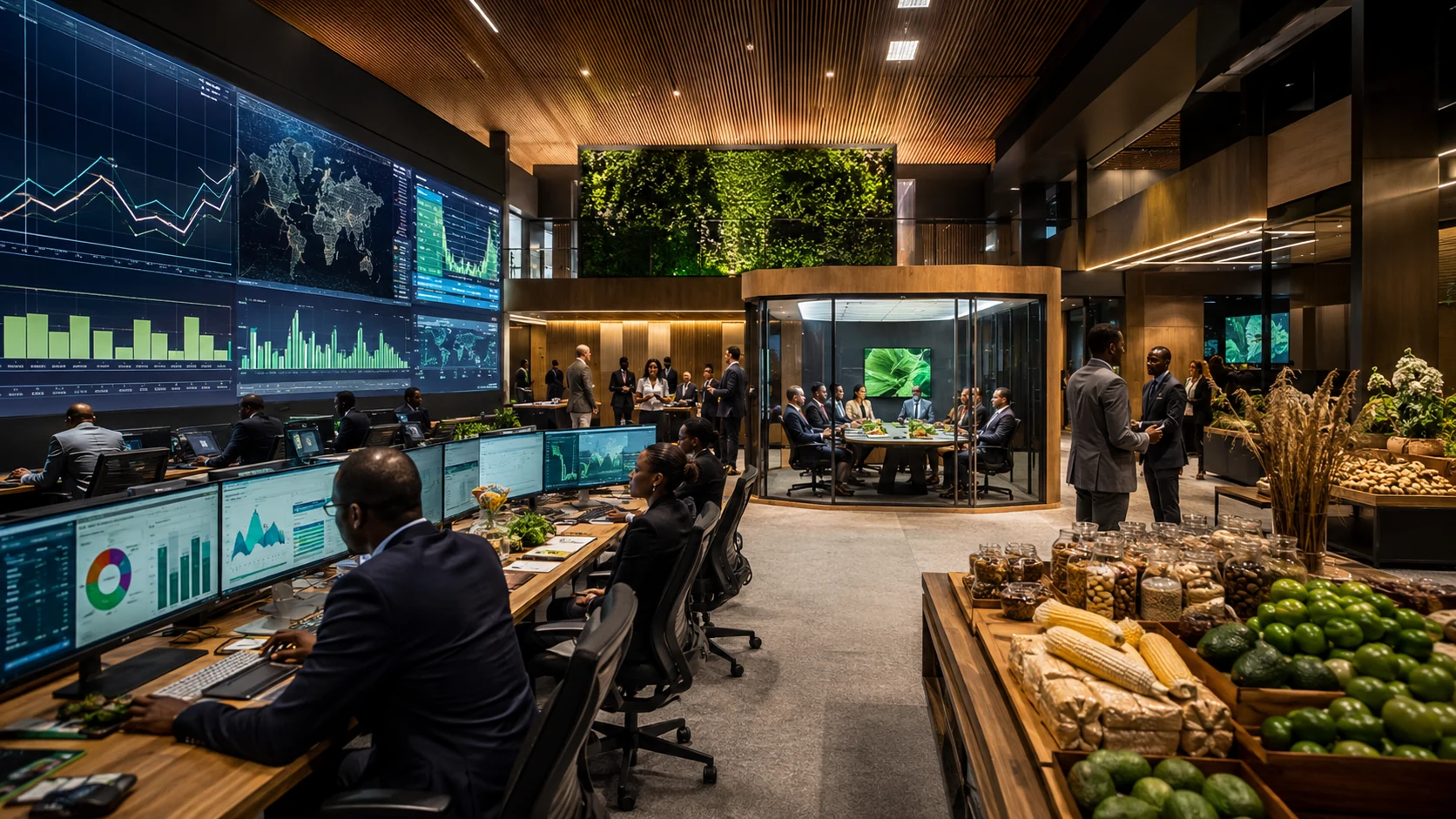
MARKET CONTROL ROOMDigital Market + Operating Board
CONTROL CENTRE
Real-time status across the market.
Fresh Produce OPENStaples OPENProtein & Dairy OPENProcessed Foods OPEN
EXECUTIVE SIGNALSVolumeBenchmark priceStockInboundOutboundReleaseCongestionSettlement
COMMERCIAL MODEL
Operating company + diversified revenue.
Food Trade City should monetise transactions, property, logistics, digital services and market infrastructure rather than rely on a single fee line.
FOOD TRADE CITY OPCOWholesale operatorDigital marketLogisticsGrid™FoodSafe™Export unitInstitutional marketsMarket intelligenceEstate management
REVENUE STACK
Leases + rentalsTransaction commissionsCold storage + warehousingLogistics + handlingInspection + certificationDigital marketplace feesData + intelligenceExport handlingFinance facilitation
EXECUTION DISCIPLINE
Measure. De-risk. Scale.
Market throughput and platform quality govern expansion — not headline scale alone.
Traded valueTraded tonnesRegistered buyersRegistered sellersFulfilment rateSettlement cyclePost-harvest lossExport volume
Supply volatilityPrice volatilityFood safetyTrader defaultCongestionWeak demand
FOOD TRADE CITY
One market. Multiple channels. Controlled food commerce at scale.
Production Base → FoodSafe™ Release → Wholesale → B2B → Buyer Matching → Logistics → Domestic / Regional / Institutional / Export
More organised tradeBetter price discoveryStronger farmer market accessHigher asset utilisationGreater regional + export trade
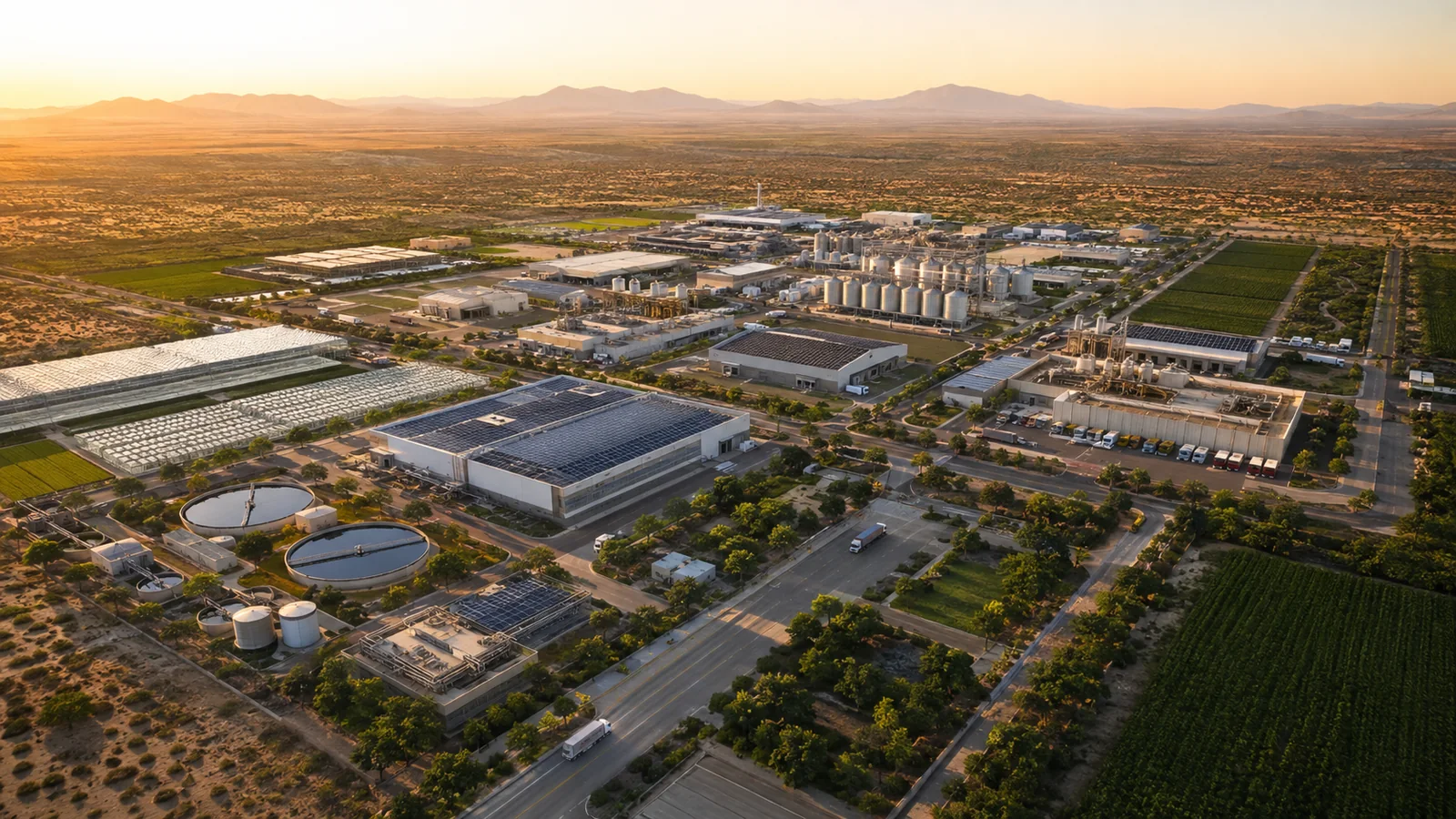
06 / VALUE-ADD ENGINE
AGRO-PROCESSING + PACKMAT™
Produce more than crops.
12core processing lines 5PackMat™ core families 1integrated value chain
Produce more than crops.
Manufacture food.
Processing is value capture. Packaging is infrastructure. The Value-Add Engine converts raw production into higher-value, branded, shelf-ready and export-compliant food products.
GROW→PROCESS→PACKAGE→BRAND→TRADE→EXPORT
Crops • milk • proteins • feedstock
Manufacture • package • release
Domestic • regional • export
INDUSTRIAL PORTFOLIOTwelve processing lines.
Twelve processing lines.
One coordinated manufacturing platform.
Capacity follows feedstock, demand and utilisation logic. Shared utilities, QA/QC, cold chain, warehouses, packaging and digital control create a food-industrial city rather than isolated plants.
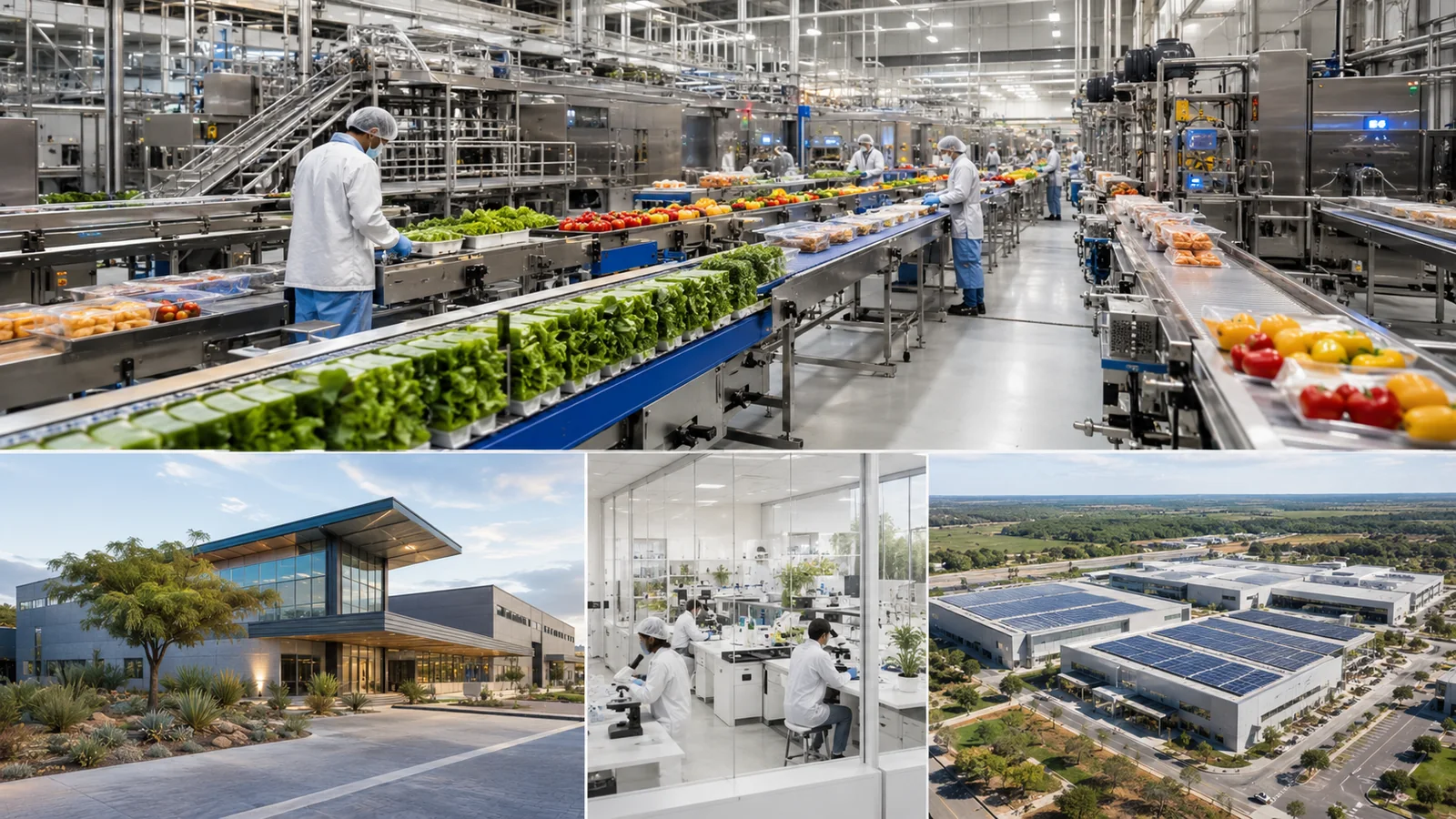
COMMON INDUSTRIAL INFRASTRUCTURE
Shared systems raise utilisation, reduce duplication and improve bankability.
FoodSafe™ laboratoryCold-chain campusPackMat™ packagingWaterGrid™ process waterEnergyGrid™ reliabilityDataGrid™ MES / SCADALogisticsGrid™ docksCircularLoop™ recovery
Fresh + tomato
Fresh vegetable processing
Wash, grade, trim, cut, sanitise and pack horticulture into fresh-cut, salad, ready-to-cook and institutional formats.
Tomato, sauce + condimentsPaste, puree, sauces, condiments and private-label products extend value capture and absorb fresh-market oversupply.
Freeze + dehydrate
Frozen vegetables + IQF
Blanch → chill → individually quick freeze → pack → frozen store, producing mixed vegetables, peas, carrots, herbs and food-service formats.
Dehydrated produceVegetables, herbs and spices become long-life, lower-freight-intensity ingredient formats.
Staples + pulses
Grain milling, flour + staples
Intake, silo, drying, cleaning, milling, fortification, blending and packaging for maize meal, flours, fortified staples and bulk supply.
Legumes, pulses + canningClean, grade, retail-pack or can pulses into shelf-stable consumer and institutional products.
Dairy + protein
Dairy: UHT, yoghurt + cheese
Milk collection, testing, pasteurisation, fermentation, aseptic filling and chilled distribution.
Meat, poultry + value-added proteinCut, portion, marinate, cook, chill, freeze and package proteins under high-care controls.
Prepared foods + beverages
Bakery, ready meals + prepared foods
Integrates flour, vegetables, proteins, dairy and sauces into complete branded meal propositions.
Juice, beverage + bottled productsJuices, nutrition drinks, bottled products and food-service beverage formats.
Oils + feed
Oilseed, edible oils + protein meal
Clean, crush, extract, refine and bottle oils while recovering meal for feed applications.
Feed mill + fodder pelletsBlend grains, fodder, oilseed meal and approved by-products into livestock and poultry feed systems.
INDUSTRIAL SYMBIOSIS
One plant’s by-product becomes another line’s feedstock.
The district is engineered for circular material flows and maximum economic recovery.
Grain bran → animal feedOilseed meal → protein feedVegetable trimmings → prepared foods / feedOrganic residues → compost / biogasPackaging scrap → recycling
TARGET: ZERO AVOIDABLE FOOD + PACKAGING WASTE
PACKMAT™
Packaging is infrastructure.
Packaging determines whether food can be protected, traced, branded, transported, displayed, sold and exported. PackMat™ is managed as common enabling infrastructure for every processing line.
Reduce external dependencyCreate retail readinessSupport export compliance
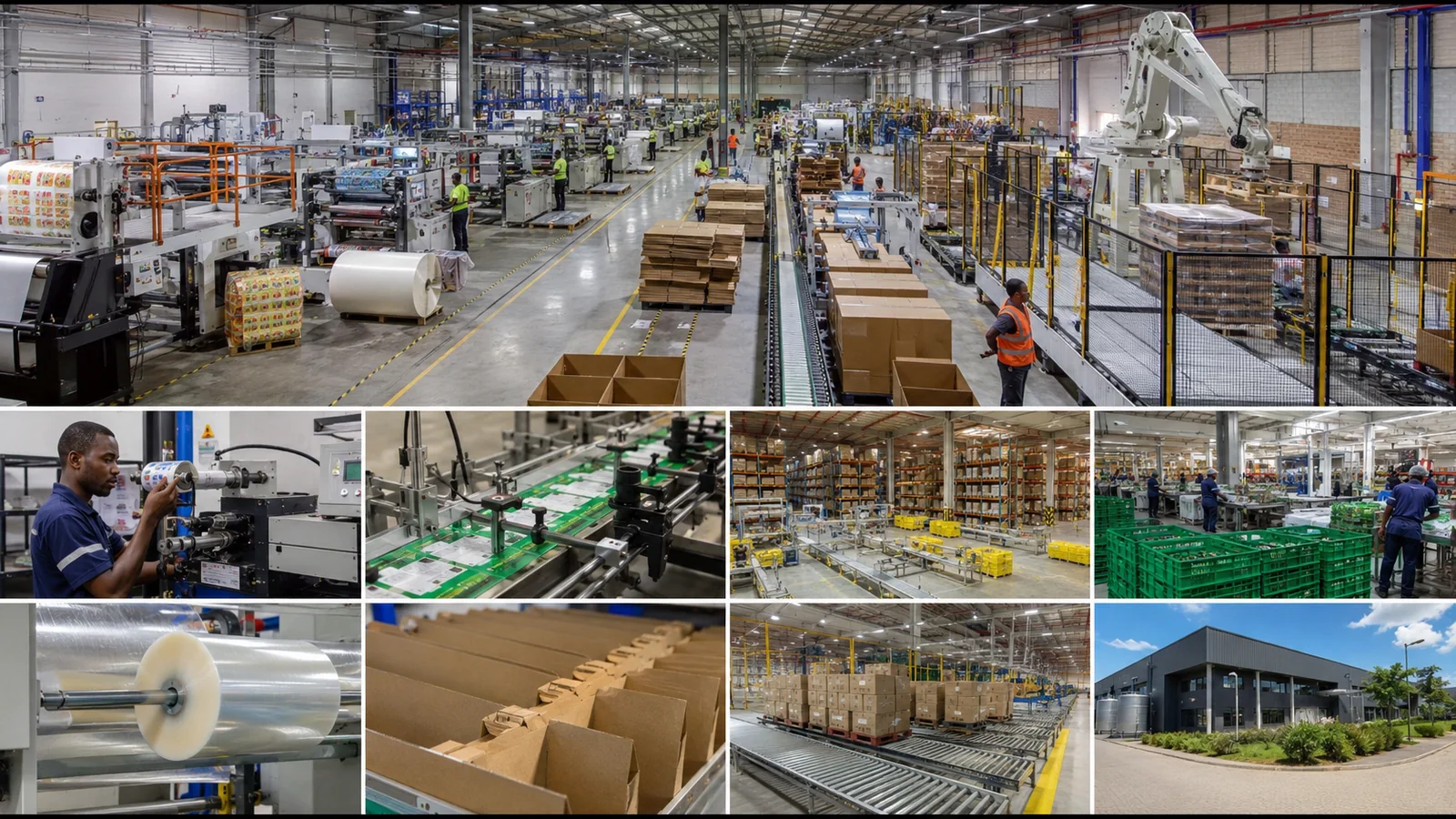
PHASED PACKAGING RANGE
BottlesCaps + closuresPouchesSachetsTubs + cupsJarsPallet wrapThermal packsCold-chain packsBulk bagsExport cartonsReusable pallets
Phasing rule: localise where scale, quality and economics support competitiveness; retain strategic inventory for imported specialist formats.
Never stop a line for a missing consumable.
Central visibility across cartons, labels, films, trays, bottles, closures, crates and other consumables.
Safety stock logicLine-side replenishmentInventory visibilitySupplier performanceReorder thresholds
Design, compliance and market launch in one capability.
Structural design, branding, labelling, traceability, private-label adaptation and export compliance.
Structural packagingGraphics + brandingNutrition / legal copyBarcode + QRRetail shelf optimisation
COMMERCIALISATION
Private label + Botswana-owned brands.
Monetise processing through both third-party manufacturing and proprietary food brand development.
Buyer specification → develop → package → validate → manufacture → distribute
Long-term objective: build Botswana-owned food intellectual property capable of competing regionally and internationally.
Quality is engineered into the process.
01 Approved suppliers02 HACCP + sanitation03 Allergen controls04 Microbiology + residues05 Temperature control06 Packaging integrity07 Batch release08 Recall readiness
NO PRODUCT LEAVES WITHOUT VALIDATED RELEASE STATUSFarm → field → batch → pack → customer.
Farm→Field→Harvest batch→Processing batch→Ingredient lot→Packaging lot→Finished product→Pallet→Warehouse→Customer
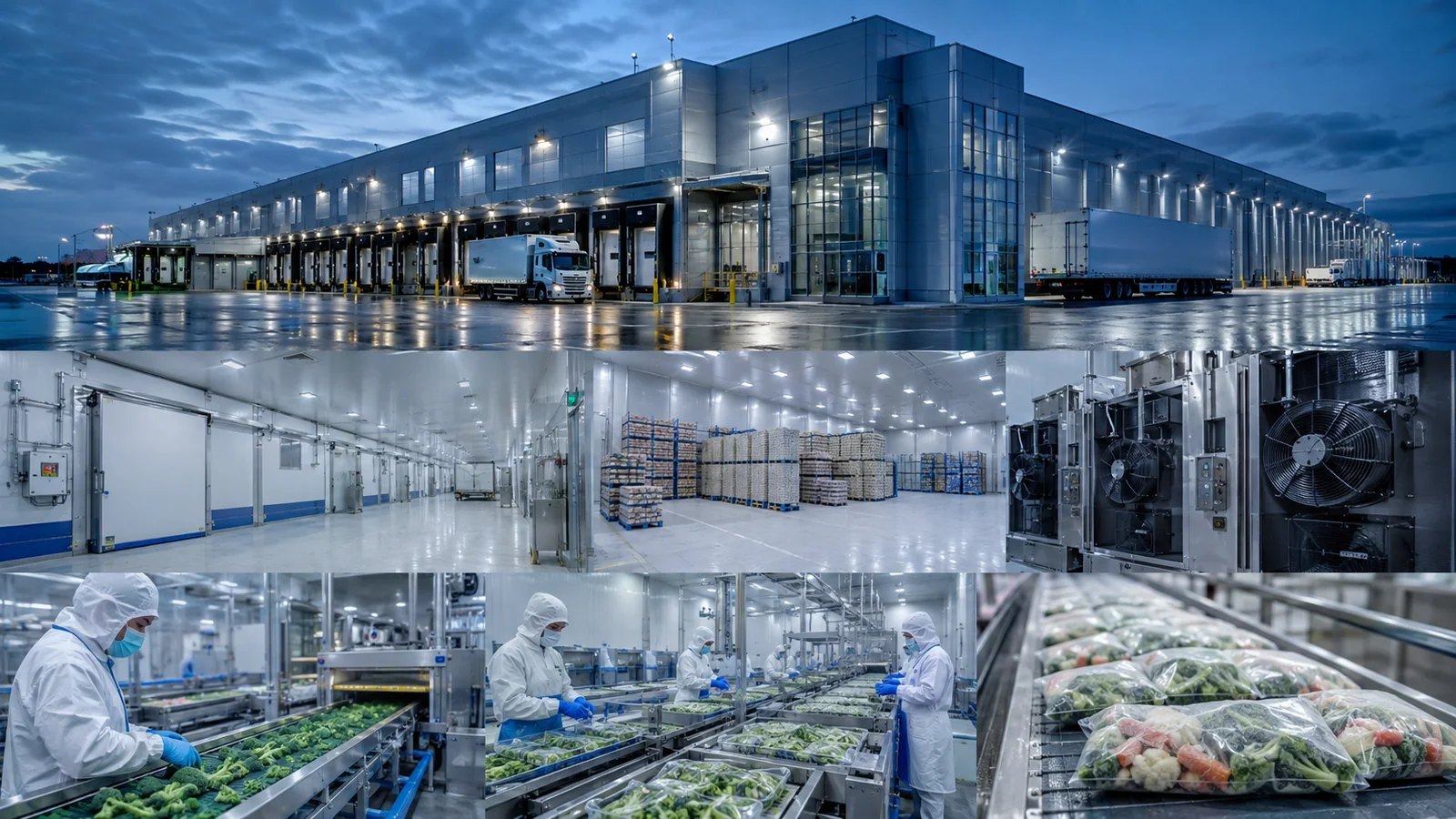
COLD-CHAIN ARCHITECTURE
Temperature control is bankability infrastructure.
Pre-cooling • chilled raw rooms • blast chilling • blast freezing • IQF • frozen warehouses • reefer docks • temperature telemetry.
No single-point failure across critical cold loads.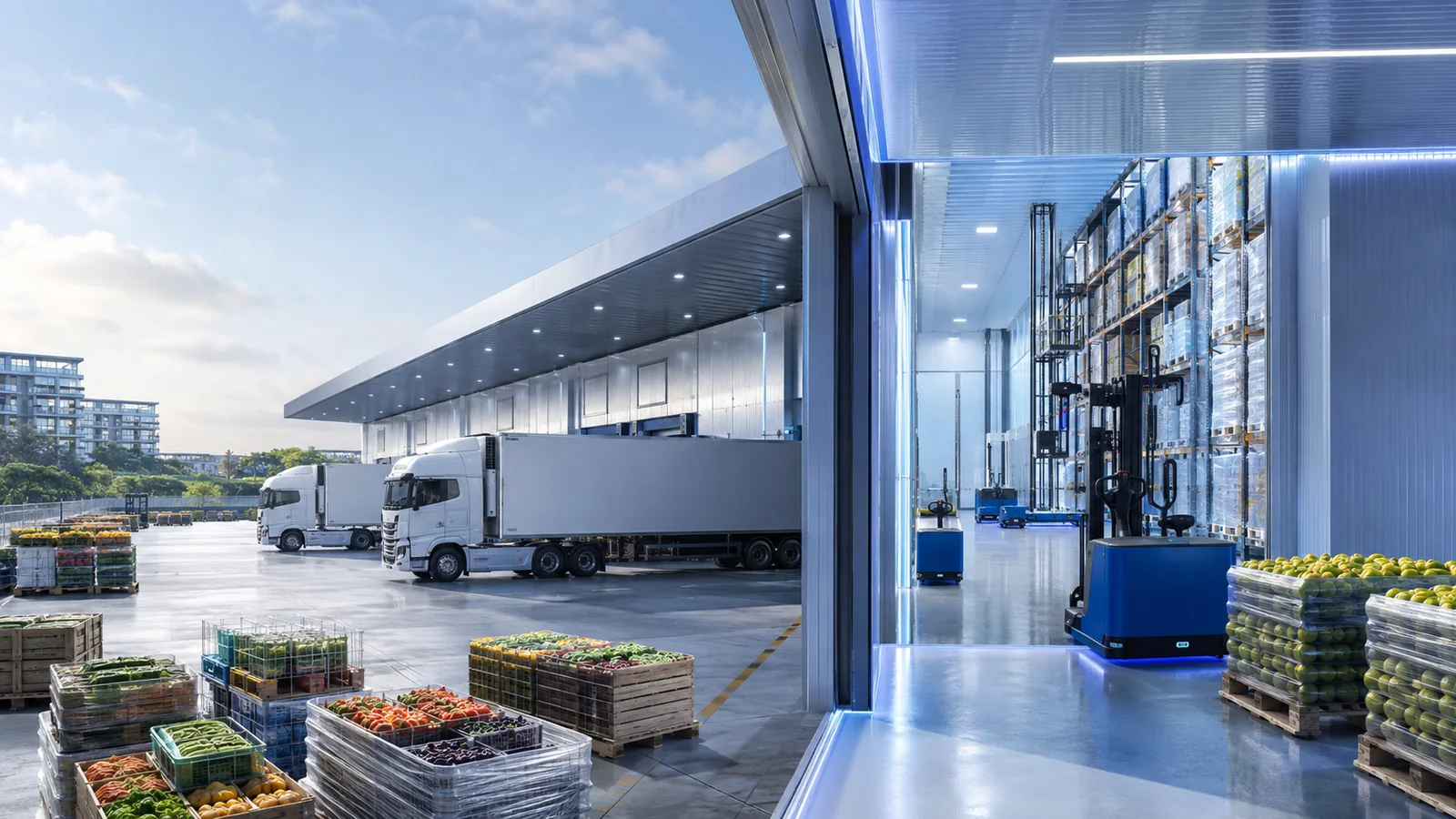
LOGISTICSGRID™ INTEGRATION
Inbound feedstock. Outbound finished goods.
Inbound: produce • grains • milk • proteins • packaging • ingredients
Outbound: fresh/chilled • frozen • dry goods • consumer foods • feed • exports
Order → inventory → slot → load → proof of dispatch → deliveryProcess water + sanitation
Potable process waterWash + sanitationCIP systemsSteam + coolingWastewater treatmentTreated-water reuse
Industrial reliability
Processing machineryRefrigerationBoilers + compressed airPackaging linesCritical-load redundancyRenewables + storage
Make every line measurable.
INPUT → OUTPUT → YIELD → WASTE → COST → INVENTORY → ORDER → REVENUE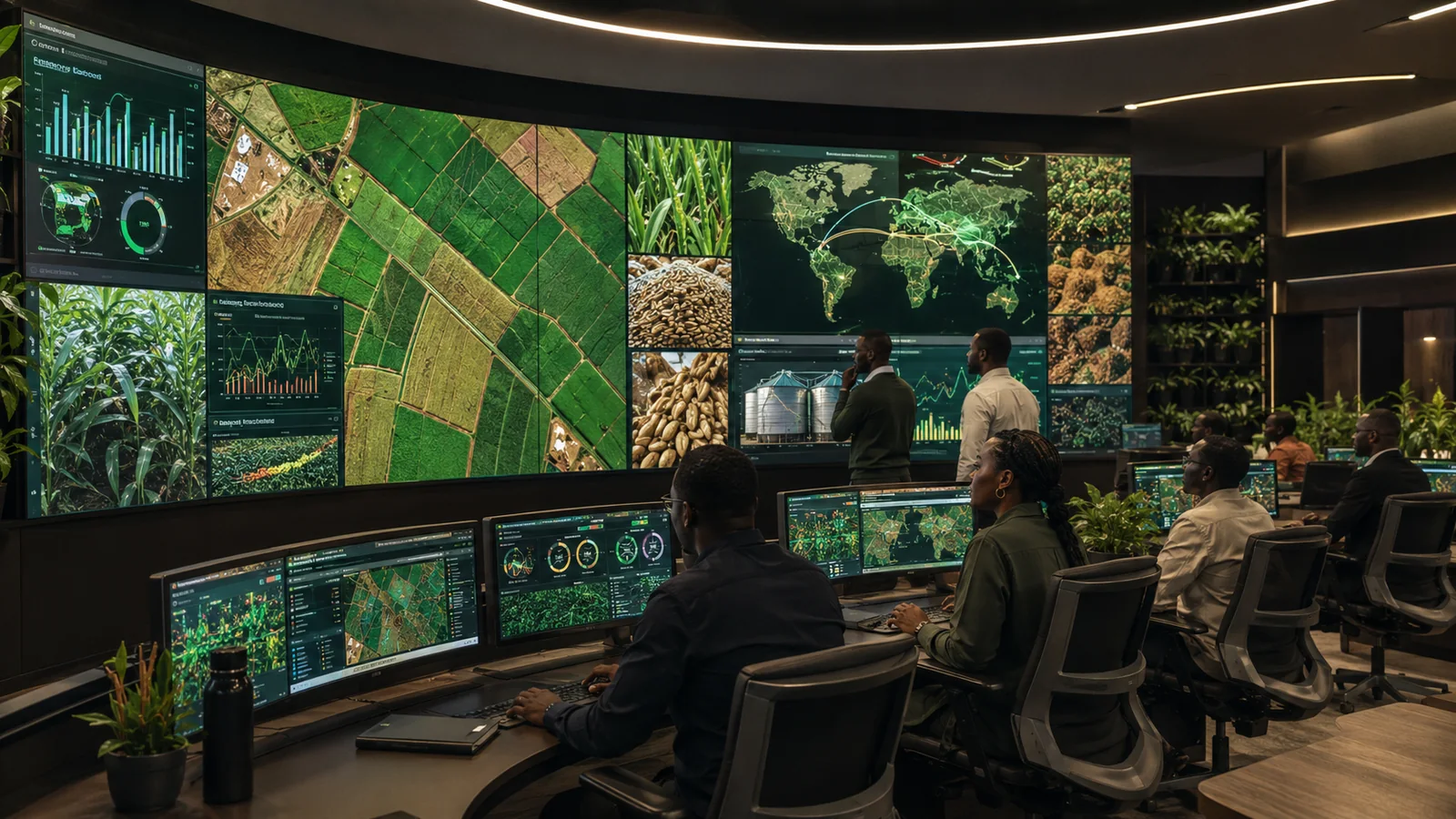
PROCESSING CONTROL TOWER
One command view across 12 lines.
Industrial management sees utilisation, yield, downtime, utilities, quality, inventory and order fulfilment in near real time.
Line statusUtilisationYieldDowntimeEnergyWaterFoodSafe™Packaging stockFinished goodsOrders + dispatch
INDUSTRIAL INTELLIGENCE → FASTER DECISIONS → HIGHER UTILISATIONFOOD-INDUSTRIAL CLUSTER
Build an ecosystem around the plants.
Co-location of specialist manufacturers and service providers creates an agglomeration effect through shared skills, suppliers, utilities, logistics and innovation.
Anchor processorsSpecialist manufacturersIngredient suppliersPackMat™ operatorsEquipment servicesFood laboratoriesLogistics operatorsInnovation companies
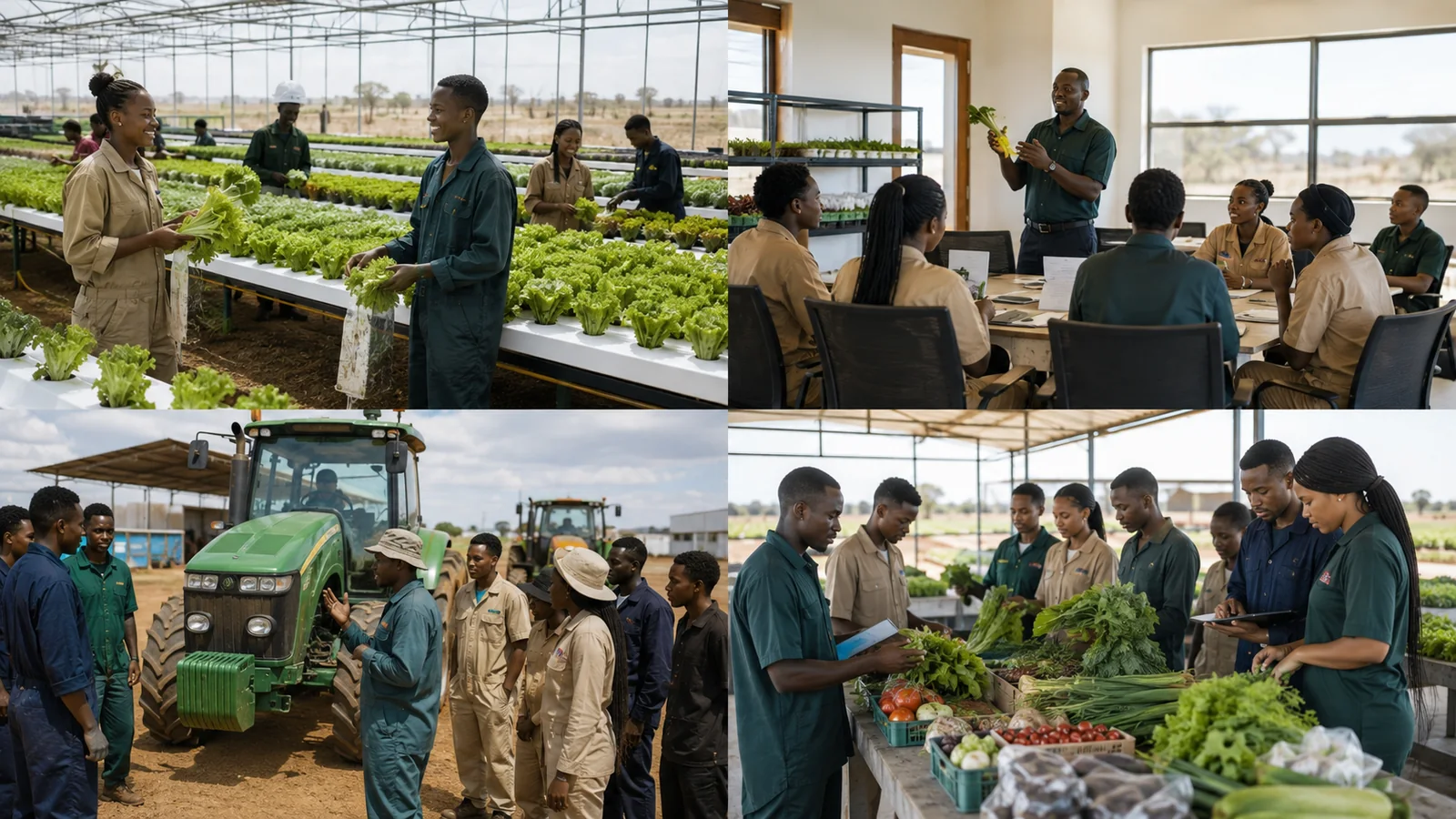
SKILLS + INNOVATIONFood technologists • process engineers • refrigeration technicians • laboratory technicians • quality controllers • packaging technicians • product developers • supply-chain specialists
Concept → prototype → test → validate → package → commercialise → scale
COMMERCIAL MODEL
Diversified revenue + disciplined bankability.
Each plant should be a defined investment package supported by feedstock, demand, utilisation and offtake—not an undifferentiated mega-factory.
ANCHOR OFFTAKE STRATEGY
Demand first. Capacity second.
Secure buyer specifications and demand pools before major line commissioning.
01Demand→02Product spec→03Processing capacity→04Feedstock contract→05Production→06PackMat™→07Delivery
ALLOCATION LOGICPREMIUM → FRESH / EXPORTSTANDARD → RETAILPROCESSING GRADE → MANUFACTURINGBY-PRODUCT → CIRCULARLOOP™
IMPLEMENTATION ROADMAP
Phase the Value-Add Engine with demand and utility readiness.
The platform moves from priority conversion capacity to a fully integrated food-manufacturing ecosystem.
Fresh vegetables • tomato • grain milling • feed mill • cold chain • basic PackMat™
IQF • dehydration • pulses • dairy • bakery • beverages • private label
Protein • ready meals • edible oils • advanced packaging • export lines
12 lines + PackMat™ + FoodSafe™ + cold chain + DataGrid™ + LogisticsGrid™
GATING CRITERIAFeedstockOfftakeUtilitiesCAPEX validationFoodSafe™LogisticsWorking capital
06 / VALUE-ADD ENGINE
Production → Processing → Packaging → Branding → Trade → Export
More local processingHigher value per tonneLower post-harvest lossMore Botswana packagingMore export-ready products
07 / MOVEMENT SYSTEM
LogisticsGrid™ × MobilityGrid™
Controlled movement of products, people, vehicles, utilities and emergency services across a 50,000 ha food-industrial ecosystem.
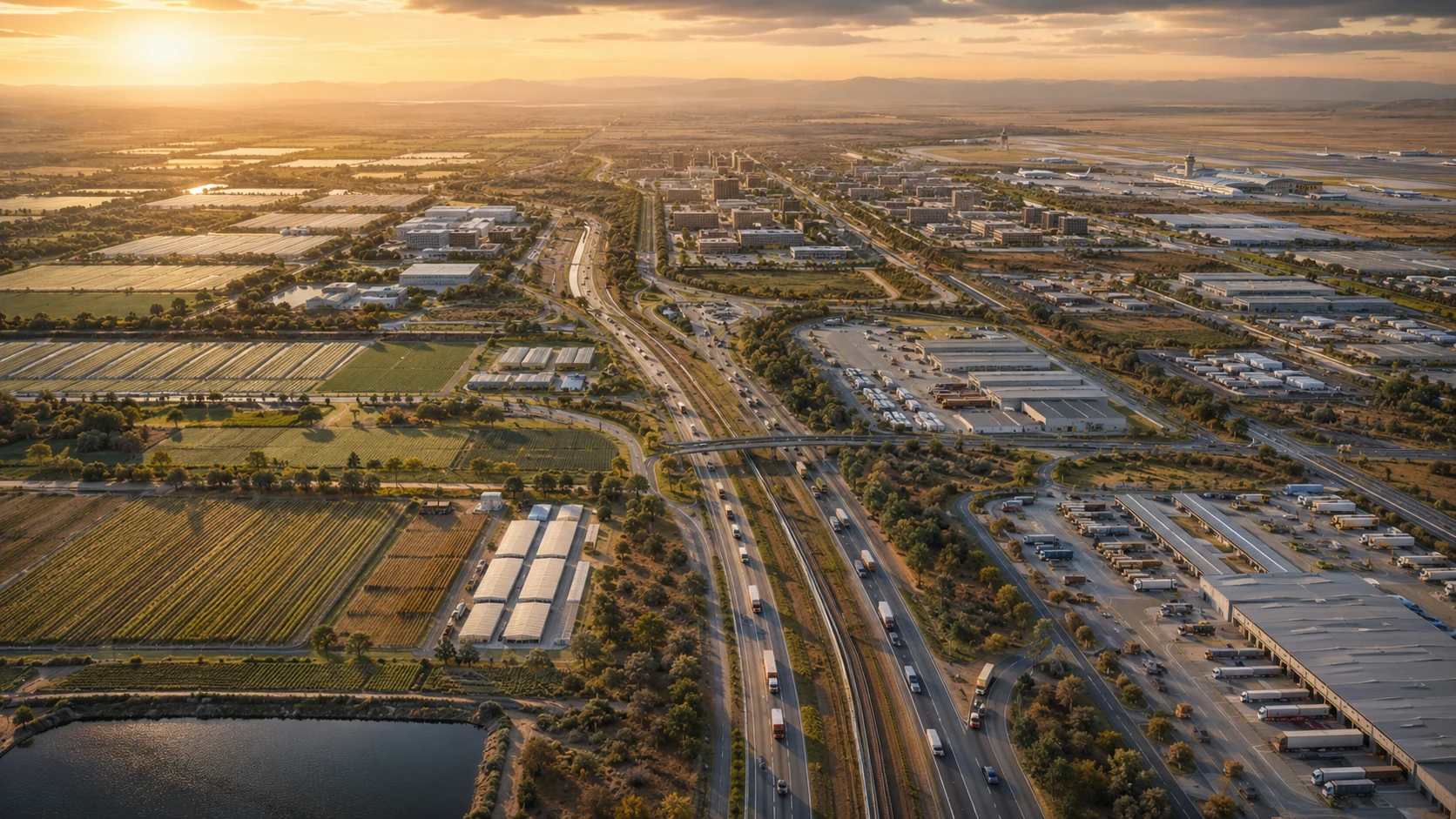
SYSTEM THESIS
Productivity at 50,000 ha is a movement problem.
The Agropark only performs when products, people and services move predictably, safely and at industrial scale.
50,000 hacontrolled envelope5primary product nodes4movement imperatives1integrated control layer
THE OPERATING QUESTION
Can every tonne, vehicle, worker and critical service move through the platform with speed, visibility, safety and control?
PRODUCTFarm → marketPEOPLEWorker → workplaceVEHICLESGate → dock → exitSERVICESUtility + emergency access
END-TO-END SPINE
Five nodes define the commercial movement chain.
The movement system is designed from product origin to domestic, regional and export gateways.
LogisticsGrid™ protects product integrity. MobilityGrid™ protects network capacity.
Goods movement + storage
Dry + cold warehousingCross-docking + stagingFleet + reefer operationsDispatch + yard managementExport logistics + handling
DATAGRID™ONE MOVEMENT
ENVIRONMENTWMS • TMS • YMS • GPS • Gates • Weighbridges • ePOD
ENVIRONMENTWMS • TMS • YMS • GPS • Gates • Weighbridges • ePOD
Network circulation + access
Freight corridors + truck lanesBRT + LRT-ready corridorsTOD + active mobilityEmergency ring roadsGate hierarchy + service access
FREIGHT HIERARCHY
Protect strategic capacity through four road levels.
Local farm movements should never overload high-capacity industrial and export corridors.
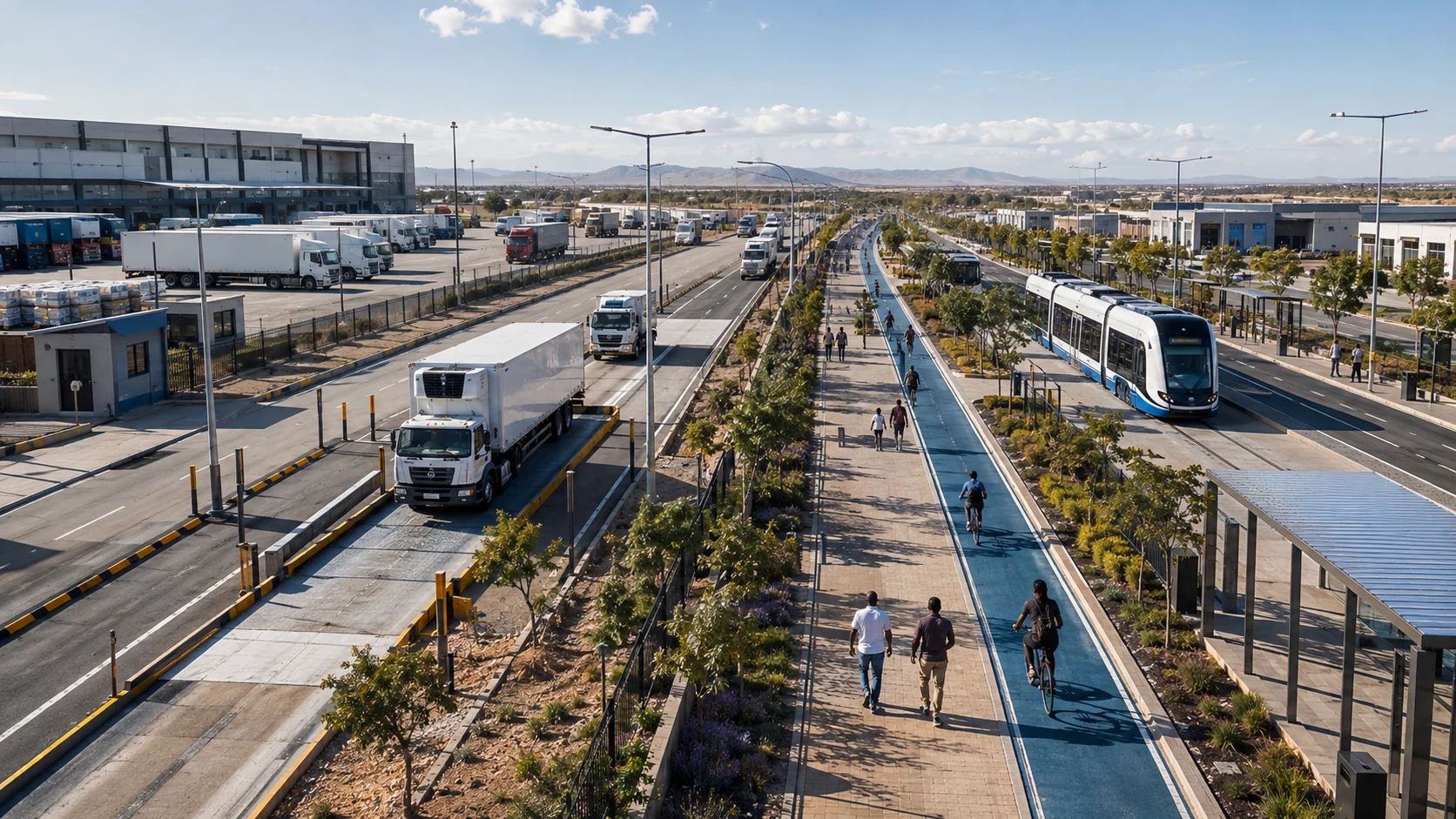
FREIGHT / PUBLIC SEPARATION
Heavy freight should not routinely compete with people movement.
Physical and operational separation improves safety, corridor capacity and travel-time reliability.
TRUCKDedicated freight lanes + gatesTRANSITBRT + LRT-ready right-of-wayACTIVEWalking + cycling corridorsPUBLICSeparate employee + visitor access
LOGISTICS ASSET STACK
Common-user assets scale with throughput.
Shared logistics infrastructure reduces duplicated CAPEX and enables system-wide control.
01 Dry warehousing02 Cold-chain warehousing03 Cross-docking04 Truck staging05 Fleet management06 Reefer operations07 Yard management08 Dispatch control09 Export consolidation10 Air-cargo handling11 Smart weighbridges12 Gate systems
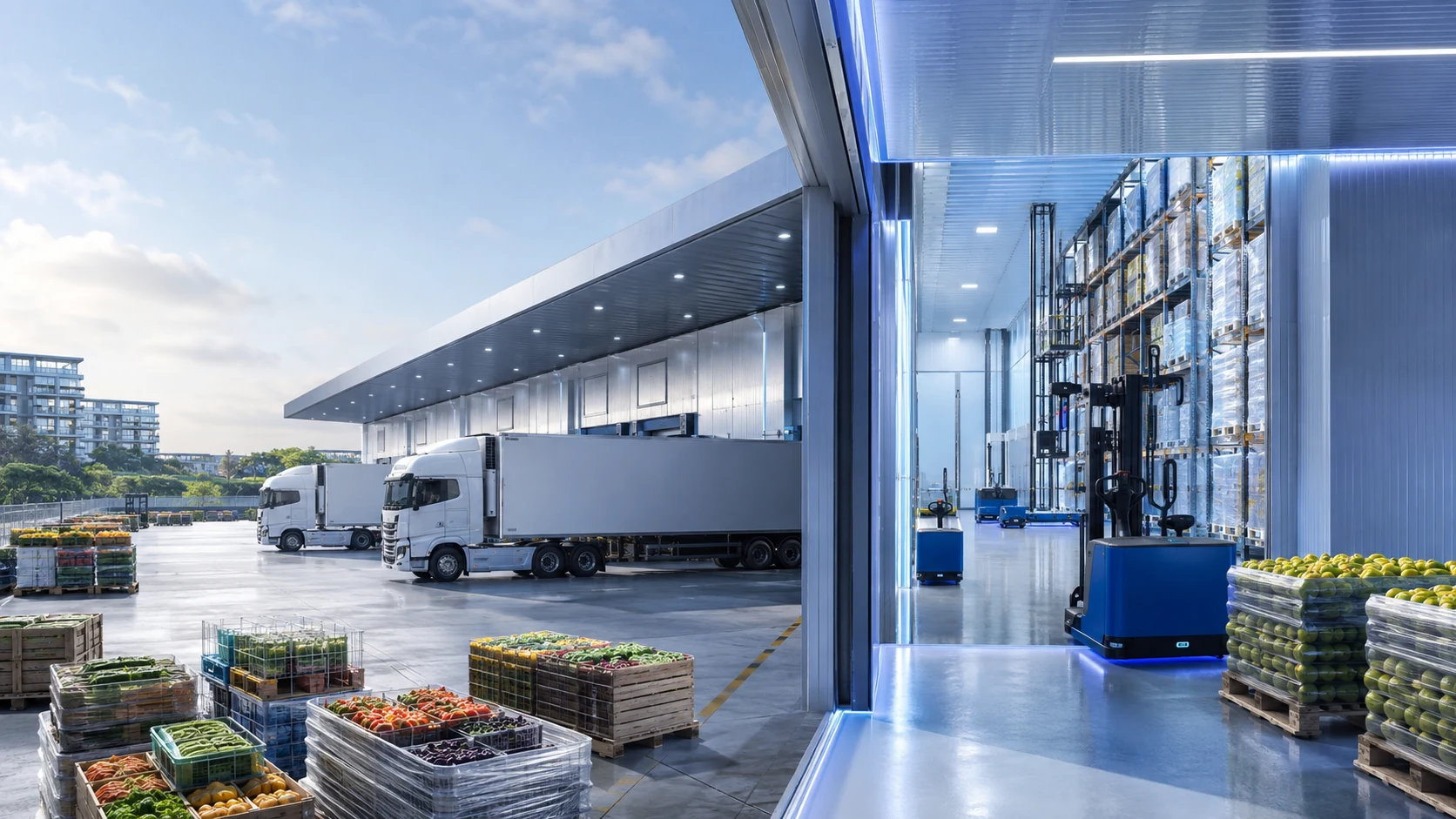
Storage is an operating buffer—not idle real estate.
Receive→Put-away→Store→Pick→Consolidate→Dispatch
WMS inventory visibility • lot control • pallet traceability • order consolidation • cycle counting • dock integration
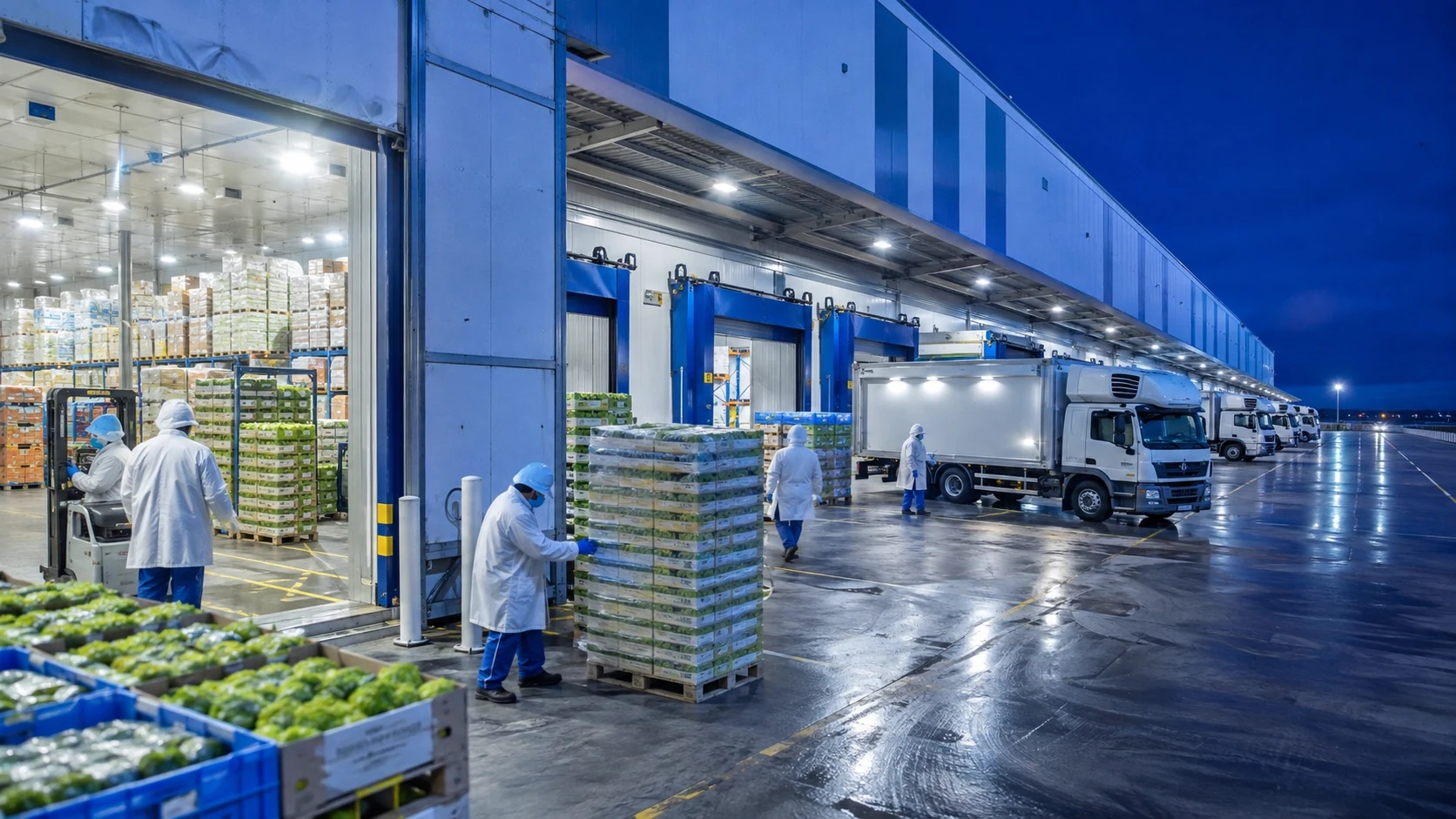
Temperature control is bankability infrastructure.
Pre-coolingChilled storageBlast chillFrozen storageReefer stagingTemperature monitoring
Critical load: grid supply + standby + storage + automated transfer + alarms.
Move product through the node—not into long-term storage.
Inbound→Scan→Quality + ID→Consolidate→Outbound dock→Dispatch
Fresh produce • retail orders • institutional supply • regional distribution • export consolidation
Queues belong in staging areas—not on strategic roads.
Booking→Gate→Stage→Dock→Release
Arrival • gate entry • staging position • dock assignment • load status • documentation • exit
FLEET MANAGEMENT
Every vehicle becomes a managed asset.
The fleet layer optimises location, route, driver, fuel, maintenance, utilisation, delivery performance and tyre condition.
Rigid trucksTractor-trailersReefer trucksVansFarm collectionTankersBulk commodity vehiclesService vehicles
REEFER TELEMETRY
2.0°CSet point2.4°CTrailerClosedDoorOnlinePowerOn planRoute0Alerts
Any excursion → alert → intervention → documented disposition
DISPATCH ORCHESTRATION
Orders become routes through one digital workflow.
DataGrid™ connects inventory, vehicle capacity, dock slots, delivery windows and proof of delivery.
Order→Inventory→Vehicle→Dock→Load→Route→Delivery→POD→Settlement
TMS • WMS • YMS • GPS • gate control • weighbridge • ePOD • exception management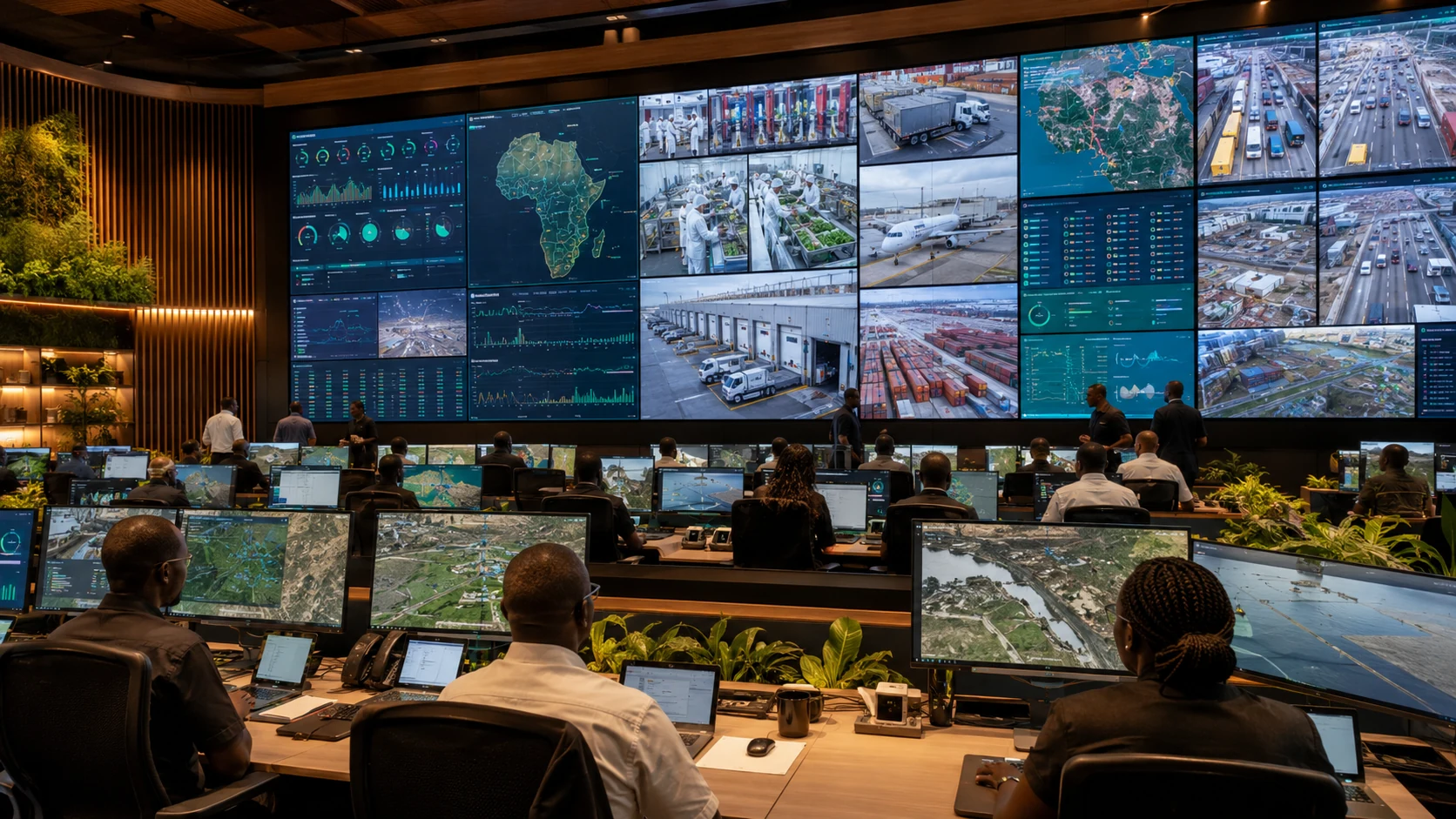
LOGISTICSGRID™ CONTROL TOWERInbound / outbound • fleet location • dock utilisation • warehouse occupancy • cold-store status • export consignments • delivery performance • incidents
The movement system begins before product leaves the field.
Harvest forecast→Vehicle booking→Field pickup→Aggregation→Packhouse
Harvest crates • milk-run collection • refrigerated collection • aggregation centres • scheduled pickup • digital intake
Logistics must be engineered into the plants.
PACKHOUSERaw intake • grading + cooling • packaging • palletisation • consolidation • dispatchPROCESSINGFeedstock • ingredients • finished goods • dry/cold dispatch • by-products
Design rule: minimise crossing between inbound, outbound, food-grade and waste flows.
The commercial heart is also a high-throughput logistics node.
INBOUNDProduction • processing • regional supplyTRADEWholesale • buyer matching • aggregationOUTBOUNDBuyer collection • distribution • export
Truck staging • last-mile delivery • cold-chain docks • cross-docking • regional freight • export consolidation

EXPORT INTERFACES
Road is the regional workhorse. Air serves premium and time-sensitive food.
Packhouse / processor→Reefer / secure truck→Consolidation→FoodSafe™ + customs→Air / road→Buyer
BOTSWANADomestic retail + institutionsSOUTH AFRICALargest regional demand poolNAMIBIAWestbound corridorZIMBABWENorth-east corridorZAMBIANorthbound corridorPORT / AIROn-carriage to global markets
MULTIMODAL EXPORT ARCHITECTURE
Design road + air now. Preserve optionality for rail.
Future rail integration should be possible without rebuilding the whole logistics estate.
Preserve right-of-way • station zones • bridge clearances • depot sites • interchange geometry.
A 50,000 ha employment platform requires organised public transport.
BRT — EARLY SPINEProduction zones • processing • Trade City • skills campus • housingLRT-READY — FUTURE CAPACITYProtect ROW • stations • depot • bridge clearances • utility offsets
Shuttles • staff buses • park-and-ride • ride-hailing • active mobility
Movement infrastructure should also organise place.
Transit stationWorker servicesRetailOfficesPublic spaceAccommodationCommunity facilitiesLast-mile mobility
Shaded walkways • cycling lanes • safe crossings • bike parking • micromobility
Emergency access cannot depend on normal traffic conditions.
FireAmbulanceSecurityHazMatUtilitiesEvacuation
Digital priority: signal pre-emption • gate opening • route clearance • vehicle tracking • incident geolocation
Protect the invisible infrastructure too.
UTILITY / SERVICEWater • wastewater • power • telecoms • drainage • irrigation • maintenanceWASTE LOGISTICSOrganics • packaging • recyclables • food waste • by-products • sludge • hazardous streams
Food-grade, service and waste movements should be physically and operationally separated.
GATE ARCHITECTURE
Controlled access is part of network performance.
Gate type, weighbridge, digital vehicle identity and route permissions work together.
FreightPublicWorkforceServiceEmergencyExport
Vehicle identity→Access rights→Insurance / safety→Cargo authorisation→Route permission→Weighbridge→Gate release
INTEGRATED MOVEMENT CONTROL
One command environment across logistics and mobility.
At maturity the platform continuously answers five operational questions.
01WHAT is moving?02WHERE is it?03WHERE is it going?04WHEN must it arrive?05IS the route operating normally?
OPERATING MODEL + REVENUE
Specialised operators. One governance architecture.
Common-user efficiency, transparent tariffs and measurable service levels govern the movement platform.
LogisticsGrid™ operatorMobilityGrid™ operatorCold-chain operatorFleet operatorAir-cargo operatorPublic transport operatorEstate roads unitMovement Control Centre
Warehousing • cold storage • handling • cross-dock • truck staging • fleet services • reefer transport • export handling • software
Concessions • parking • transit fares • mobility subscriptions • advertising • service-area leases • commercial mobility hubs
PERFORMANCE SCORECARD
Make movement measurable.
A concise KPI set defines whether the network is productive.
MOVEMENT RISK CONTROLS
Each major operational risk has a designed control.
Infrastructure, digital control and operating discipline reduce movement-system risk.
Freight congestion→Dedicated corridorsPublic / truck conflict→Movement separationCold-chain failure→Redundant power + refrigerationLong turnaround→Yard bookingDelivery delay→DataGrid™ dispatchEmergency blockage→Ring roadsExport delay→Consolidation + pre-clearanceSecurity incident→Controlled gates + identity
DEVELOPMENT PHASING
Build the spine first. Add scale. Then integrate export and intelligent control.
Phasing tracks production volume, industrial occupancy and market demand.
Primary freight routes • dry warehouse • first cold hub • staging • gates • emergency routes
Distribution centres • Food Trade City logistics • fleet • BRT • yard systems
Air cargo • regional freight • customs-linked logistics • reefer scale • LRT-ready corridors
Full logistics + mobility control tower • multimodal optimisation • network-wide analytics
END-TO-END PRODUCT MOVEMENT CYCLE
Movement is a repeatable operating loop.
Crop plan→Harvest→Collect→Aggregate→Pack→Process→Store→Trade→Dispatch→Deliver→Settle→Learn
Performance data feeds the next movement cycle.
STRATEGIC OUTCOME
Movement becomes an operating advantage.
The system protects the productivity of every other Agropark platform.
ONE MOVEMENT SYSTEM.FARMS → PACKHOUSE → PROCESSING → TRADE CITY → AIR CARGO / ROAD EXPORTFaster movement • lower logistics cost • protected cold chains • safer freight flows • reliable worker + emergency mobility • seamless regional + export connectivity
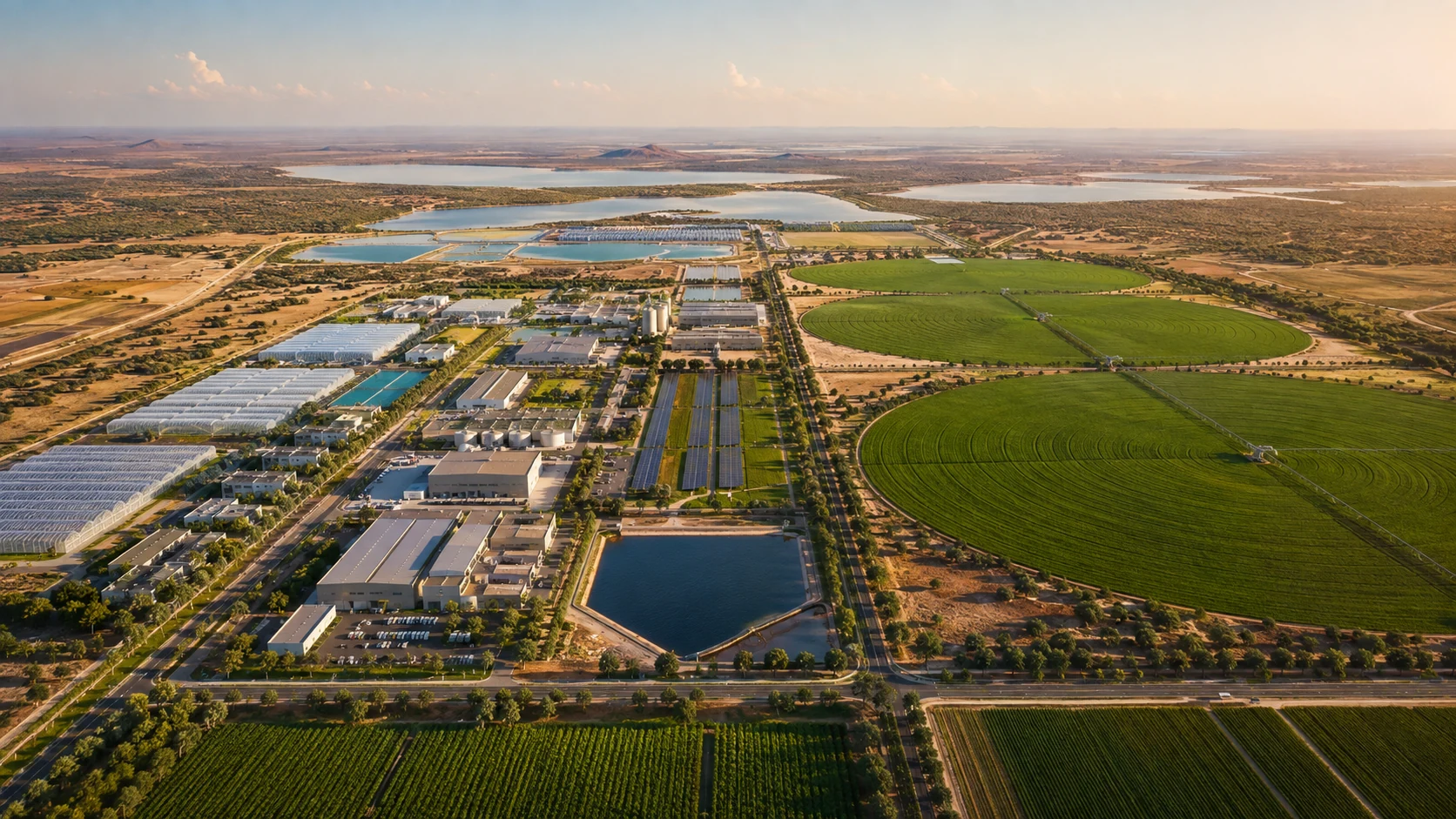
08 / BANKABILITY INFRASTRUCTURE
WATERGRID™
WATERGRID™
× ENERGYGRID™
Utilities are not support services. They are the hard capacity gates that determine how much of the 50,000 ha food-industrial ecosystem can be irrigated, processed, cooled, stored, digitised and safely operated.
CONTROL PRINCIPLECAPACITY
BEFORE SCALEProduction expansion follows confirmed utility readiness.
BEFORE SCALEProduction expansion follows confirmed utility readiness.
02Integrated utility grids
07WaterGrid™ functions
05EnergyGrid™ functions
01DataGrid™ control layer
SYSTEM THESIS
Utility security is a bankability condition.
Water availability, water quality, electrical capacity and resilience must be validated as hard development gates. The utilities architecture therefore combines bulk supply, distribution, recovery, redundancy and digital control in one operating environment.
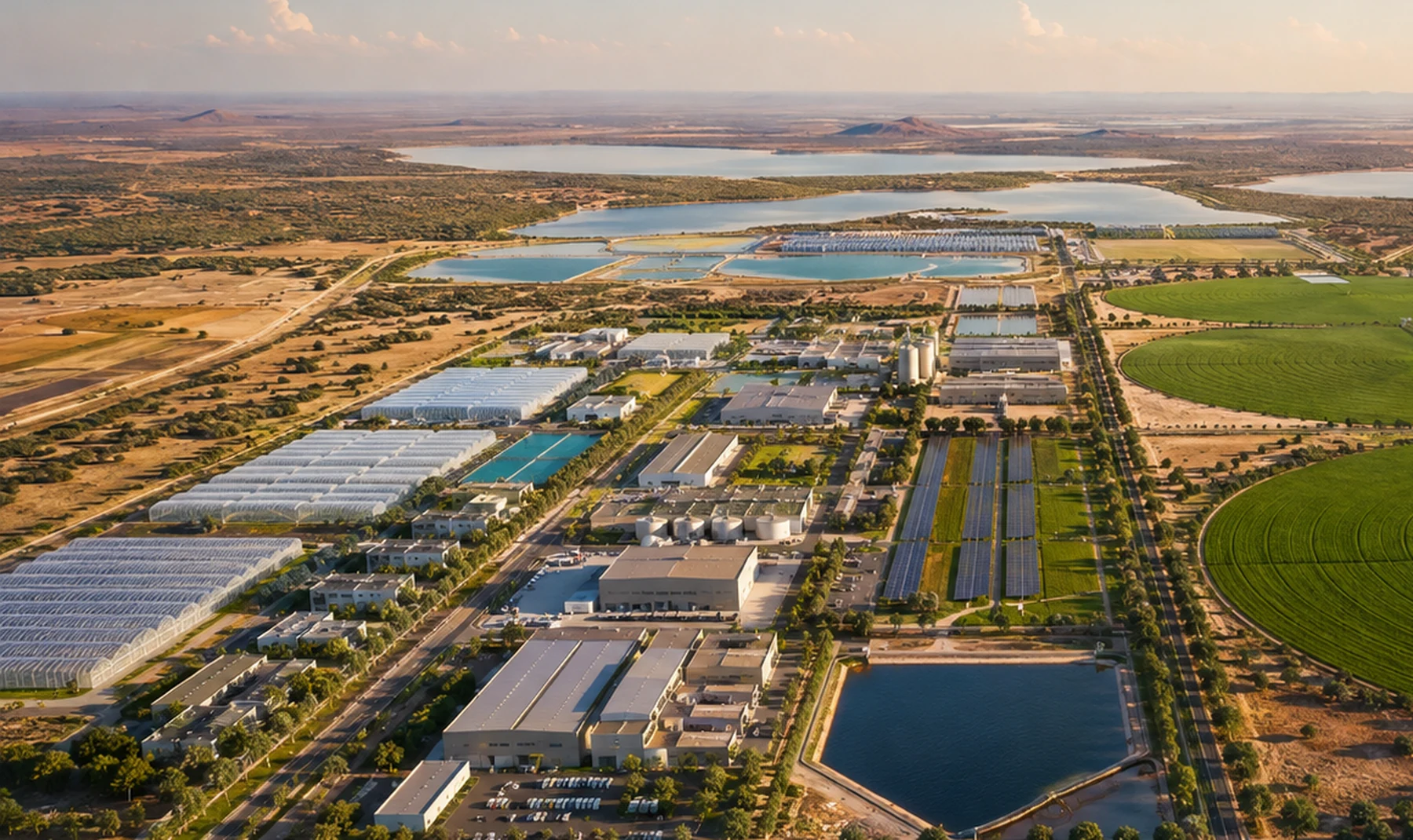 WATERGRID™
WATER SECURITY + CIRCULAR USE
Secure every productive litre.
Production expansion is staged against confirmed capacity, quality and drought resilience.
01Bulk storageReservoirs + storage02TreatmentPotable + process water03IrrigationPrimary + secondary networks04ReuseTreated wastewater reuse05HarvestingStormwater capture06ControlSmart metering + SCADA07ResilienceDrought-response planning
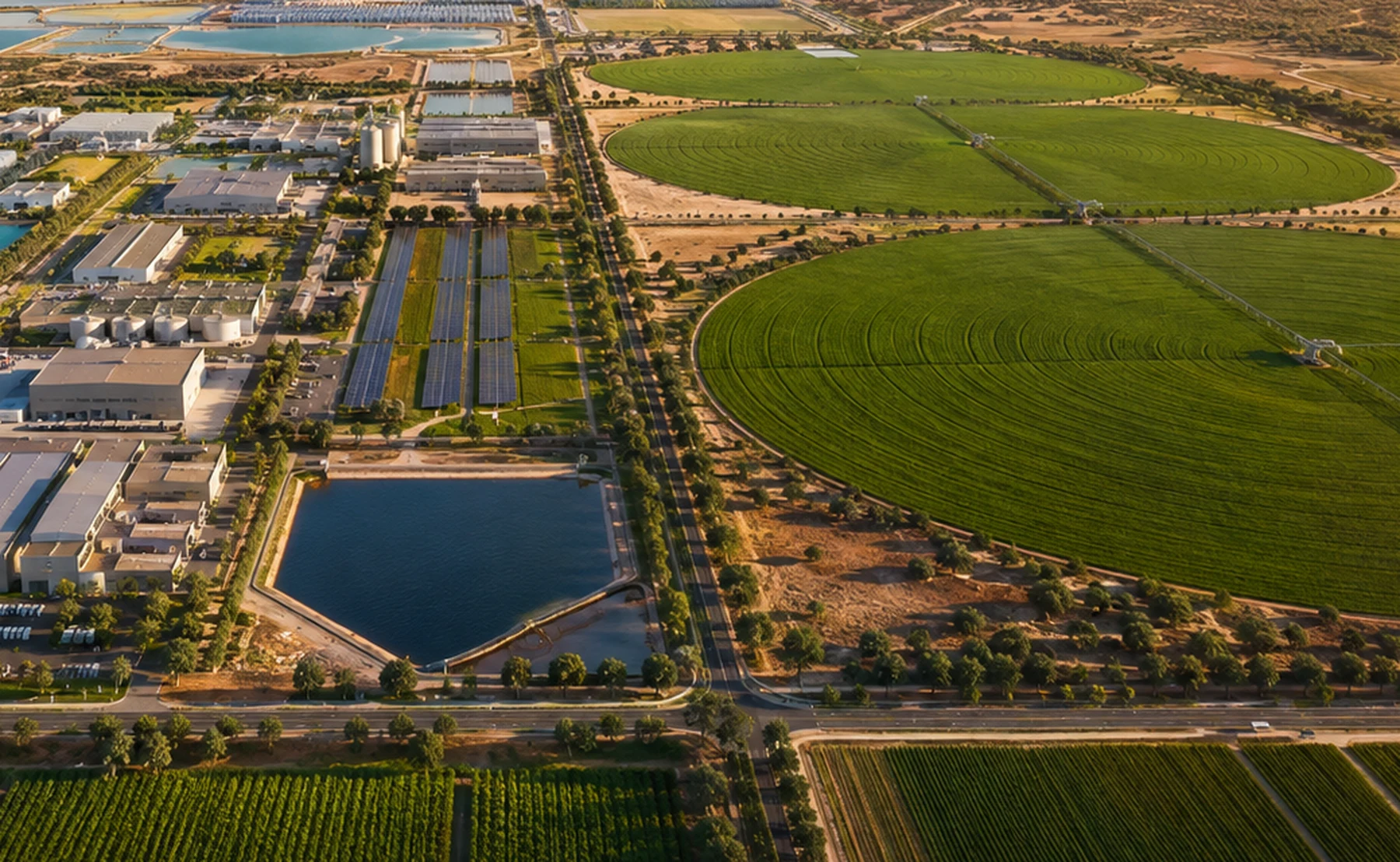 ENERGYGRID™
INDUSTRIAL POWER SECURITY
Protect every critical load.
Power architecture supports irrigation, cold chain, processing, logistics, digital systems, housing and public infrastructure.
01Bulk intakeGrid connection + substations02Distribution33 kV / 11 kV networks03RenewablesSolar + storage integration04Critical loadsCold-chain + data redundancy05ControlSmart metering + load management
UTILITY OPERATING RULEDEMAND → CAPACITY → DISTRIBUTION → METERING → CONTROL → RECOVERY / RESILIENCE
Every major production or industrial commissioning decision should be tied to a verified water and power envelope.
WATERGRID™ ARCHITECTURE
From source security to circular recovery.
The water system is designed as a controlled cycle rather than a one-way consumption network.
PRIMARY DEMAND CLASSESIrrigation
FOOD INDUSTRYProcess + CIP
COLD CHAINCooling
ESTATEPotable + sanitation
SAFETYFirewater
CIRCULARITYReuse
ENERGYGRID™ ARCHITECTURE
Bulk supply, resilient distribution, intelligent loads.
The power system protects the industrial continuity of assets whose failure can destroy product value or interrupt food-safety controls.
SUPPLY LAYERGRIDBulk intakeSOLARRenewable generationSTORAGEResilience + balancing
→
NETWORK CORESUBSTATIONS33 kV / 11 kV distribution
→
LOAD LAYERIrrigation + pumpingProcessing plantsCold chainLogisticsData + controlsHousing + public realm
CONTROL LAYERSMART METERING • LOAD MANAGEMENT • DATAGRID™
CRITICAL-LOAD DOCTRINE
Not every load has the same consequence of failure.
EnergyGrid™ prioritises continuity for product integrity, safety and digital control while allowing managed optimisation of non-critical loads.
P1Cold chainChilled / frozen assets • reefer interfaces
P1FoodSafe™ + DataGrid™Labs • traceability • control systems
P1Water pumping + treatmentUtility continuity
P2ProcessingIndustrial production continuity
P2Logistics + tradeDocks • warehouses • market operations
P3General estate loadsManaged / schedulable demand
DATAGRID™ UTILITY CONTROL
SCADA • SMART METERS • ALARMS • QUALITY • LOADSOne command view across water + energy.
EXECUTIVE QUESTIONDo we have enough verified water and resilient power to commission the next production or industrial block?
RESILIENCE + RISK CONTROL
Design the failure modes before they become operating failures.
Water availability→Stage development against confirmed WaterGrid™ capacity
Water quality→Treatment + continuous quality monitoring
Drought stress→Storage buffers + reuse + stormwater + response planning
Power interruption→Backup systems + renewable / storage integration
Peak demand→Smart metering + load management
Cold-chain exposure→Critical-load priority + redundancy
Uncontrolled expansion→Utility capacity gate before commissioning
Weak visibility→SCADA + DataGrid™ utility dashboards
UTILITY PERFORMANCE SCORECARD
Make reliability measurable.
DEVELOPMENT PHASING
Build the backbone first. Scale only against verified demand.
Initial storage • treatment • irrigation • bulk power intake • first substations • priority critical loads • baseline SCADA
Production blocks • processing demand • cold chain • secondary water networks • 33/11 kV expansion • smart metering
Reuse systems • stormwater recovery • solar + storage • export cold chain • additional redundancy • advanced monitoring
50,000 ha utility integration • dynamic demand control • mature circular water use • network-wide utility analytics
PRIORITY CLASS 1 UTILITY WORKSTREAMS
Validate capacity before capital commitment.
01Water ResourceSource confirmation • yield • security02Demand ModelIrrigation • process • potable • firewater03Storage + TreatmentReservoir • plant • pumping concept04Irrigation NetworksPrimary / secondary distribution05Reuse + StormwaterRecovery • treatment • fit-for-purpose allocation06Power Load StudyPeak • diversity • critical-load map07Grid ConnectionBulk intake • substation strategy0833/11 kV DistributionUtility corridors • zone feeds09Renewables + StorageSolar • storage • resilience case10SCADA + MeteringInstrumentation • control • dashboards11Commercial + ESGCAPEX • OPEX • service model • permits12ExecutionPackages • sequencing • governance
STRATEGIC OUTCOMECONTROL THE UTILITIES.
PROTECT THE FOOD ECONOMY.
PROTECT THE FOOD ECONOMY.
WaterGrid™ and EnergyGrid™ convert utility availability into a governed development envelope—so every new hectare, processing line, warehouse, cold room and digital system is commissioned against confirmed capacity.
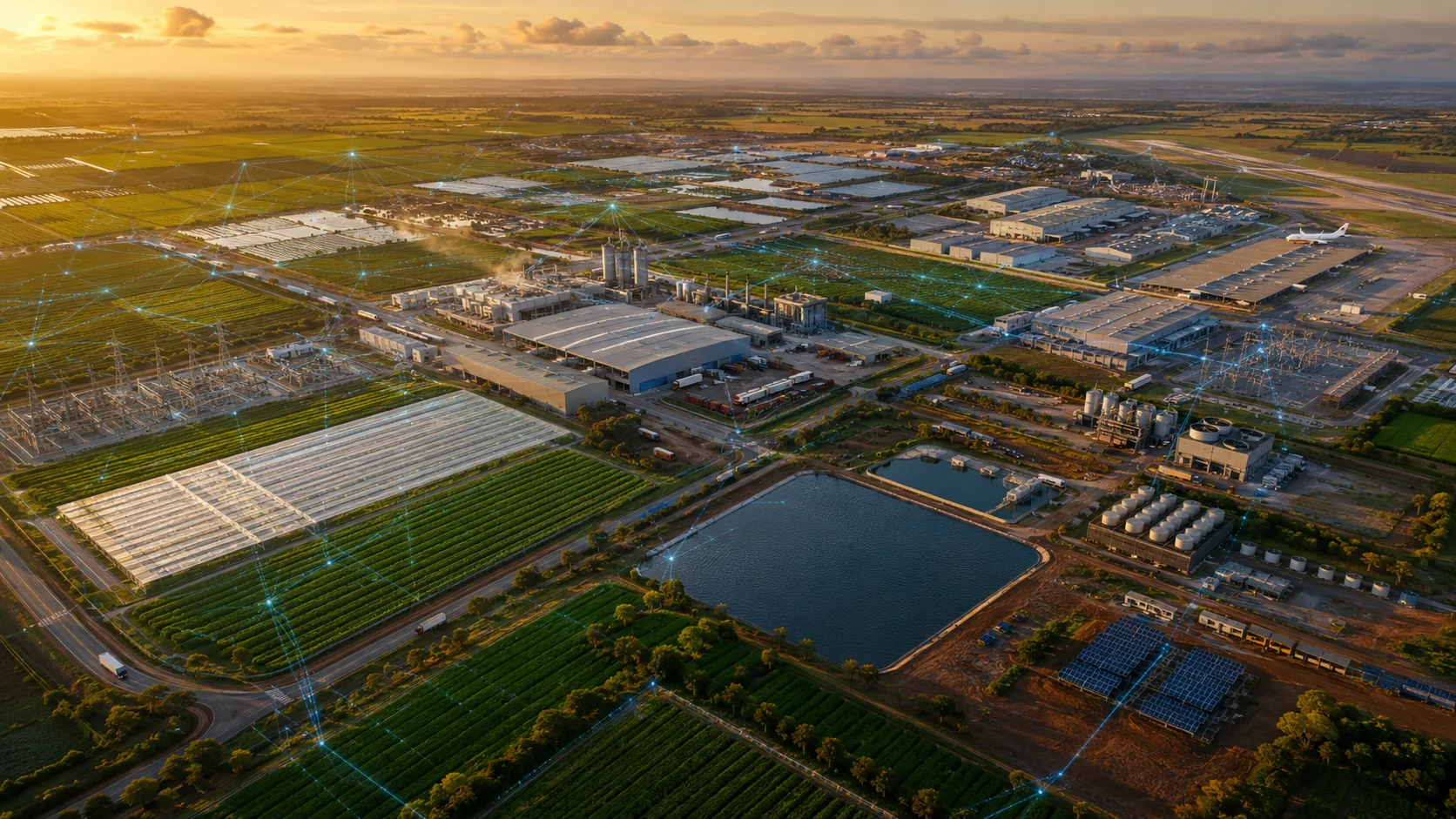
09 / DIGITAL OPERATING LAYER
DATAGRID™
DATAGRID™
+ FOODSAFE™
One digital thread across production, processing, logistics, utilities, quality, trade, finance and investor reporting.
OPERATING PRINCIPLEEVERY PHYSICAL
EVENT CREATES
A DIGITAL EVENT.Measure → verify → control → record → report.
EVENT CREATES
A DIGITAL EVENT.Measure → verify → control → record → report.
8Operating domains
1Integrated control plane
6FoodSafe™ release controls
50,000 haGeospatial operating model
SYSTEM THESIS
One source of operational truth.
DataGrid™ converts the Agropark from a collection of physical assets into a measurable, controllable and auditable operating system. FoodSafe™ uses that same digital thread to determine whether each batch may move, trade, dispatch or be recalled.
Capture the state of crops, plants, warehouses, vehicles, utilities, inventory, quality and financial flows.
Use release gates, alerts, approvals, workflow orchestration and commands to control exceptions in real time.
Operational truth flows into finance, ESG, governance, lender reporting and the investor VDR.
DIGITAL OPERATING ARCHITECTURE
Seven layers from experience to cyber resilience.
EXPERIENCEFarmer • operator • buyer • management • investor
APPLICATIONSERP • MES • WMS • TMS • Marketplace • LIMS • VDR
INTEGRATIONAPIs • event bus • workflow orchestration • common services
DATAMaster data • operational stores • lakehouse • analytics
INTELLIGENCEForecasting • optimisation • anomaly detection • AI
CONTROLApprovals • alerts • release gates • operational commands
SECURITYIdentity • segmentation • audit • resilience • cyber monitoring
EIGHT OPERATING DOMAINS
One control plane across the whole Agropark.
Farm records • crop planning • GIS • agronomy
ERP • MES • plant control • maintenance
WMS • TMS • yard • fleet • dispatch
Marketplace • orders • pricing • contracts
WaterGrid™ • EnergyGrid™ • SCADA • meters
Inspection • labs • HACCP • release
Invoices • payments • settlement • costing
Dashboards • VDR • document control • ESG
FARM-TO-CUSTOMER DIGITAL THREAD
Traceability becomes the common language.
One chain-of-custody record links source farm, crop block, harvest date, aggregation, processing batch, packaging lot, warehouse location, shipment, customer and financial settlement.
FARM→FIELD→CROP→HARVEST→BATCH→PROCESSING→PALLET→BUYER
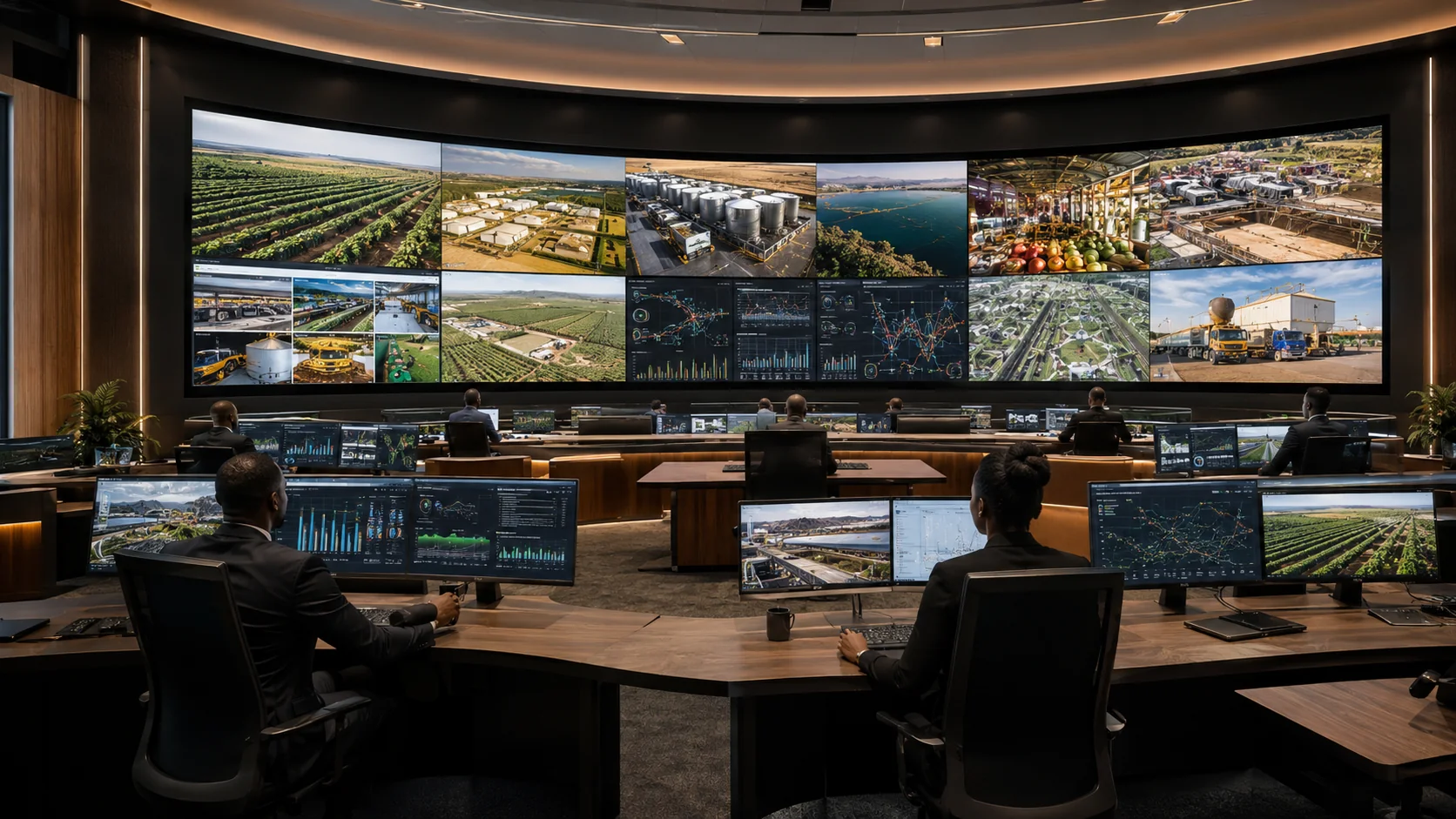 EXECUTIVE CONTROL ROOM
EXECUTIVE VISIBILITY
What leadership sees in real time.
PRODUCTIONPlanted hectares • harvest forecast • crop performance
PROCESSINGLine utilisation • yield • downtime • finished output
TRADEDaily value • inventory • prices • buyer demand
LOGISTICSActive trips • warehouse use • truck turnaround
UTILITIESWater capacity • power headroom • critical loads
FOODSAFE™ + FINANCEBatches released • holds • revenue • EBITDA • cash
Plan → Observe → Predict
PLAN
Buyer demand
Processing requirement
Crop allocation
Planting schedule
Contracted hectares
OBSERVE
Field activity
Irrigation
Crop health
Weather
Agronomy records
PREDICT
Harvest date
Expected volume
Yield risk
Quality risk
Feedstock availability
50,000 ha GIS operating model
One spatial model connects land, assets, infrastructure and risk.
ENTERPRISE + INDUSTRIAL SYSTEMS STACK
Systems of record become systems of action.
Finance • procurement • inventory • contracts
Production orders • recipes • yield • downtime
Batch • expiry • location • picking
Routes • vehicle allocation • delivery windows • POD
MARKETPLACE • LIMS • FOODSAFE™ • FARMERCONNECT™ • INVESTOR VDR • EXECUTIVE DASHBOARDS
Food Trade City marketplace
LIST→MATCH→QUOTE→CONTRACT→ALLOCATE→DISPATCH→SETTLE
SELLER SIDE
Product listing • live inventory • grade + certification • available quantity • delivery readiness
BUYER SIDE
Demand profile • price + quality rules • delivery windows • credit terms • transaction history
Capacity becomes visible before it becomes a constraint.
WATERGRID™
Reservoir levels • source availability • pump status • water quality • irrigation demand • reuse + losses
ENERGYGRID™
Grid intake • feeder load • critical-load status • renewable output • battery status • outages + headroom
ESG TELEMETRY
Operational telemetry becomes lender-grade evidence.
WATERAbstraction • reuse • losses • intensityENERGYConsumption • renewables • peak load • availabilityWASTEOrganic • recycling • recovery • disposalQUALITYIncidents • compliance • complaints • recalls
Operational telemetry → ESG evidence → lender / investor reporting → performance improvement
EXCEPTION MANAGEMENT
Operate by exception — not by spreadsheet.
CRITICALCold-room excursion • power loss • FoodSafe™ hold • reservoir below safety thresholdHIGHLate export truck • processing downtime • water-quality variance • warehouse congestionNORMALMaintenance due • certification renewal • stock rebalancing • payment follow-up
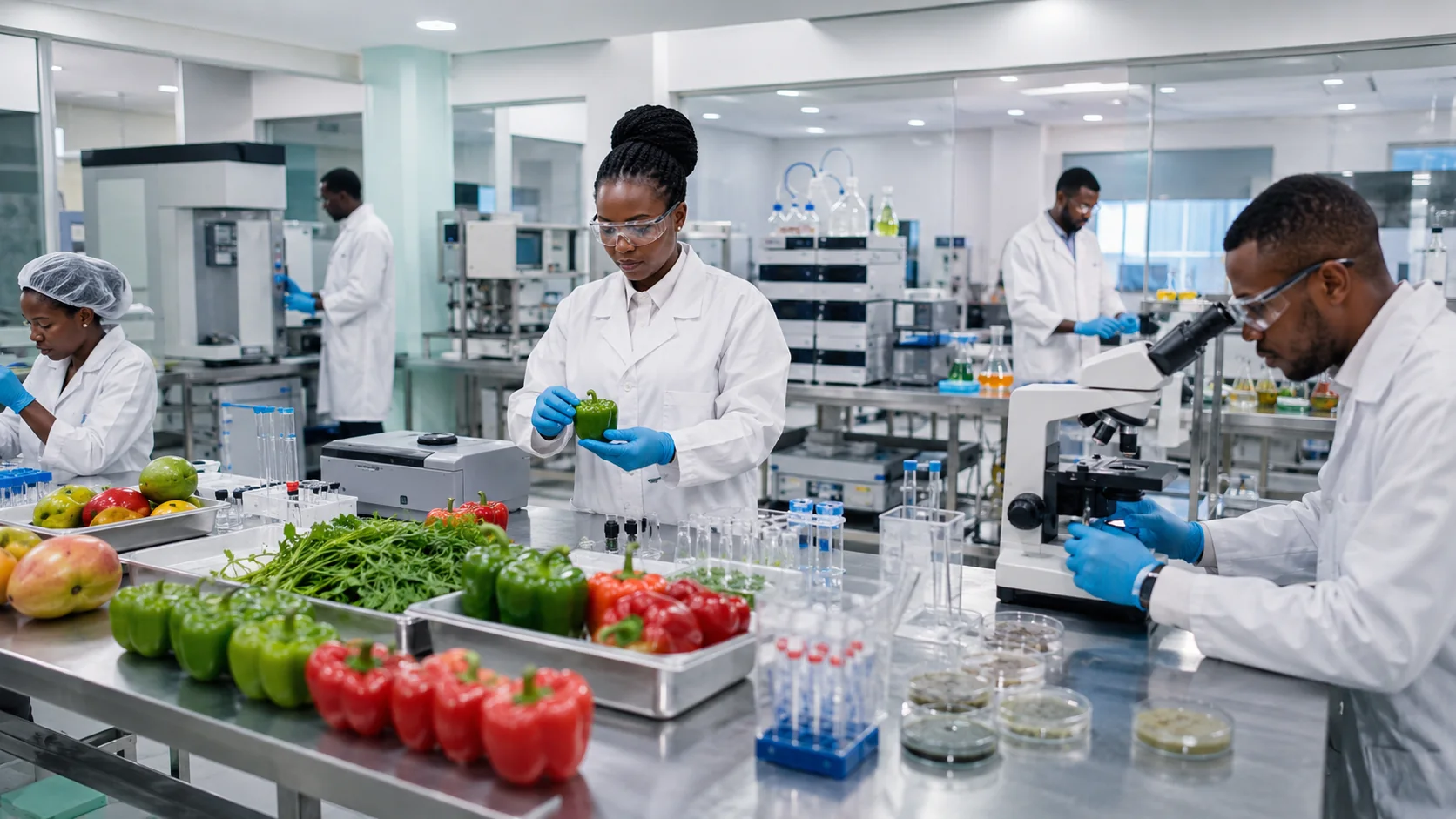
FOODSAFE™ RELEASE CONTROLQUALITY BECOMES
MARKET ACCESS.
MARKET ACCESS.
INTAKE→QA/QC→BATCH→HACCP→CERTIFICATION→RELEASE / RECALL
SIX CORE CONTROLS
One release architecture from intake to recall.
Source • grade • temperature • documentation
Microbiology • residues • water • composition
Unique ID • chain of custody • traceability
Critical limits • sanitation • corrective action
Domestic • retail • institutional • export
Released • Conditional • Hold • Rejected • Recalled
Arrival becomes a controlled decision.
ARRIVAL→VERIFY→BATCH ID→QUALITY CHECK→ACCEPT / HOLD / REJECT
Laboratory evidence drives release.
Sample → Test → Result → Approval → Release decision
One Batch ID answers traceability in seconds.
FARM→HARVEST→AGGREGATION→PROCESSING→PACKAGING→WAREHOUSE→CUSTOMER
Origin • variety • harvest date • process lot • pack lot • shipment
Critical control points become live digital limits.
Release against market-specific rules.
DOMESTICBaseline regulatory • wholesale accessINSTITUTIONALProcurement documents • service complianceMAJOR RETAILSupplier standards • traceability + QAEXPORTDestination rules • certificates • residues • pack
Status determines commercial access.
RELEASEDAll criteria satisfiedCONDITIONALSpecified market / process onlyHOLDAwaiting test / document / actionREJECTEDNot permitted for food releaseRECALLEDPreviously released — withdrawn
FoodSafe™ status is a dispatch interlock.
ORDER→PICK→BATCH VERIFY→FOODSAFE™→LOAD→DISPATCH→GATE EXIT
COLD-CHAIN RECORD
Cold room • loading temperature • reefer temperature • route temperature • receiving temperature
BLOCK CONDITIONS
Temperature excursion • release expiry • missing certificate • batch hold → dispatch blocked
Find, contain and withdraw fast.
INCIDENT→IDENTIFY→CONTAIN→FIND CUSTOMERS→WITHDRAW→ROOT CAUSE→CORRECT
Source farm / field / supplier / ingredient lot / line → warehouse / truck / buyer / retail outlet → notify / quarantine / recover / destroy or re-route / close corrective action.
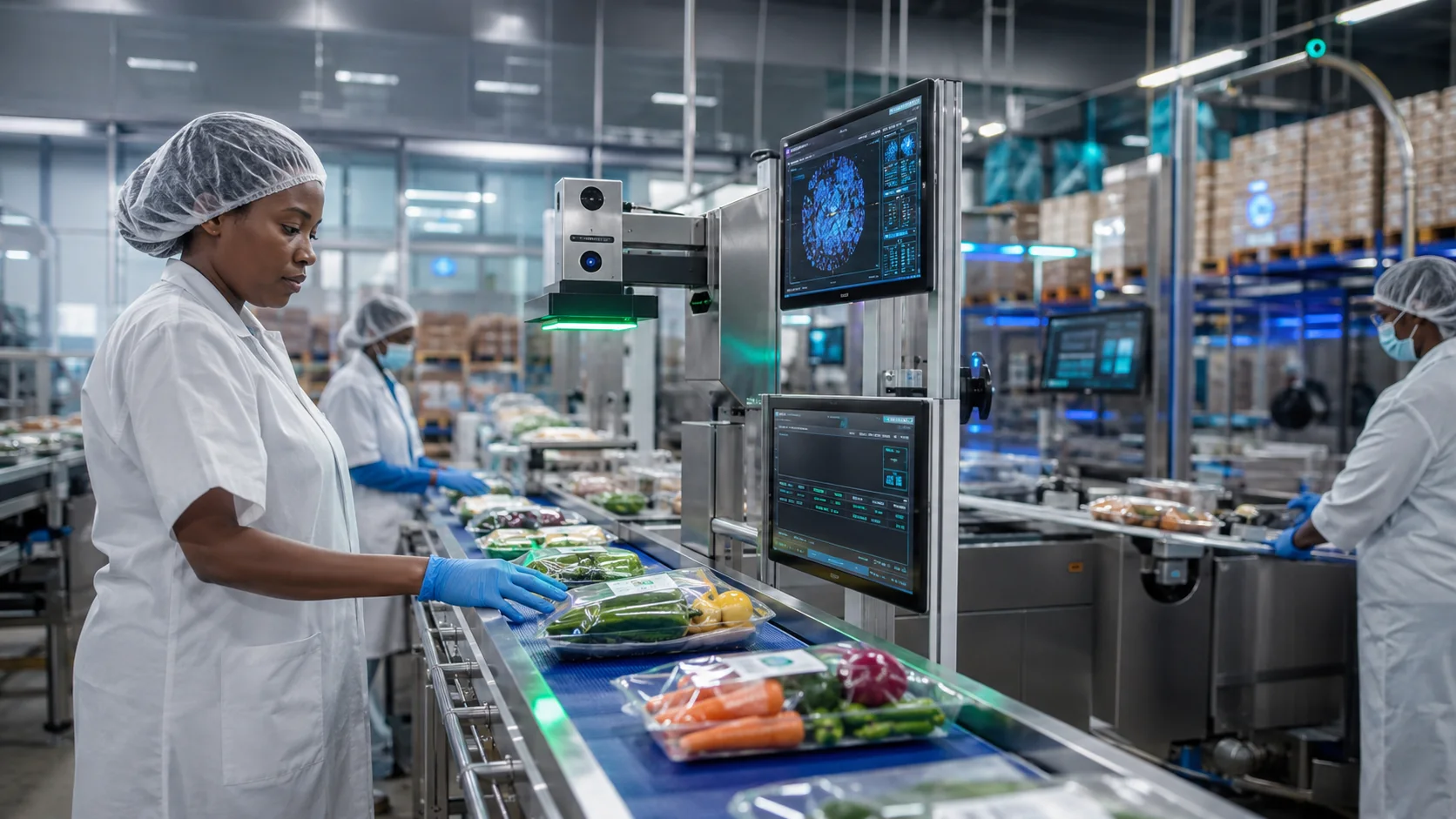 QUALITY PERFORMANCE
Quality becomes a performance profile.
FARMERAcceptance rate • grade distribution • residue compliance • delivery reliability • traceability completenessSUPPLIERCertification • inspection history • reject rate • audit findings • corrective-action closurePROCESSINGFirst-pass yield • deviation rate • hygiene results • complaints • recall incidents
INVESTOR-GRADE REPORTING
Board reality and operational reality converge.
CAPEX • Revenue • EBITDA • Utilisation • Utility Capacity • ESG • Quality • Risk • Milestones
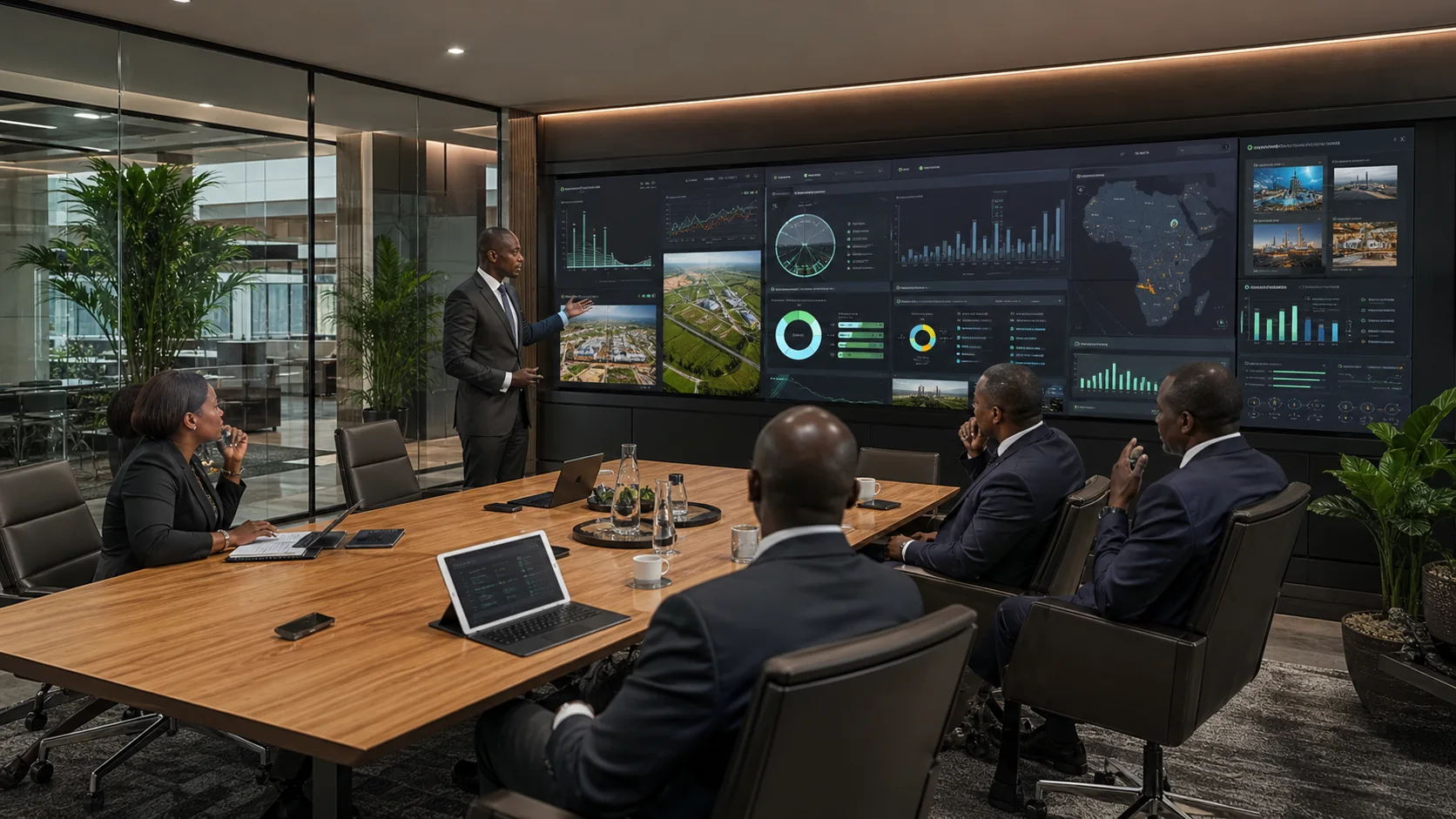
One identifier. One accountable owner.
GOVERNANCE
Data owner • system of record • steward • quality rules • retention • access rights • audit requirements
MASTER DATA
One Farmer ID • Product ID • Batch ID • Customer ID • Asset ID • Location ID • Contract ID
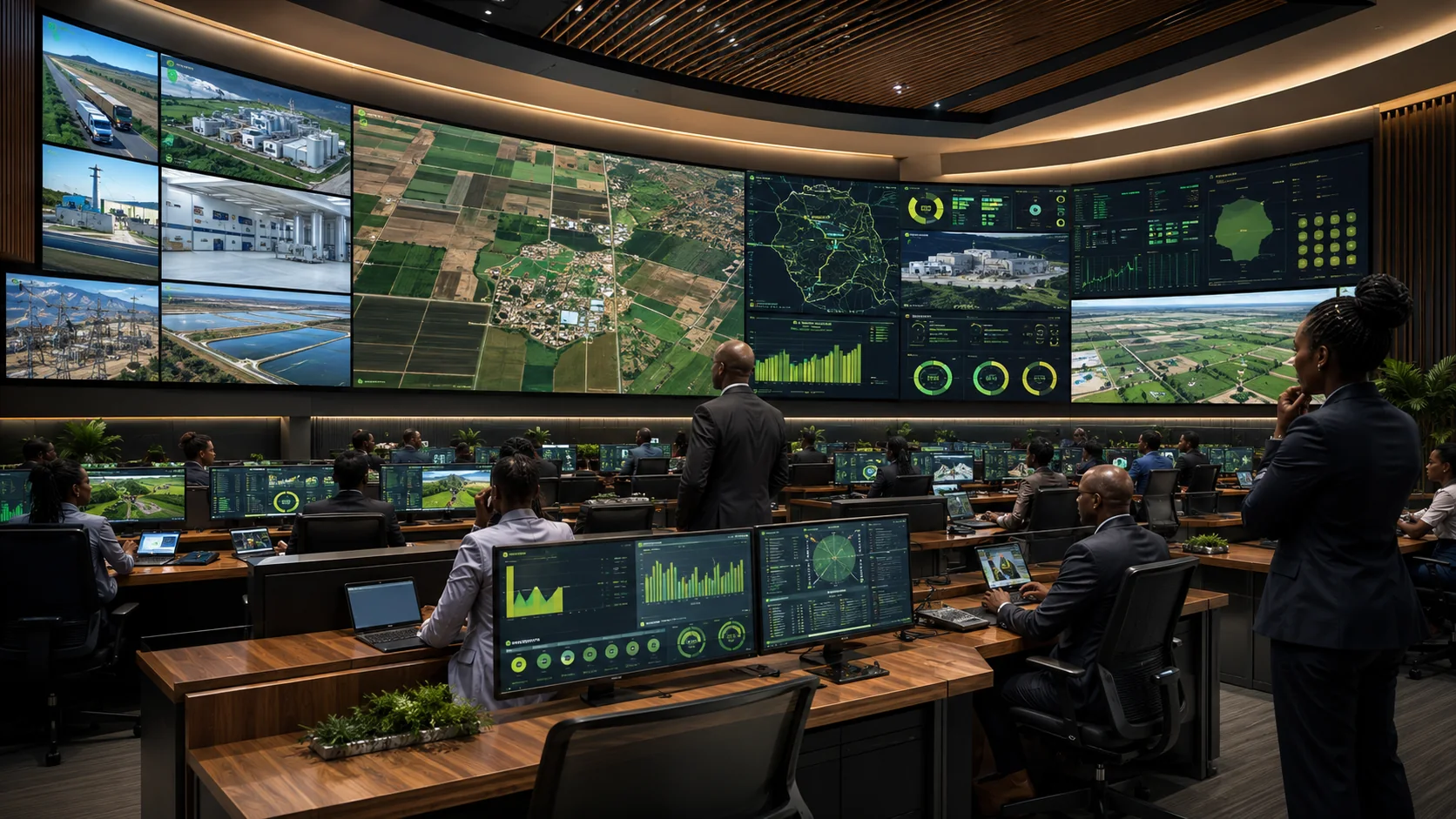
CYBER + RESILIENCE
Secure IT and OT as one operating environment.
ITERP • finance • marketplace • VDR • office systems • identity + accessCONTROLLED GATEWAYSegment • monitor • authenticate • auditOTProcessing controls • refrigeration • pumps • substations • SCADA • industrial sensors
AI-assisted operations
AI augments operating teams with forecasting, optimisation and anomaly detection while release and safety controls remain governed.
Simulate before the physical system is stressed.
IMPLEMENTATION ROADMAP
Four phases from digital foundation to intelligent Agropark.
Connectivity • identity • farm registry • ERP base • batch IDs • VDR
Crop planning • WMS/TMS • SCADA • laboratories • marketplace • settlement
Control Room • forecasting • optimisation • automated release • ESG analytics
Digital Twin • AI assist • predictive operations • dynamic utilities • integrated investor view
STRATEGIC OUTCOMEONE PHYSICAL AGROPARK.
ONE DIGITAL OPERATING LAYER.
ONE DIGITAL OPERATING LAYER.
Measure → Verify → Analyse → Decide → Control → Record → Report → Improve. Every major asset and flow is measured, every significant batch is traceable, every release and exception is controlled, and leadership works from one trusted operational truth.
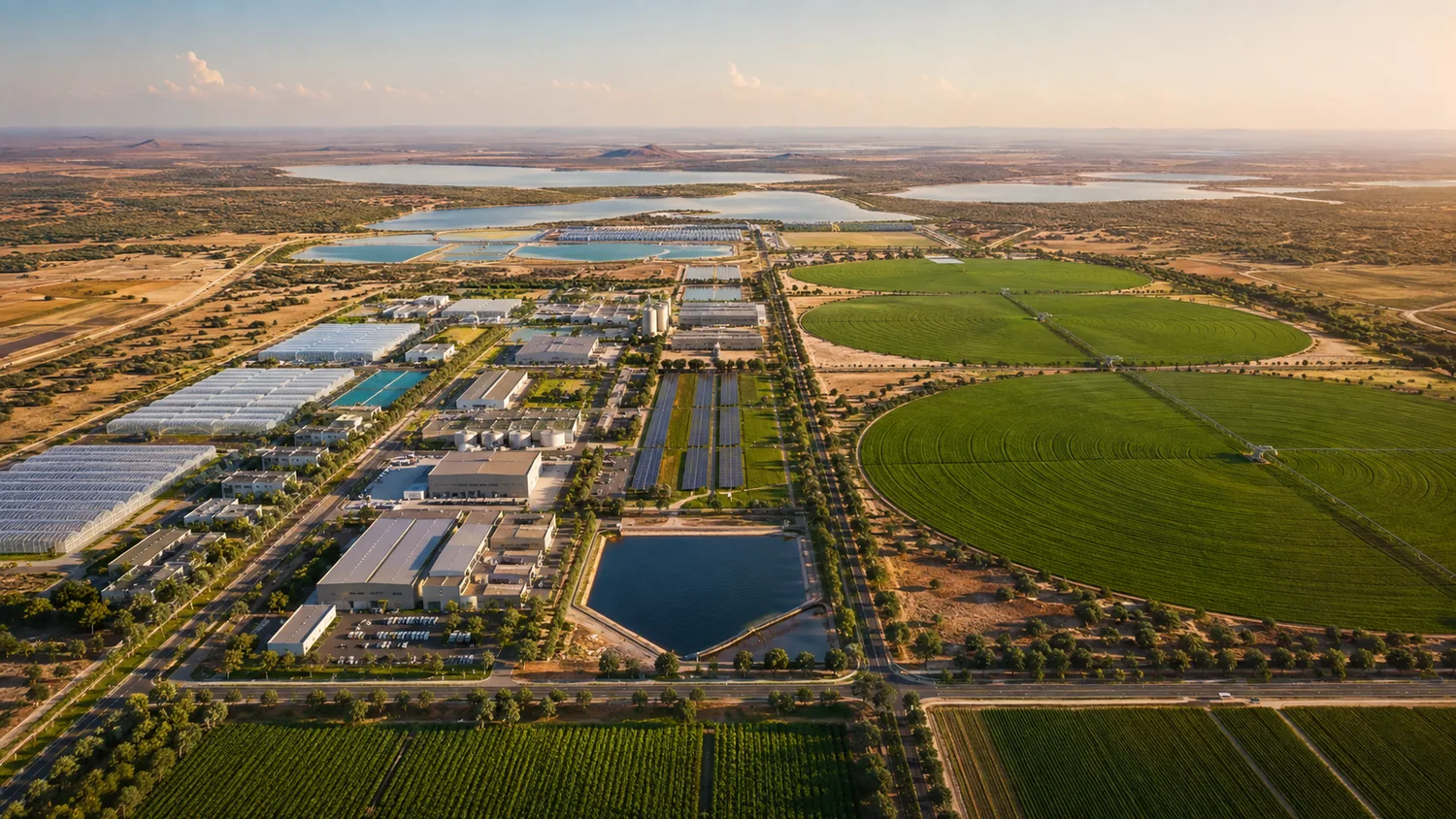
10 / END-TO-END CONTROL
One controlled
One controlled
food value chain.
From farm production to branded, shelf-ready, tradeable and export-capable products. The operating architecture connects physical flow, quality, digital control, commercial routing and market access as one system.
PLATFORM THESISOne product journey. One controlled chain. Multiple value-capture opportunities.
12END-TO-END STAGES
9CONTROLLED PLATFORM STAGES
3MARKET CHANNELS
1DIGITAL THREAD
THE RULE
Control every interface between production and market.
12-STAGE ARCHITECTURE
Nine controlled platform stages feed three market channels.
Each stage carries a defined operating function, release logic, digital record and performance measure.
Execution is governed inside the platform.
Production + aggregation • FoodSafe™ release • packhouse + processing • PackMat™ • cold-chain protection • Food Trade City • LogisticsGrid™ + MobilityGrid™.
OUTPUT → A verified, packaged, movable, tradeable product.External destinations monetise controlled output.
DOMESTICREGIONALEXPORT
ONE PRODUCT JOURNEY
A tonne of output should move through deliberate decisions—not disconnected hand-offs.
The chain should always know what the product is, where it came from, what it is worth, where it is going and whether it is released.
DEMANDWhat is needed?→PRODUCEGrow to plan→VERIFYRelease quality→CONVERTFresh / process→PACKAGEMarket-ready→MOVECold / dry→TRADEMatch buyer→SETTLECapture value
CONTROLLED STAGES 01–09
Every stage has a specific operating decision.
Physical movement only progresses when capacity, quality, commercial and digital conditions are satisfied.
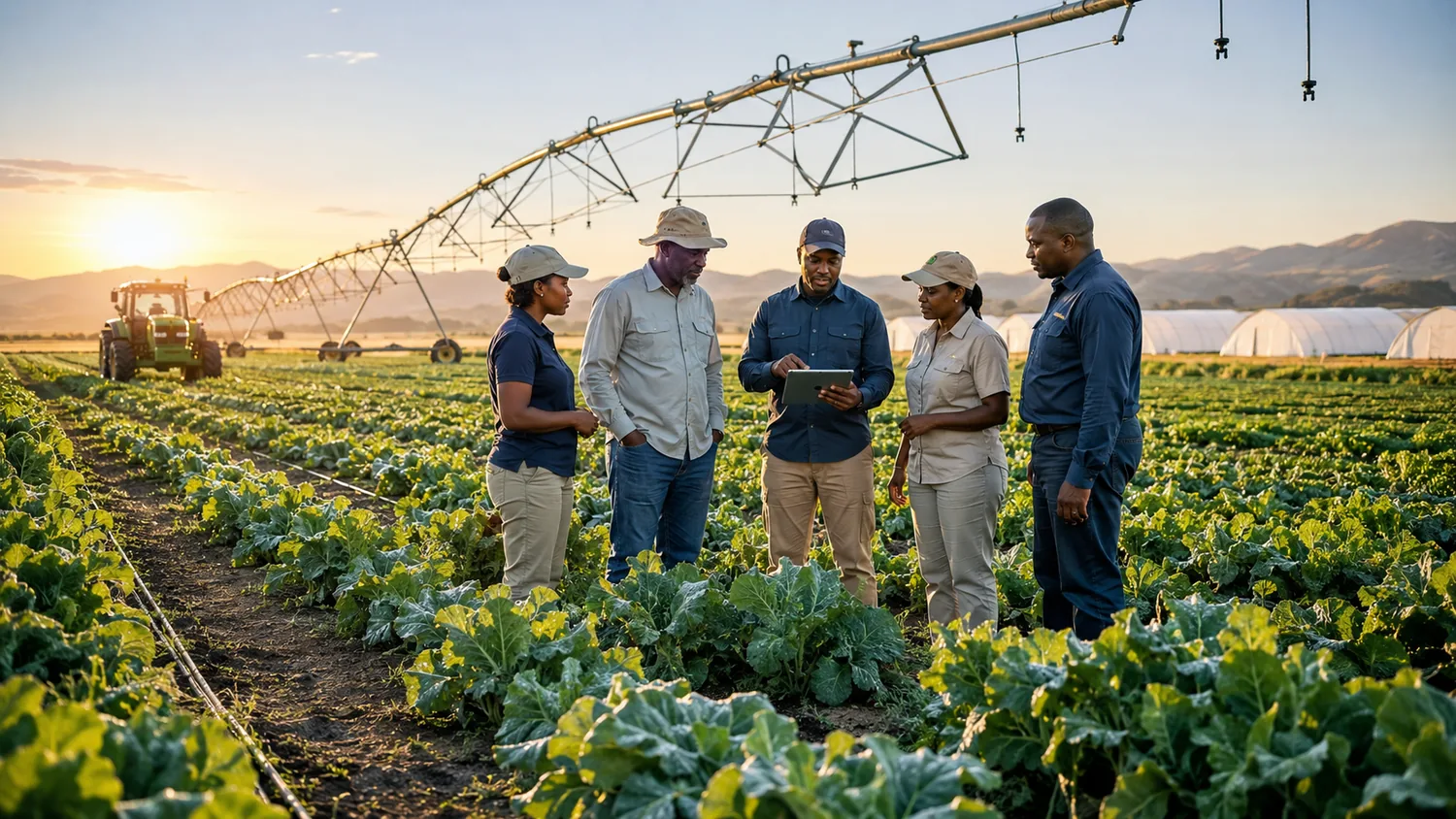
01 / PRODUCTIONDemand + resource capacity + market route.Buyer / processor signal • water + energy ready • crop allocation • harvest forecast
Farm → Collect → Node → Grade → Allocate
Origin • weight • batch ID • grade • time • destinationIntake → QA/QC → Batch → HACCP → Certify → Release
Released • Conditional • Hold • RejectedWash → Grade → Cool → Pack → Route
Fresh-market grade • processing allocation • value recovery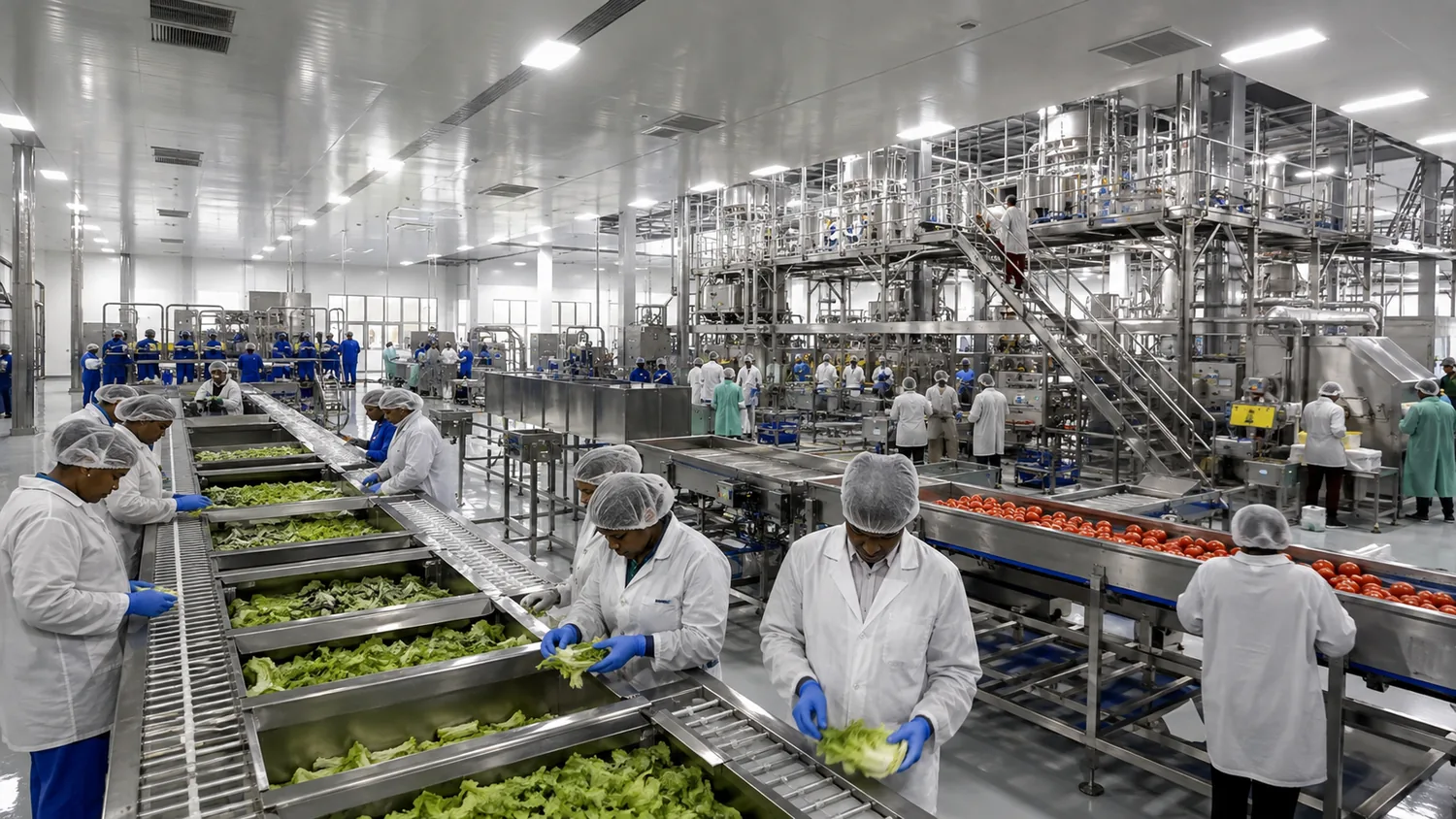
05 / PROCESSINGConvert feedstock into higher-value food.Fresh • sauces • IQF • dehydration • milling • pulses • dairy • protein • meals • beverages • oils • feed
Box • Tray • Film • Label • Crate
Retail readiness • traceability • handling efficiency • export compliance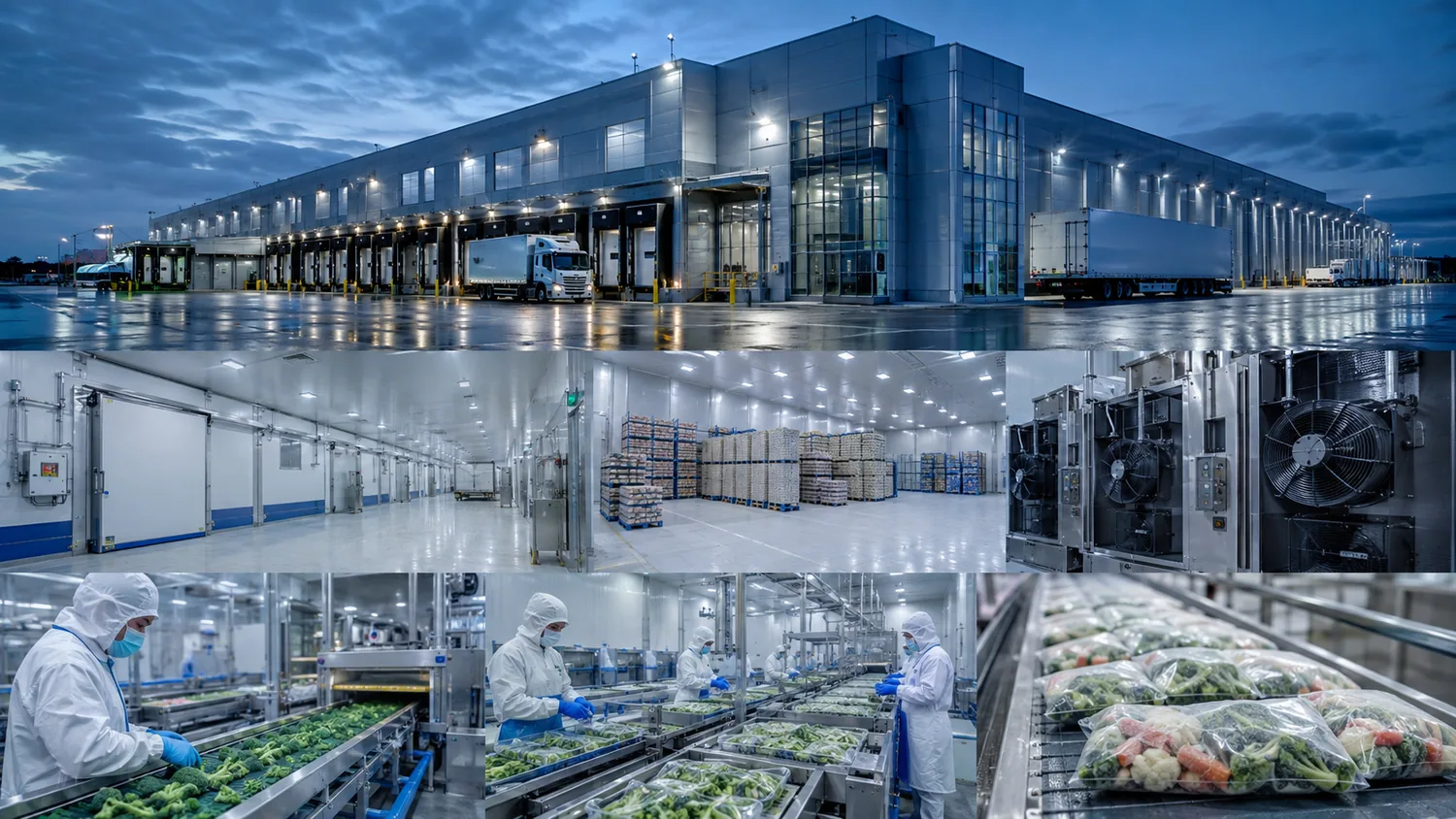
07 / COLD CHAINProtect value by protecting temperature.Pre-cool → Store → Load → Reefer → Receive • critical-load redundancy
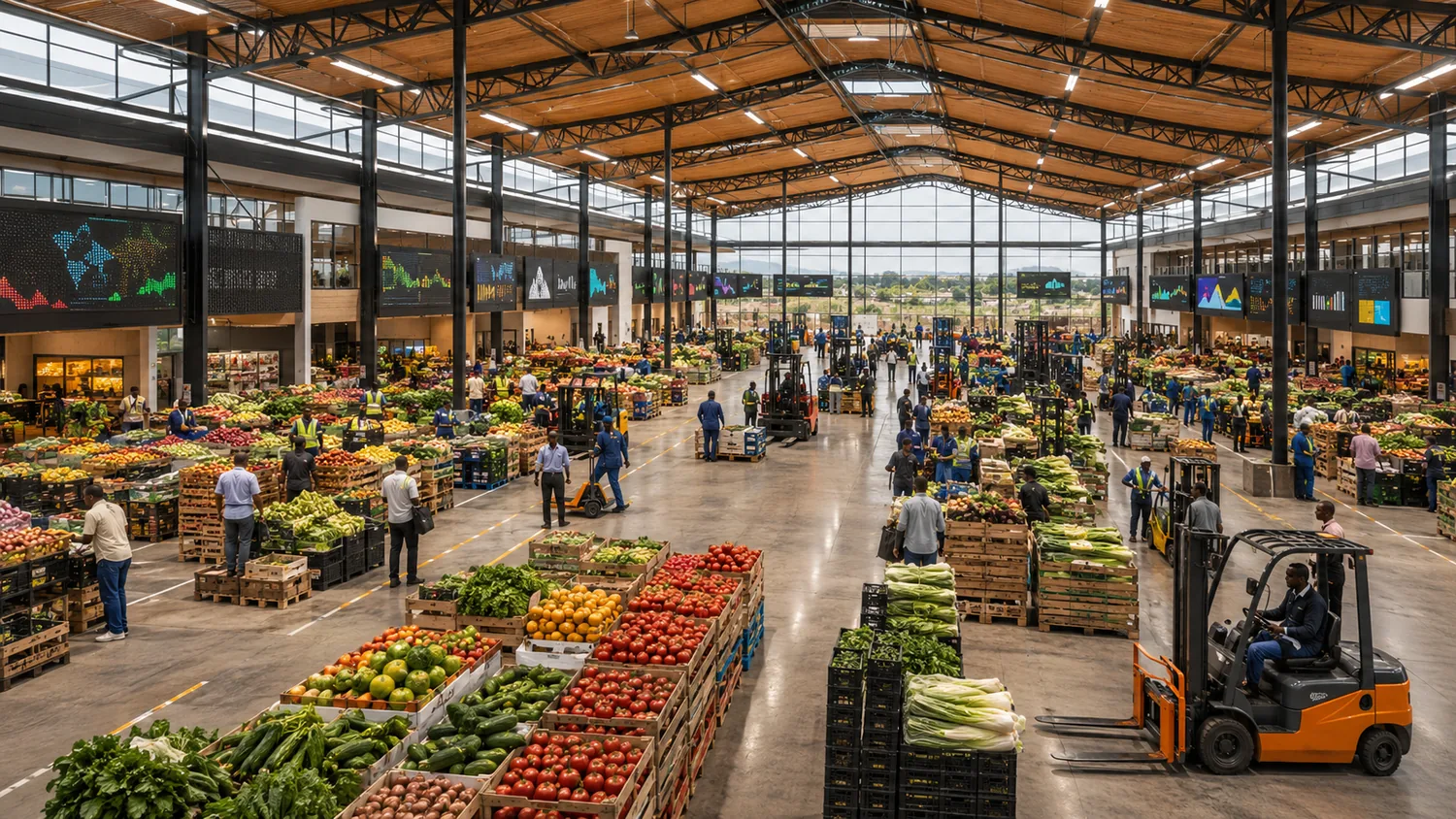
08 / FOOD TRADE CITYAllocate verified product to the best viable market.Supply • FoodSafe™ status • buyer demand • price signal • commercial match
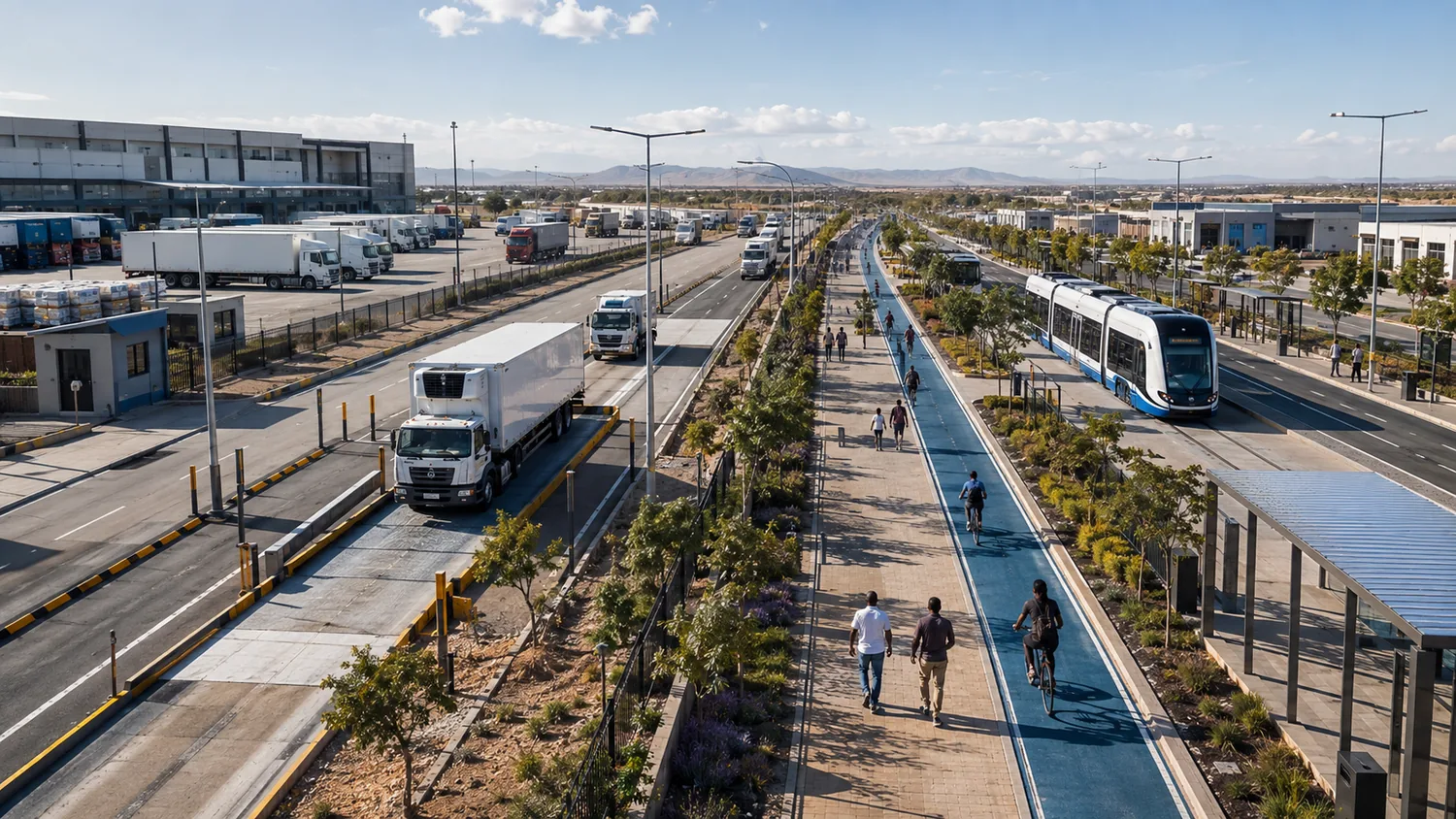
09 / LOGISTICSA sale is complete only when movement is executable.Warehouse • yard • fleet • dispatch • road + air export
STAGES 10–12 / MARKET CHANNELS
Three principal markets convert the controlled chain into revenue.
Each channel carries different product, certification, packaging, service and logistics requirements.
Import substitution + predictable base demand.
Scale + regional distribution.
Higher-value geographic reach.
OUTPUT PORTFOLIO
Move beyond farmgate produce.
Fresh retail packsFrozen foodsSauces + condimentsDehydrated foodsMilled staplesCanned pulsesDairyValue-added proteinBakery + ready meals
Portfolio expands over time with branded, private-label, institutional and export product families.
PRODUCT VALUE LADDER
Increase control + value capture.
1RAWFarmgate commodity2GRADEDSorted + certified3PACKEDRetail-ready4INGREDIENTProcessed B2B5CONSUMERPackaged food6BRANDEDOwn / private label7PREMIUMExport / specialty
FRESH-VERSUS-PROCESSING ALLOCATION
Route every tonne against grade, margin, shelf life and capacity.
Grade + qualityFresh market priceProcessing marginShelf lifeInventoryCold-chain capacityBuyer commitments
ALLOCATION ENGINE
Maximise contribution margin while respecting contracts + quality.
Premium freshMainstream freshProcessingFeed / circular
GRADE-BASED ROUTING
Quality is not simply pass / fail.
APREMIUMFresh retail / premium exportBSTANDARDWholesale / institutionalPPROCESSIndustrial conversionFFEEDApproved animal feed routeCCIRCULARCompost / biogas / recoveryRREJECTControlled disposal
DEMAND-LED PRODUCTION LOOP
Operate from market demand backwards.
Market intelligence continuously rebalances crop planning, processing and commercial allocation.
BUYERDemand→PRODUCTSpecification→PROCESSCapacity→FEEDSTOCKRequirement→CROPPlan→HARVESTOutput→TRADETransaction→DATANext cycle
ONE DIGITAL THREAD
Every commercially significant physical movement creates a digital event.
DataGrid™ provides product genealogy from farm to buyer and connects operational identity to transaction settlement.
Farm→Field→Crop→Harvest→Batch→Packhouse→Process→Packaging→Pallet→Warehouse→Shipment→Buyer→Invoice
PHYSICAL PRODUCT ↔ DIGITAL IDENTITY ↔ FINANCIAL EVENT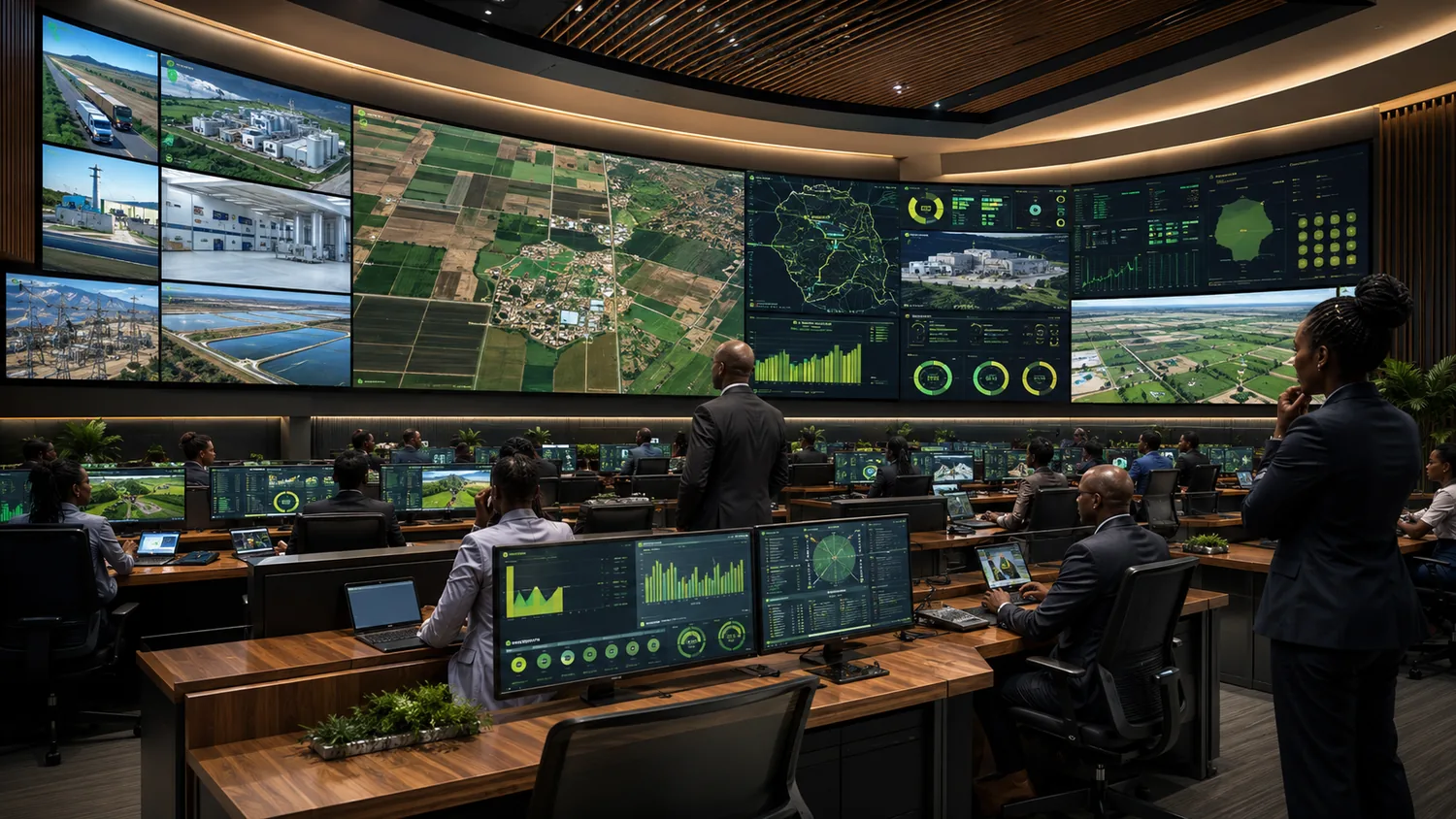
EXECUTIVE CONTROL ROOMManagement-by-exception across the complete food-industrial system.
END-TO-END CONTROL BOARD
Status, capacity, throughput, quality and constraints at every stage.
Illustrative green status demonstrates the control-board architecture, not current operating status.
01ProductionGREENCapacity • Throughput • Exceptions02AggregationGREENCapacity • Throughput • Exceptions03FoodSafeGREENCapacity • Throughput • Exceptions04PackhouseGREENCapacity • Throughput • Exceptions05ProcessingGREENCapacity • Throughput • Exceptions06PackagingGREENCapacity • Throughput • Exceptions07Cold ChainGREENCapacity • Throughput • Exceptions08Trade CityGREENCapacity • Throughput • Exceptions09LogisticsGREENCapacity • Throughput • Exceptions10DomesticGREENCapacity • Throughput • Exceptions11RegionalGREENCapacity • Throughput • Exceptions12ExportGREENCapacity • Throughput • Exceptions
CAPACITY SYNCHRONISATION
The value chain is only as strong as its most constrained critical stage.
EFFECTIVE VALUE-CHAIN CAPACITY = CAPACITY OF THE MOST CONSTRAINED CRITICAL STAGELIVE CONSTRAINT REGISTER
Remove the bottleneck before adding upstream capacity.
WATERSource • storage • irrigationENERGYCritical-load availabilityLABOURHarvest • plant staffingPROCESSThroughput • downtimePACKAGINGStock • supplier riskCOLDStorage • reefer capacityLOGISTICSFleet • road • borderMARKETBuyer absorption • priceWORKING CAPITALCash tied in inventory
PRODUCT CONTROL GATES
Nine approval / hold / redirect decisions prevent risk propagating downstream.
Each gate is connected to a clear release condition and digital record.
WORKING CAPITAL + INVENTORY CONTROL
Control product flow and cash conversion together.
INPUTSCash out→CROPGrowing→HARVESTRaw stock→PROCESSWIP→PACKFinished goods→STOREInventory→SELLReceivable→CASHCash in
Inventory control: quantity • location • age • value • quality • destination. Cash conversion: reduce days from production spend to collected revenue.
REVENUE + MARGIN STACK
Retain more stages of value within Botswana.
FARMAgricultural valueAGGREGATEHandlingPROCESSIndustrial marginPACKPackagingLOGISTICSStorage + movementTRADEMarket marginBRANDConsumer premium
Domestic resilience.
Replace selected imported finished foods • use real domestic demand + cost competitiveness • deepen local processing + packaging • strengthen domestic brands.
International market growth.
Begin with buyer specification • design certification + packaging before production • aggregate export-scale volume • connect road + air cargo channels.
Institutional base load.
Schools • hospitals • mines • government • catering — predictable demand that stabilises utilisation.
Own brands + private label.
Fresh • staples • sauces • dairy • protein • ready meals • retailer / hospitality / airline / distributor private label.
TRACEABILITY + RECALL CONTROL
Trace every finished product backward to source and every source forward to customers.
Customer←Shipment←Pallet←Finished Batch←Packaging Lot←Process Batch←Raw Batch←Aggregation←Farm←Field
RECALL WORKFLOWDETECT → CONTAIN → TRACE → NOTIFY → RECOVER → INVESTIGATE → CORRECT
Affected batch • line • packaging lot • warehouse • shipment • customers • remaining inventory • source farm
INFRASTRUCTURE INTERLOCKS
No productive-capacity package commissions without hard development gates.
Expansion is synchronised to water, power, movement, offtake and digital control readiness.
WATERGRID™Water capacity confirmed?ENERGYGRID™Firm power confirmed?LOGISTICSGRID™Movement pathway executable?FOOD TRADE CITYDemand / offtake confirmed?DATAGRID™Digital control available?RELEASE → COMMISSION PRODUCTIVE CAPACITY
END-TO-END KPI COCKPIT
Manage cross-stage performance—not isolated departmental metrics.
Throughput, quality, time, cost and cash are measured from farm to market.
GOVERNANCE + OPERATING CADENCE
Specialist operators execute. End-to-End Control coordinates.
A disciplined daily, weekly and monthly rhythm keeps the chain synchronised.
MASTER PLATFORMRules + investmentPRODUCTIONGrow + deliverFOODSAFE™Release + qualityPROCESSINGManufacturePACKMAT™PackageLOGISTICSMoveTRADE CITYMonetiseDATAGRID™Integrate + report
Harvest • intake • production • dispatch • exceptions
Capacity • trade • utilities • risk • performance
Revenue • EBITDA • working capital • ESG • investor reporting
BANKABILITY ARCHITECTURE
Package value chains as visible business cases while sharing common infrastructure.
TOMATOFarm → packhouse → sauce → PackMat™ → tradeDAIRYFeed → farm → milk → dairy plant → cold chainGRAINField → silo → mill → packaging → wholesaleFROZEN VEGHorticulture → packhouse → IQF → cold store → export
Bankability visibility: feedstock • utilisation • buyers • quality • utilities • logistics • revenue • working capital
DEVELOPMENT PHASING
Build control depth as the value chain expands.
Each phase adds capacity only when downstream demand and infrastructure readiness are confirmed.
Production • aggregation • FoodSafe™ • packhouse • cold chain • domestic market
Priority processing • PackMat™ • warehouses • Food Trade City • institutional demand
Regional trade • private label • export aggregation • advanced traceability
All stages integrated through DataGrid™ + Executive Control Room
END-TO-END PRODUCT JOURNEY
One controlled loop from market demand to the next production cycle.
01Market demand02Production plan03Planting04Harvest05Aggregation06FoodSafe™07Packhouse08Fresh / process09Processing10PackMat™11Storage12Trade City13Logistics14Market15Settlement16Market intelligence
DEMAND → CONTROL → VALUE ADD → MARKET → LEARNING → NEXT CYCLE
The strategic advantage is not simply how much the Agropark can grow—but how much value it can reliably create from every tonne produced.
ONE PHYSICAL CHAIN • ONE DIGITAL THREAD • ONE QUALITY SYSTEM
11 / OPERATING MODEL
KAP-OM-001 • PLATFORM COMPANY + BANKABLE OPERATING VERTICALS
One platform.
One platform.
Multiple bankable verticals.
A coordinated institutional architecture separates common infrastructure from commercial assets, specialist operating platforms and governance functions—while preserving one integrated physical and digital ecosystem.
OPERATING THESISIntegrate operationally. Separate economically where appropriate.
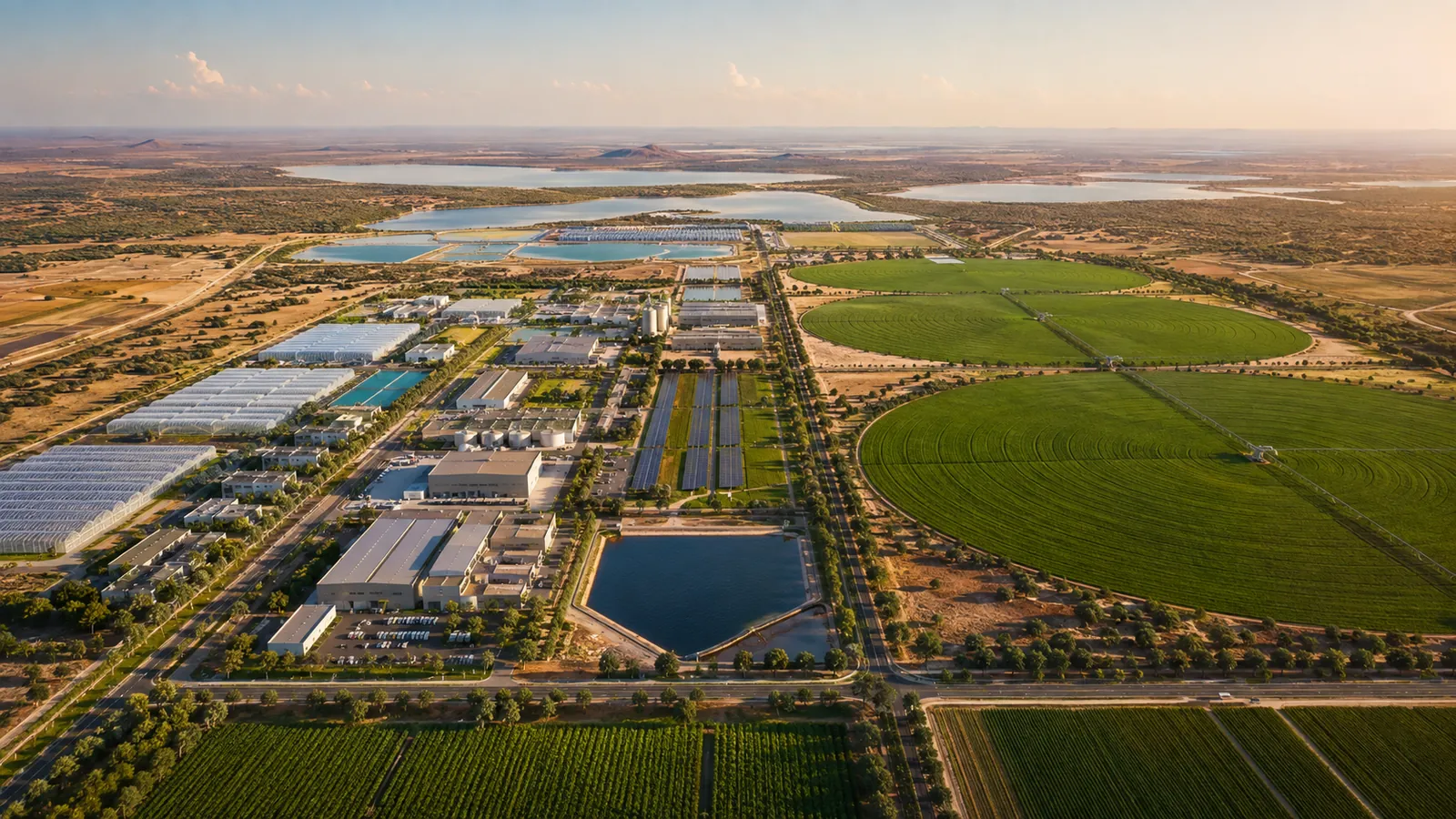
INSTITUTIONAL ARCHITECTURE
Four layers. One coordinated operating system.
Platform control sits above commercial asset SPVs, specialist service operators and governance / estate functions.
MASTER DEVELOPER / PLATFORM COMPANY
Programme control • estate governance • standards • common infrastructure
Control the system—not every operating decision.
01COMMERCIAL OPERATING ASSETS
Production SPVFood Trade City SPVAgro-Processing SPVsRing-fenced cash flows • dedicated management • financing • investor participation02SPECIALIST PLATFORM OPERATORS
LogisticsGrid™ • WaterGrid™ • EnergyGrid™ • DataGrid™PackMat™ • FoodSafe™ • FarmerConnect™ • Air CargoShared services • specialist capability • contracted performance • measurable SLAs03GOVERNANCE / ESTATE
Estate ManagementPPP / Investor GovernancePhysical standards • tenant interface • transaction control • investor diligenceWHY PORTFOLIO ARCHITECTUREOne physical ecosystem.
One physical ecosystem.
Multiple economic identities.
Different assets require different capital, contracts, operators, asset lives and risk allocation. The objective is clarity—not fragmentation.
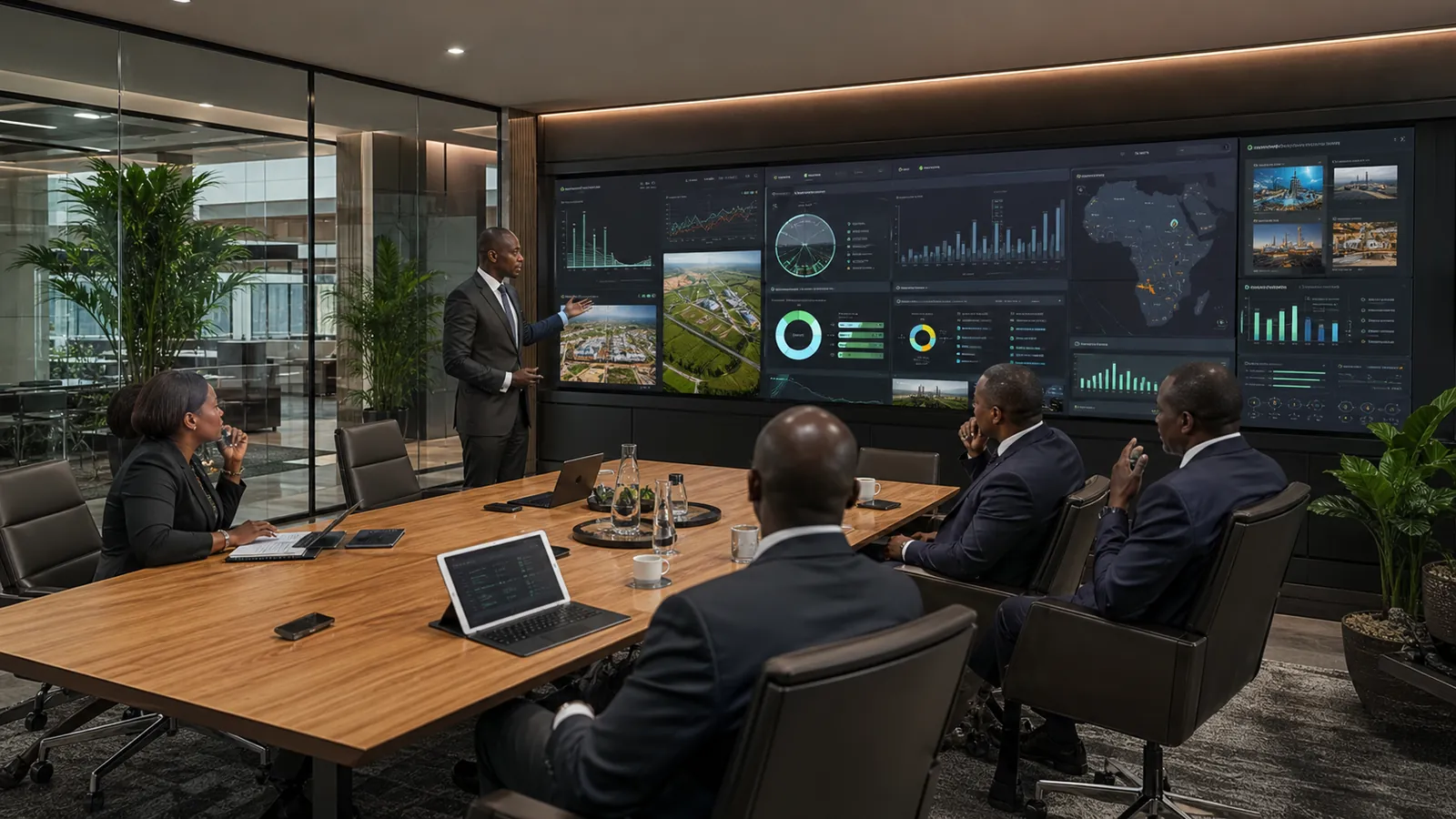
INTEGRATE OPERATIONSShared masterplan • common infrastructure • digital thread • platform standards
MASTER DEVELOPER / PLATFORM COMPANY
The apex institution for strategy, development control and platform coherence.
Its mandate is to orchestrate the ecosystem—not necessarily to operate every business directly.
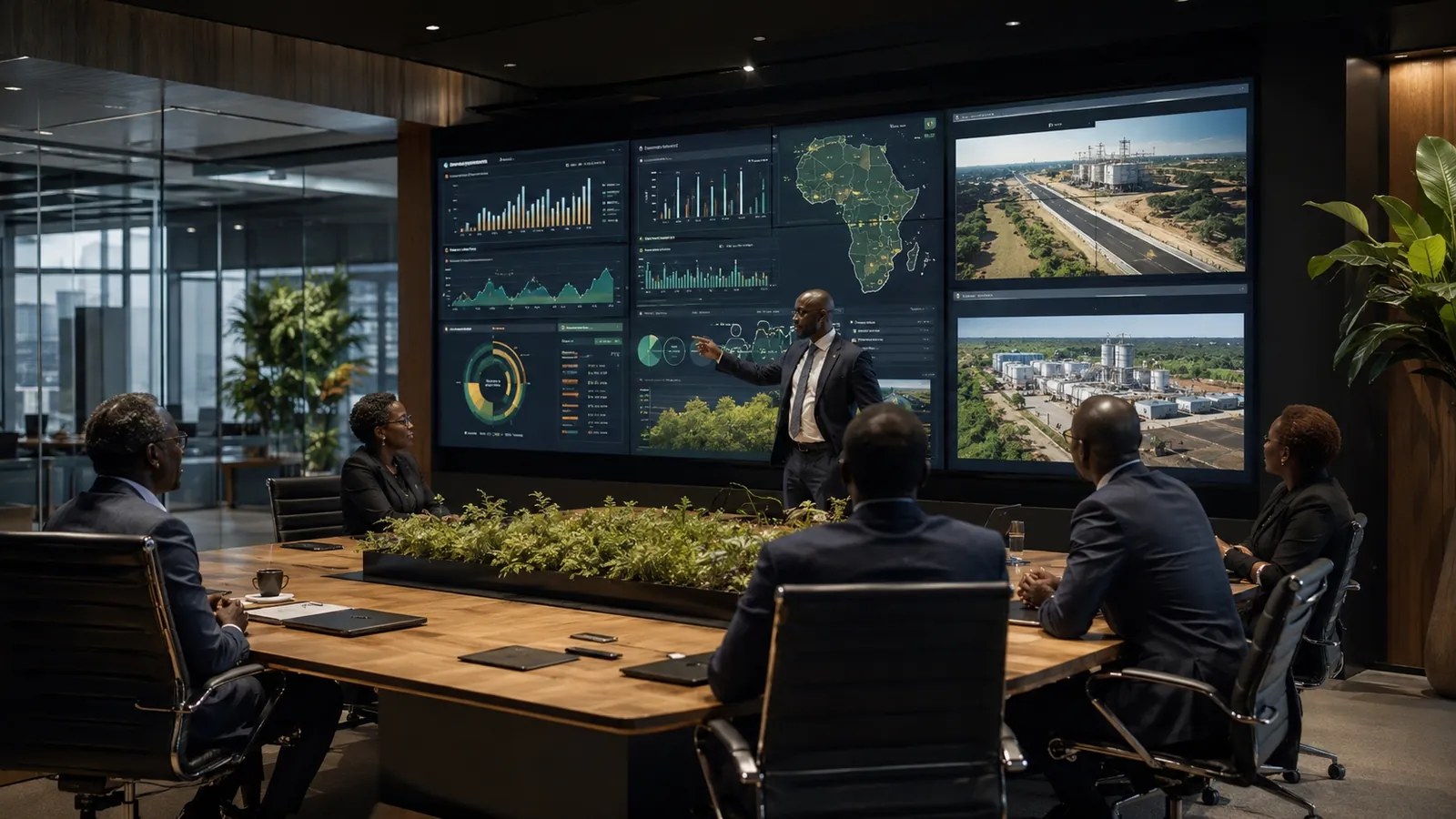
PLATFORM COMPANY = CONTROL OF THE SYSTEM
NOT CENTRALISATION OF EVERY OPERATING DECISION
PROGRAMME CONTROL
One PMO coordinates the multi-asset build-out.
Development gates, CAPEX, utilities, interfaces and commissioning are managed as one portfolio.
PORTFOLIOAll SPVs + common infra→GATESFeasibility → FID→CAPEXCommitment + spend→INTERFACESDependencies + critical path→COMMISSIONHandover to operators
CONTROL REGISTERSScheduleCAPEXRiskDecisionInterfaceCapacityCommissioning
COMMON INFRASTRUCTURE BOUNDARY
Separate shared enabling systems from asset-specific investments.
This avoids duplication and allows common capacity to serve multiple operating businesses.
CAPACITYallocated throughCONTRACTS + DEVELOPMENT GATES
COMMERCIAL OPERATING ASSETS
Three core verticals create direct operating cash flows.
Each supports dedicated management, financing, contracts, KPI accountability and investor participation.
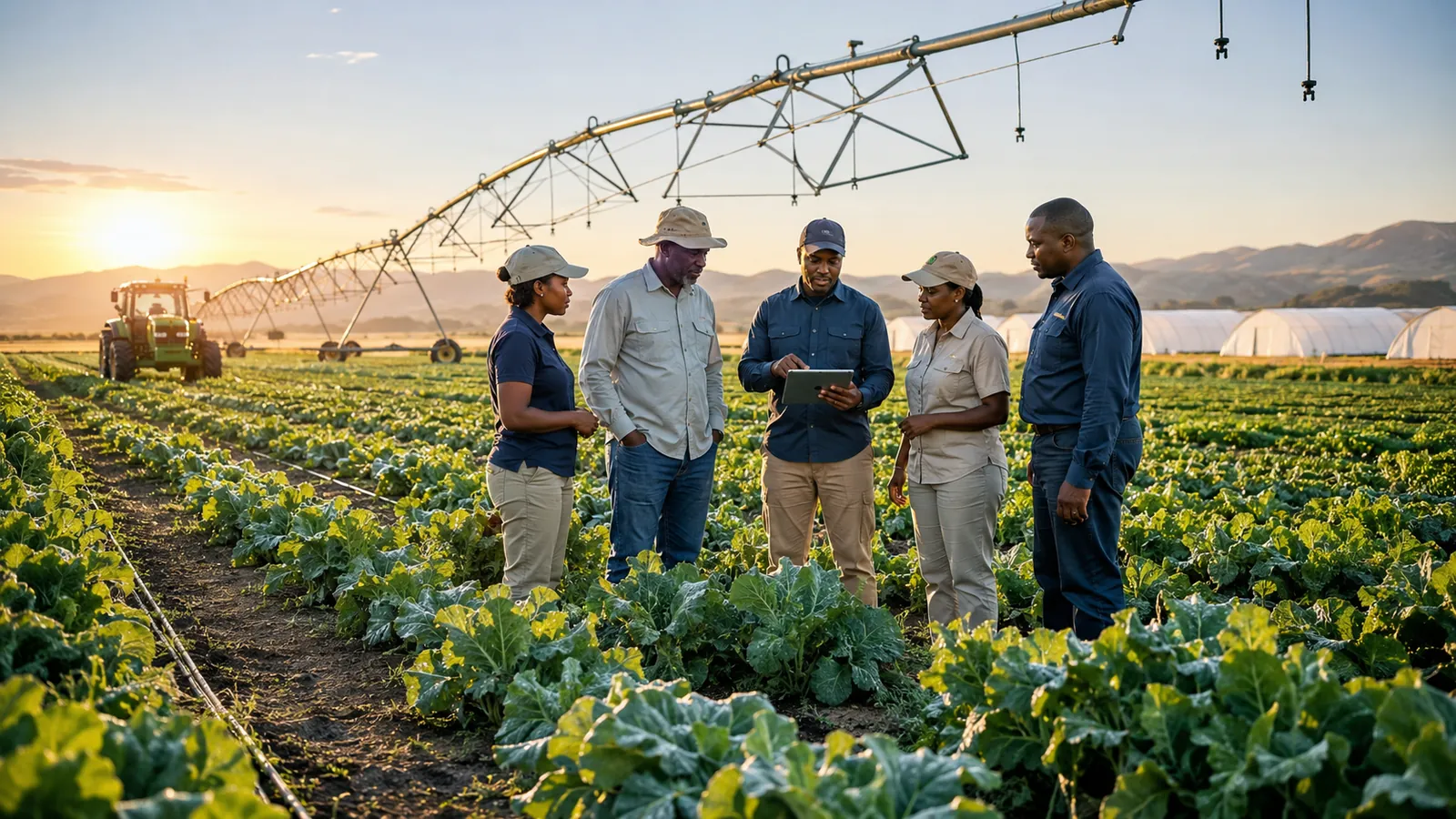
COMMERCIAL ASSET 01
Production SPV
Commercial accountability for centrally managed agricultural output.
- Assets
- Irrigated fields • controlled agriculture • machinery
- Revenue
- Fresh produce • feedstock • grains • fodder
- KPIs
- Yield • cost/tonne • water productivity • fulfilment
- Finance
- Equity • equipment finance • seasonal working capital
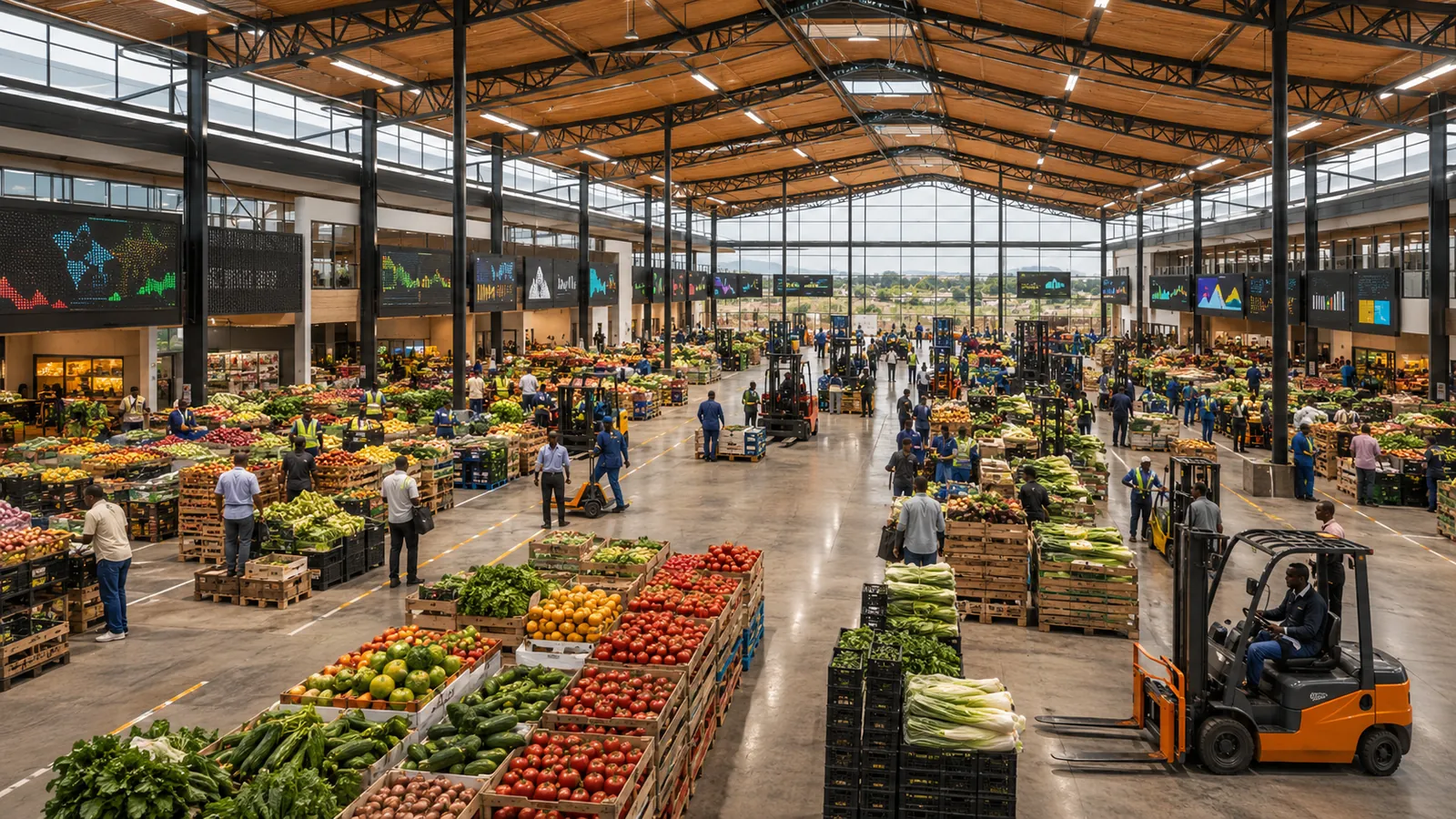
COMMERCIAL ASSET 02
Food Trade City SPV
Marketplace operator for wholesale, B2B, property and trade services.
- Assets
- Market halls • warehouses • trader facilities
- Revenue
- Leases • commissions • storage • memberships
- KPIs
- Traded value • occupancy • throughput • settlement
- Interfaces
- FoodSafe™ • LogisticsGrid™ • DataGrid™ • buyers
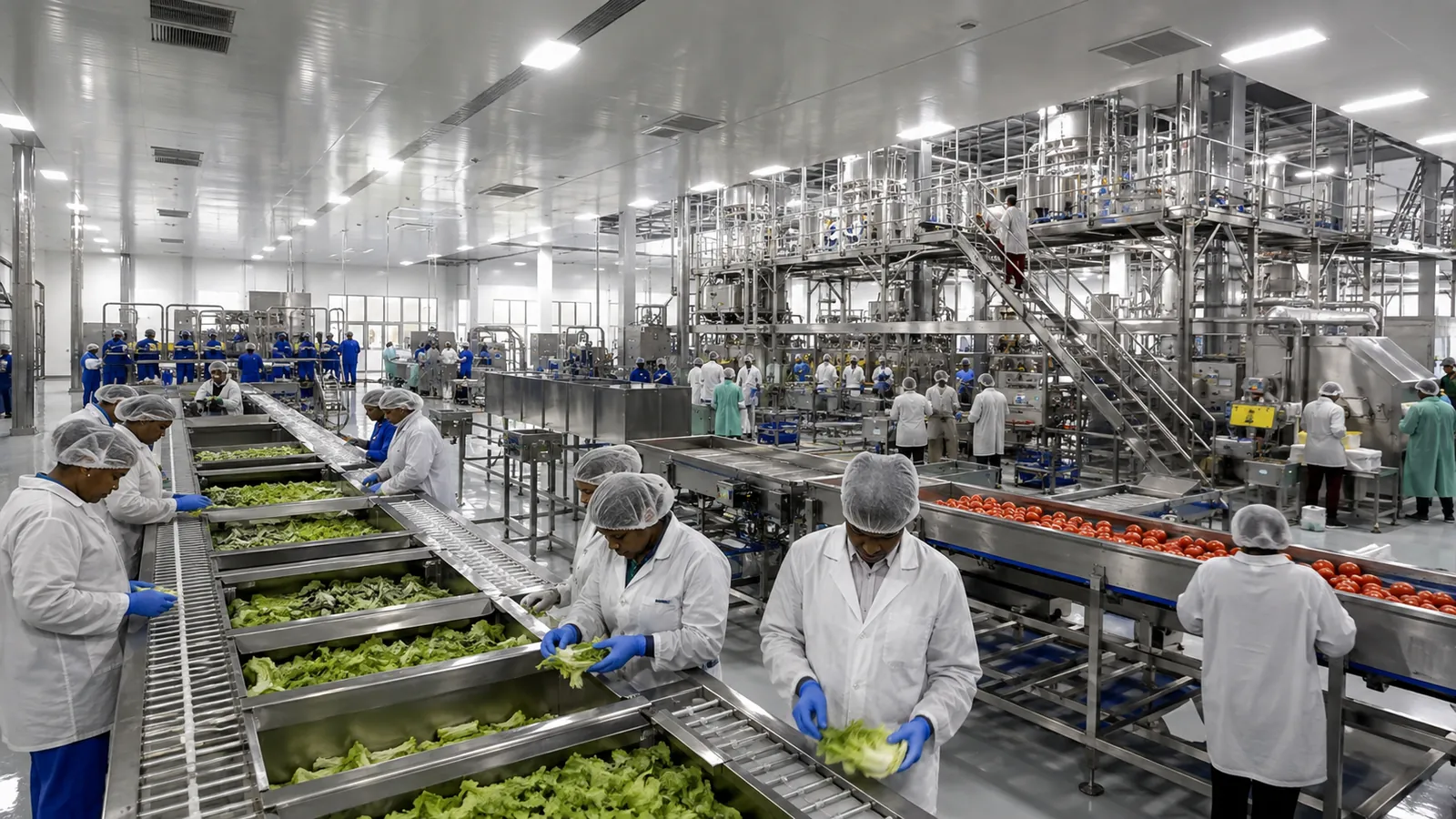
COMMERCIAL ASSET 03
Agro-Processing SPVs
Plant- or logical-cluster-level entities sized against feedstock, offtake and utilities.
- Clusters
- Fresh/sauces • IQF/dehydration • milling/pulses • dairy • protein • meals • beverages • oilseed/feed
- Bankability
- Feedstock • offtake • utilities • CAPEX • working capital
SPECIALIST PLATFORM OPERATOR LAYER
Shared systems become accountable service businesses.
Eight operators serve multiple SPVs, tenants and investors through defined scope, revenue logic, KPIs and service levels.
LogisticsGrid™
Movement + storageDry/cold warehousing • cross-dock • fleet
Storage • handling • transport • yard servicesCost/tonne • turnaround • OTDWaterGrid™
Industrial water utilitySource • storage • treatment • irrigation • reuse
Bulk • irrigation • process • wastewater tariffsAvailability • losses • quality • reuseEnergyGrid™
Industrial power utilityBulk intake • 33/11kV • solar • storage • backup
Energy • capacity • connection • resilienceAvailability • outages • losses • renewable shareDataGrid™
Digital operating layerConnectivity • platforms • integration • analytics
Subscriptions • platform fees • analytics • cyberUptime • adoption • completeness • securityPackMat™
Packaging platformBoxes • trays • film • labels • crates
Material sales • contract packing • designAvailability • cost • local content • defectsFoodSafe™
Quality + releaseInspection • QA/QC • labs • HACCP • release
Testing • audit • certification • release servicesTurnaround • release rate • incidents • recallsFarmerConnect™
Distributed farmer networkRegistry • contracts • agronomy • aggregation
Service • aggregation • mechanisation • management feesHectares • fulfilment • yield • farmer incomeAir Cargo
Export gatewayTerminal • cold chain • customs • aircraft-side handling
Handling • storage • security • export servicesTonnes • dwell • temperature • uplift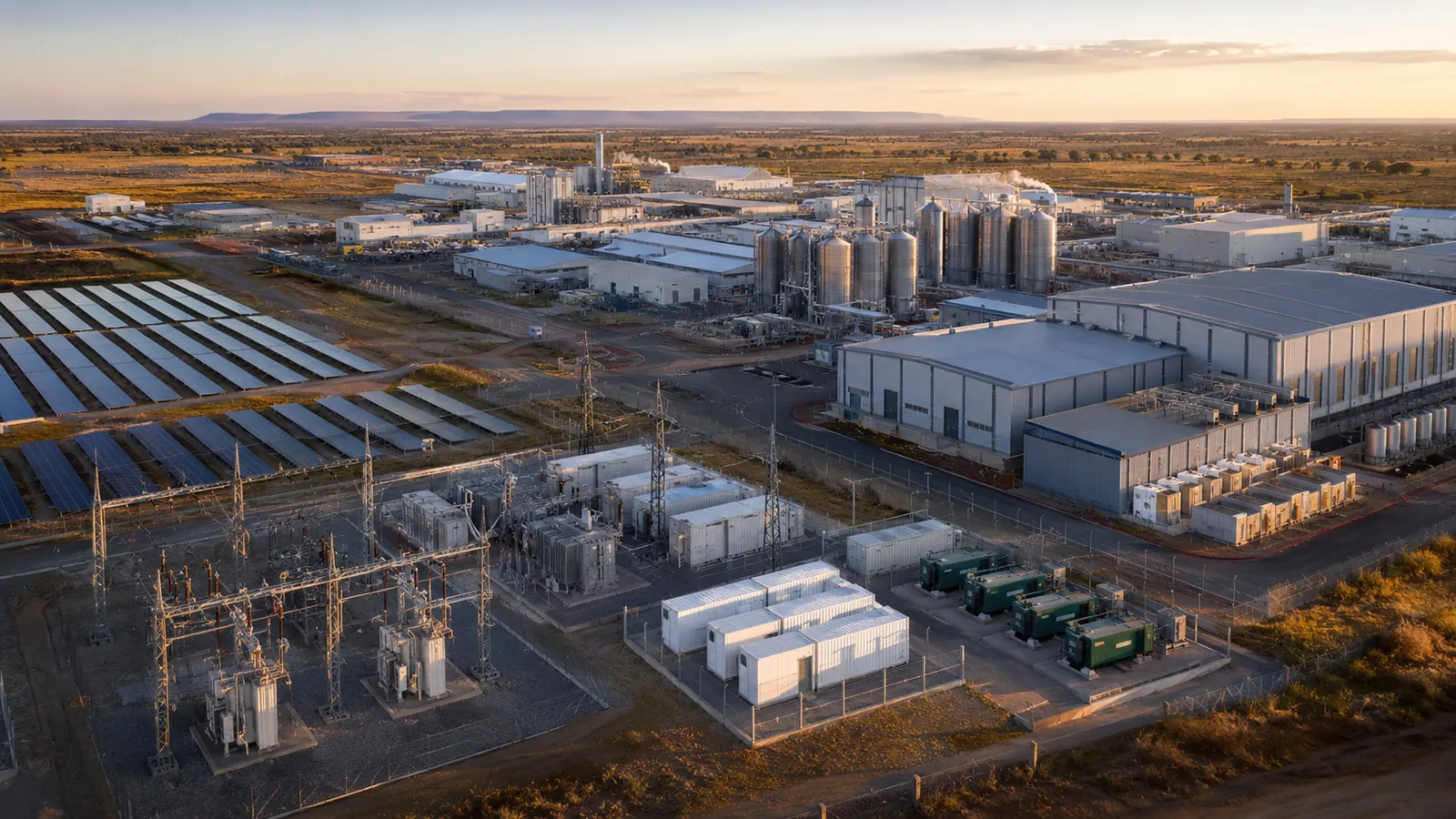
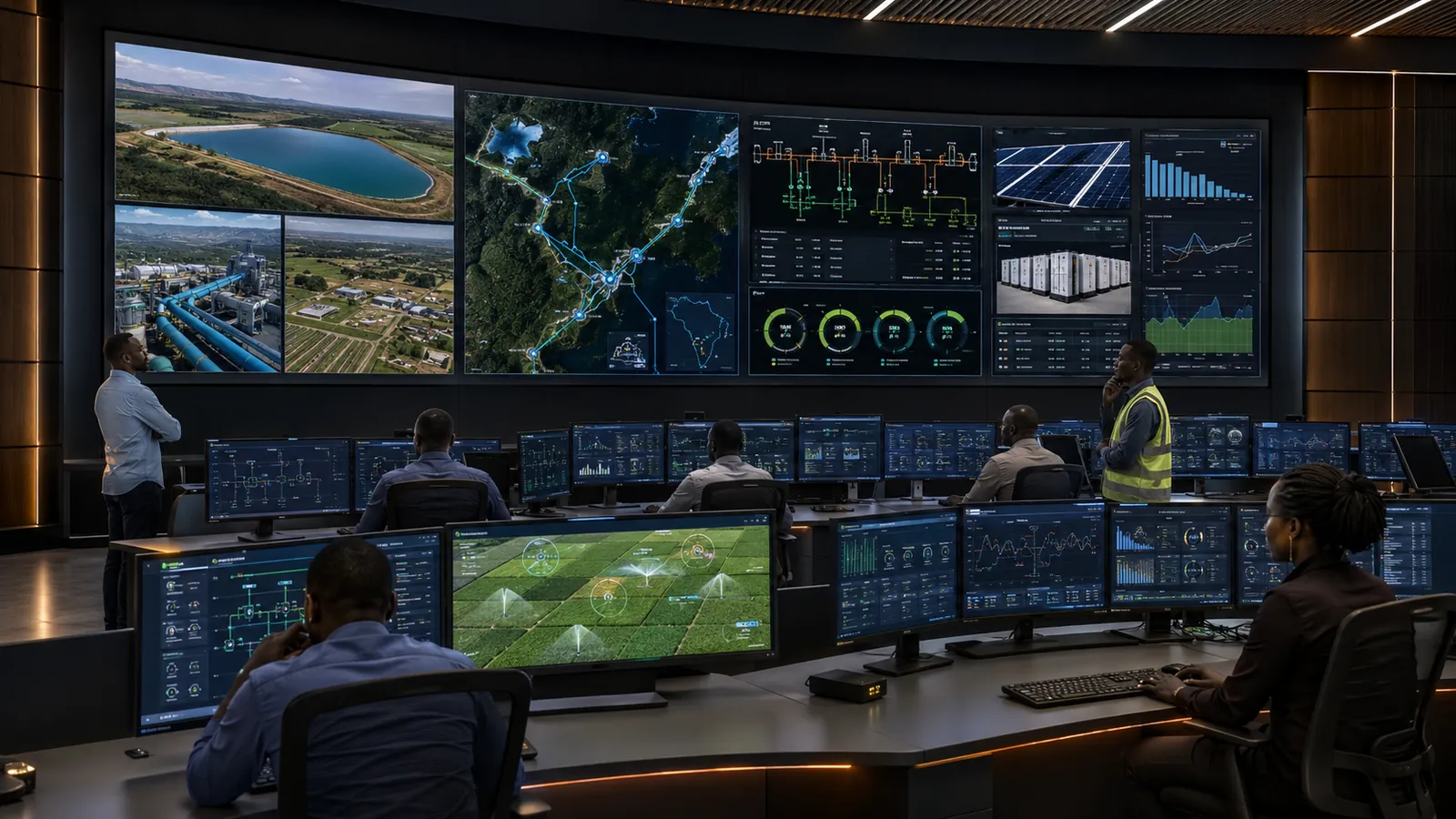

GOVERNANCE / ESTATE LAYER
Protect platform quality, institutional discipline and investor confidence.
Estate operations protect the physical environment; PPP / investor governance controls participation, transactions and reporting.
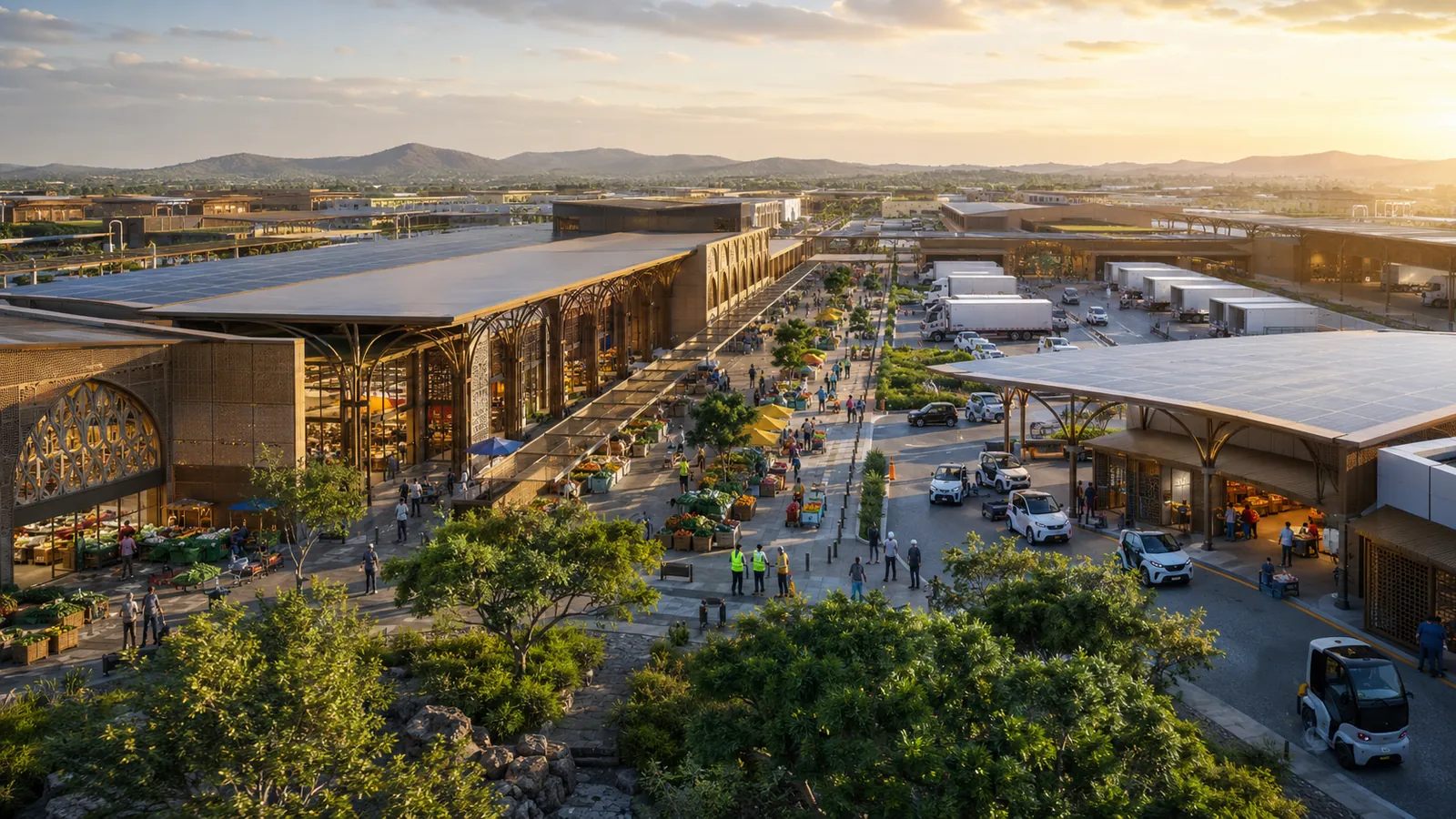
ESTATE MANAGEMENT
Operate the common environment to measurable standards.
- Roads + common-area maintenance
- Security + cleaning + landscaping
- Estate inspections + tenant management
- Waste coordination + signage
- Physical standards + service charges
PPP / INVESTOR GOVERNANCE
Coordinate multiple investment processes without losing control.
PACKAGE→DILIGENCE→PROCURE→CLOSE→REPORT
Controlled outputs: IM/teaser • financial model • concession draft • shareholders agreement • lender pack • VDR.
CAPITAL ARCHITECTURE
Match capital to the economic characteristics of each asset.
The portfolio structure broadens the investable universe across enabling infrastructure, commercial SPVs, utilities and specialist services.
Sponsor EquityStrategic EquityInstitutional CapitalPrivate EquityDFI / ClimateCommercial DebtECA / EquipmentPPP / Blended
Illustrative strategic capital mapping only — not a final financing recommendation.
CONTRACTING ARCHITECTURE
Choose the operating form that fits ownership, risk and expertise.
Specialist platforms need not share one contractual structure.
MASTER DEVELOPERPlatform authority→CONCESSIONRights + obligations→SPECIALIST OPERATORDesign / finance / build / operate→SERVICE USERSSPVs + tenants + buyers→PERFORMANCESLA + tariff + reporting
SHAREHOLDING + GOVERNANCE
Asset-specific ownership. Entity-level accountability.
Ownership reflects capital, operating capability, technology, market access and local participation.
BANKABLE SPVASSET-SPECIFIC OWNERSHIPCapital • capability • technology • offtake • governance
BOARDStrategy + oversightINVESTMENT COMMITTEEMajor CAPEX + financingAUDIT & RISKControls + assuranceTECHNICAL COMMITTEEStandards + performanceESG COMMITTEEEnvironmental + socialMANAGEMENTDaily operations
RESERVED MATTERSBudget • major CAPEX • debt • new equity • asset disposal • business-plan change • dividends • senior appointments
INTERFACE AGREEMENTS + SLAs
Contracts turn platform integration into accountability.
Clear service boundaries, pricing, performance standards and escalation rights keep multiple entities operating as one ecosystem.
OPERATORSERVICE COMMITMENTPERFORMANCE MEASURECOMMERCIAL CONSEQUENCE
WaterGrid™Volume • pressure • qualityAvailability • responseFee / credit / escalation
EnergyGrid™Firm capacity • power qualityAvailability • restorationFee / credit / escalation
DataGrid™Uptime • latency • cyberAvailability • incident responseFee / credit / escalation
LogisticsGrid™Dock • storage • deliveryTurnaround • OTDFee / credit / escalation
FoodSafe™Inspection • labs • releaseTurnaround • traceabilityFee / credit / escalation
PackMat™Packaging stock • qualityLead time • defectsFee / credit / escalation
TRANSFER PRICING + RING-FENCING
Preserve transparent SPV economics.
Internal charges must be rule-based, auditable and commercially supportable. Each entity carries the risks it can actually manage.
TRANSPARENT CHARGES • NO HIDDEN CROSS-SUBSIDY • CLEAR SPV-LEVEL MARGINS
EXECUTIVE PORTFOLIO DASHBOARD
One portfolio view. Separate entity accountability.
The Master Developer consolidates operating, capital and risk performance without collapsing SPV economics.
INVESTOR VDR + DEVELOPMENT GATES
No SPV advances to full investment without controlled readiness.
The VDR and gate process create a repeatable institutional pipeline across multiple operating verticals.
01Strategic fit02Market demand03Technical feasibility04Water + energy05CAPEX validation06Operating model07Financial feasibility08ESG09Financing10FID
CONTROLLED INVESTOR VDRCorporate • land • engineering • permits • contracts • models • ESG • financing • reportingPlatform Company • Production SPV • Food Trade City SPV • Processing SPVs • Utilities • Logistics • Digital • Air Cargo
SPV FORMATION SEQUENCE
A repeatable investment factory.
The same ten-step pathway can be reused across plants, utilities, logistics and specialist operating platforms.
01Define vertical→02Business case→03Select structure→04Form SPV→05Capitalise→06Interface contracts→07Finance→08Build→09Commission→10Operate + report
PHASED OPERATING MODEL
Build institutional architecture with physical and commercial maturity.
The platform company starts early; SPVs and specialist operators scale as the asset base expands.
Core Platform
Master Developer • Production SPV • WaterGrid™ • EnergyGrid™ • DataGrid™ baseline • FoodSafe™ • Estate
Commercial Expansion
Food Trade City SPV • first processing SPVs • LogisticsGrid™ • PackMat™ • FarmerConnect™
Industrial + Export Scale
More processing SPVs • Air Cargo • advanced logistics • specialist concessions • investor participation
Full Maturity
Portfolio of bankable verticals • utility concessions • institutional capital • portfolio-level optimisation
STRATEGIC BENEFITS
One platform. Multiple businesses. Clear accountability.
Portfolio architecture increases scalability, transparency and investability without weakening operational integration.
PLATFORM CONTROL IS PRESERVED THROUGHStandards → Interface Agreements → SLAs → DataGrid™ → Portfolio Governance
12 / PLATFORM ECONOMICS
Platform economics.
CAPEXBWP 169bnIndicative full-platform maturity envelope
REVENUEBWP 67.4bnIndicative annual maturity revenue
EBITDABWP 26.2bnIndicative annual maturity EBITDA
MARGIN38.9%Blended indicative EBITDA margin
Platform economics.
Capital discipline creates bankability.
Maturity economics define the strategic scale of the 50,000 ha ecosystem. Investment decisions are built bottom-up through asset- and SPV-level engineering, demand, operating and cash-flow validation.
CONCEPT-NOTE BASELINE • Requires Class 1 engineering, demand studies, CAPEX validation and bankability diligence before investment decision use.
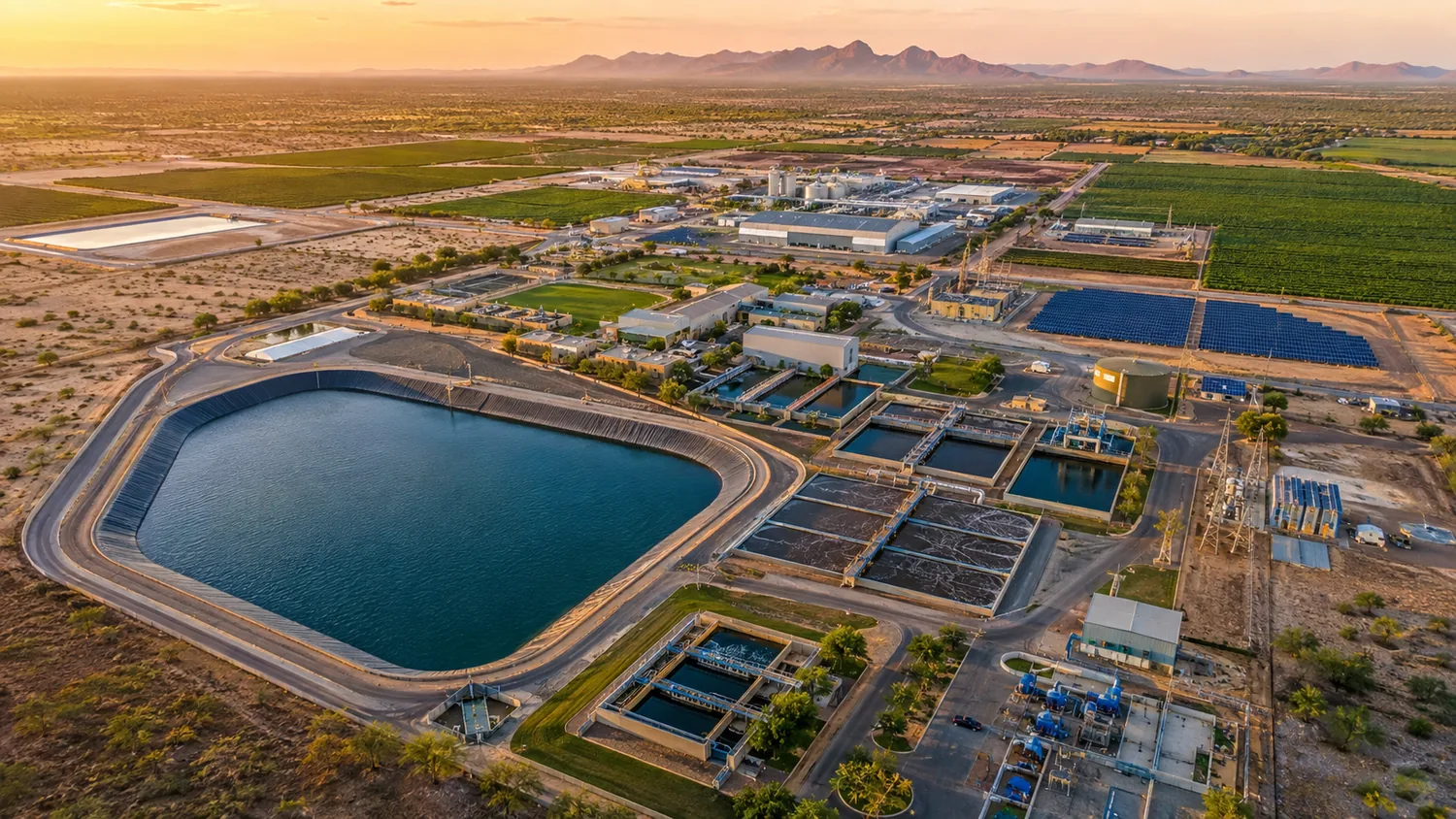
ECONOMIC LENSES
Two levels of economics are required.
Platform economics demonstrate strategic scale. Asset/SPV economics determine actual investment viability.
Platform Economics
Combined economics of the complete 50,000 ha ecosystem.
Aggregate CAPEXConsolidated revenueConsolidated EBITDAPortfolio utilisationInfrastructure leverageEconomic-development impactSTRATEGIC SCALEAsset / SPV Economics
Standalone bankability of each operating vertical.
Asset CAPEX + OPEXCustomer + revenue modelWorking capitalDebt capacityIRR / NPV / DSCRDownside resilienceINVESTMENT DECISIONMATURITY CONTEXT
Operating scale relative to installed capital.
These are context indicators only—not substitutes for project returns, equity returns or distributable cash flow.
OPEX 61.1%EBITDA 38.9%
Individual verticals will carry materially different cost structures.CAPITAL DISCIPLINE
No capital package without an explicit economic case.
The BWP 169bn programme is the aggregate of controlled capital decisions—not one funding decision.
01Scope→02Operator→03CAPEX→04OPEX→05Demand→06Revenue→07Risk→08Financing→09Returns→10FID
CAPITAL PROGRAMME
Four investment families organise the maturity envelope.
Different asset families can attract different financing structures while remaining operationally integrated.
Common Infrastructure
Roads • freight corridors • utility corridors • drainage • public transport corridors • digital backbone • emergency systems • public realm
Commercial Assets
Production • packhouses • Food Trade City • processing • packaging • warehousing • air cargo • commercial estate assets
Utility + Specialist Platforms
WaterGrid™ • EnergyGrid™ • LogisticsGrid™ • DataGrid™ • FoodSafe™ • FarmerConnect™
Governance + Estate
Estate management • programme control • security • standards • investor governance • shared administration
VERTICAL ECONOMICS
Each operating vertical earns its own bankability case.
Capacity should follow observable demand, throughput, utilisation, tariffs and operating capability—not masterplan ambition alone.
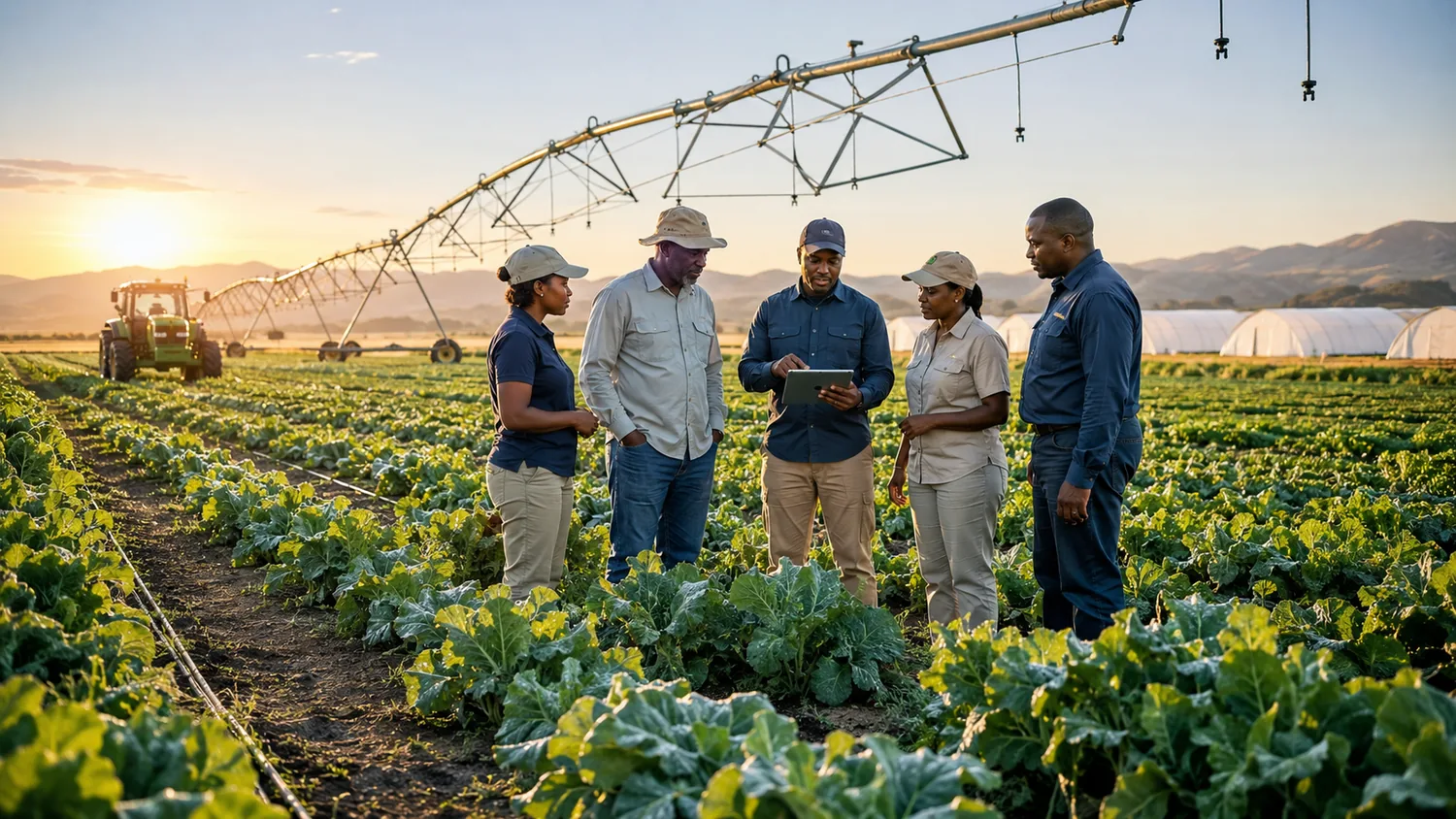
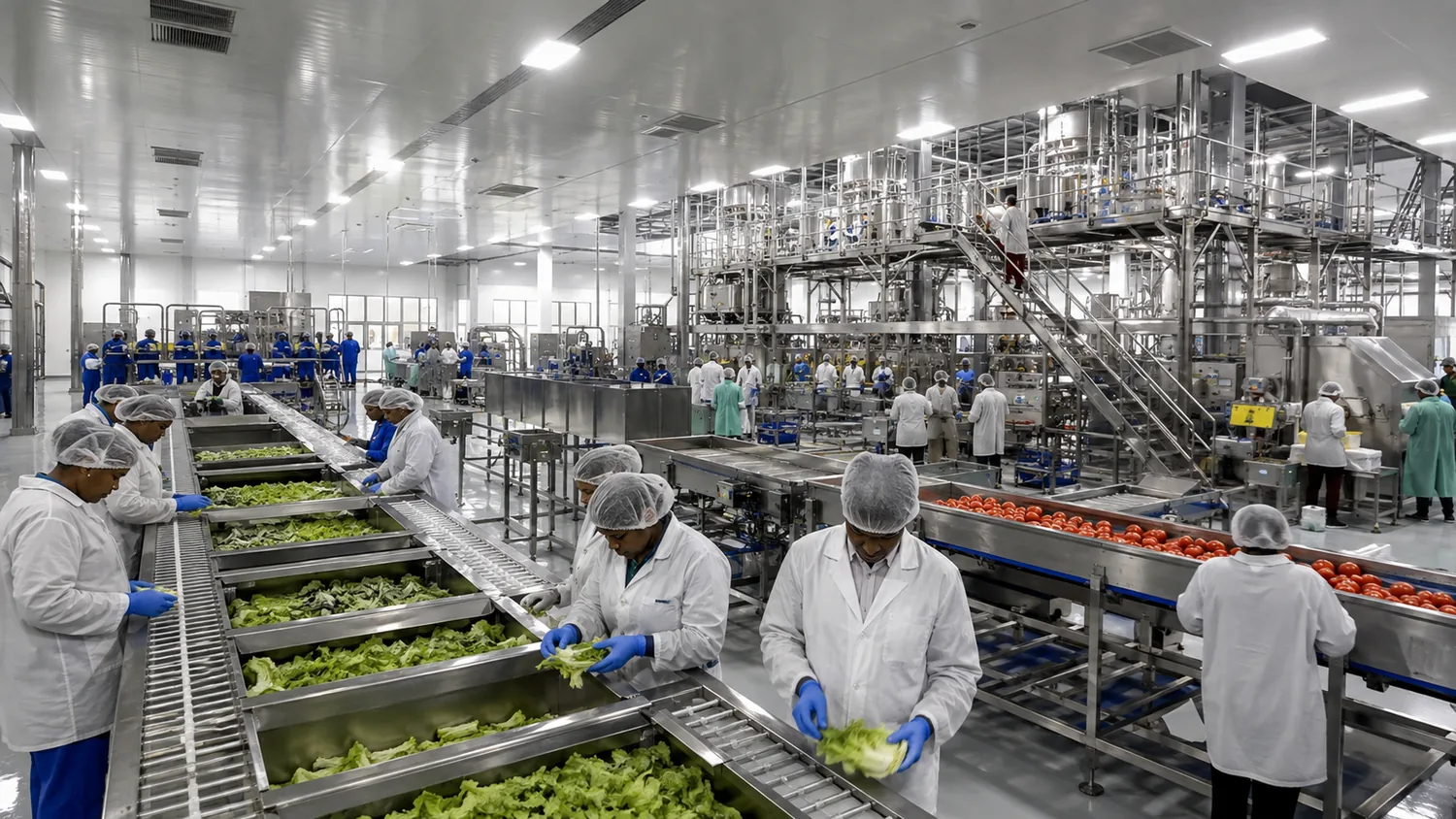
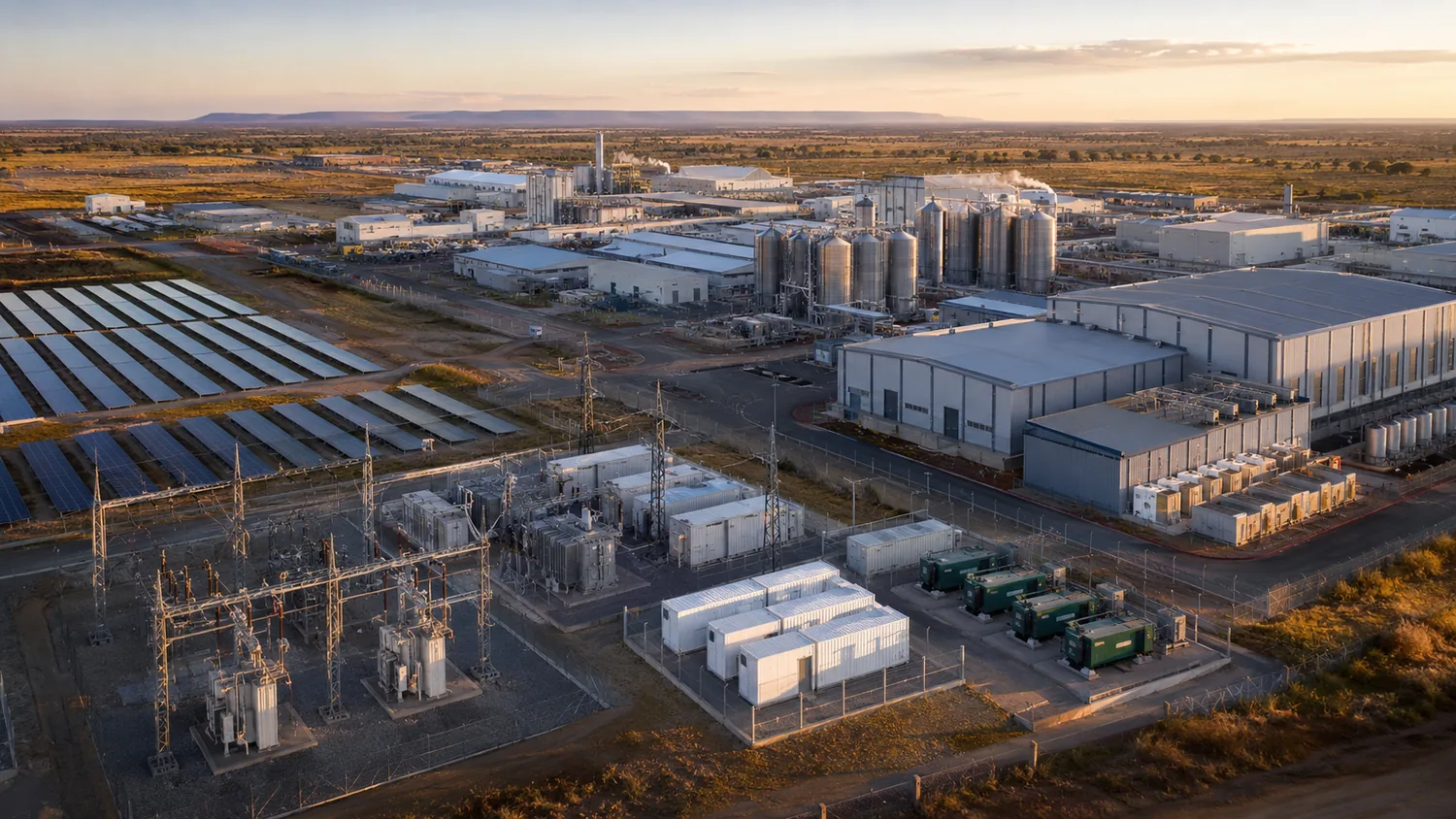
Common Infrastructure
ECONOMIC ROLEUnlock productive land and multiple cash-generating verticals.
FINANCING OPTIONSMaster developer equity • public enabling infrastructure • DFI / concessional • PPP • levies • land-value capture
Production Base
CAPEX RELEASE CONDITIONSWater • demand • processing absorption • operator capability • farmer/labour readiness
PRINCIPLEDevelop productive hectares—not idle irrigated capacity.
Aggregation + Packhouse
BANKABILITY TESTHarvest volume → throughput → capacity design → customer allocation → utilisation → cash flow
Food Trade City
REVENUESLeases • stall rentals • commissions • market fees • warehousing • marketplace • data • procurement services
KEY TESTTraded value • occupancy • throughput • lease quality • working capital
Agro-Processing
12 PLANT CASESFresh veg • sauces • IQF • dehydration • milling • pulses • dairy • protein • meals • beverages • oilseed • feed
MODELFeedstock • utilisation • yield • price • energy • labour • packaging • WC • EBITDA • debt service
PackMat™
CAPACITY RULEScale boxes, trays, films, labels and reusable crates against fresh, private-label, processing and export demand.
LogisticsGrid™
ECONOMIC DRIVERSPallet throughput • occupancy • handling • fleet utilisation • reefer services • regional freight • export handling
METRICSCost/tonne • EBITDA/m² • cold-store use • empty-running • contracted volume • WC days
MobilityGrid™
DIRECTTransit fares • parking • concessions • commercial mobility hubs
INDIRECTLower congestion • labour access • land value • freight productivity • safer movement
WaterGrid™ + EnergyGrid™
UTILITY CREDIT TESTContracted demand / firm load • tariff adequacy • reliability • losses • lifecycle maintenance • resilience
DataGrid™ + FoodSafe™
SHARED SERVICESSubscriptions • platform access • analytics • testing • inspection • certification • release • traceability
Air Cargo
DEVELOPMENT TRIGGERPremium fresh + processed exports • contracts • route capacity • FoodSafe™ • customs readiness
REVENUE ARCHITECTURE
Maturity revenue is the sum of transparent vertical economics.
BWP 67.4bn must ultimately be rebuilt from physical operating drivers by vertical.
MATURITY REVENUE = Σ (VOLUME × UTILISATION × YIELD × REALISED PRICE) BY OPERATING VERTICAL
OPEX REBUILD
BWP 41.2bn is an arithmetic placeholder—not a cost model.
Bottom-up OPEX validation must replace the implied maturity envelope with unit-cost models by asset and value chain.
Agricultural inputsLabourEnergyWaterProcessing consumablesPackagingMaintenanceTransport + storageAdministrationInsuranceQuality + complianceTechnology + estate
OPEX VALIDATION → HECTARES × COST/HA • TONNES × UNIT COST • UTILITIES × UNIT COST • LOGISTICS × UNIT COST + FIXED OPEX
CAPITAL EFFICIENCY
Installed capacity creates value only when it becomes productive utilisation.
The capital allocation question is: which next pula of CAPEX creates the strongest risk-adjusted increase in platform value?
DEMAND-LED CAPITAL
Demand should release capital.
The development sequence starts with a credible customer and ends with capital commitment—not the reverse.
01Demand→02Product spec→03Feedstock→04Utilities→05Logistics→06CAPEX + OPEX→07Feasibility→08Financing→09FID
Require feedstock + offtake + utilities + logistics + financial feasibility before commissioning.
Require commercial demand + water allocation + aggregation/processing capacity + operating capability before scale.
INVESTMENT GATES
Final Investment Decision is gated, evidenced and financeable.
The Master Developer releases capital only after each package satisfies commercial, technical and financial tests.
01Strategic fit02Demand03Feedstock04Technical05Utilities06CAPEX07OPEX08Economics09Financing10FID
BANKABLE PACKAGE
A clear economic boundary for every project.
Each project must answer the same core questions before capital is committed.
BANKABILITY = DEFINED ASSET + DEFINED CUSTOMER + DEFINED CASH FLOW + DEFINED RISK + DEFINED CAPITAL STRUCTURE
FINANCIAL MODEL
Each material SPV requires a standalone investment-grade model.
The platform model does not replace plant, utility, market, logistics or production cash-flow models.
Development scheduleCAPEXCommissioningOperating volumesPricesUtilisationOPEXFundingEquity + debtInterest + feesWorking capitalTaxMaintenance CAPEXFree cash flowIRR / NPV / DSCRPayback
WORKING CAPITAL
Food economics are also cash-conversion economics.
Cash leaves early and returns after production, conversion, inventory, distribution and receivables collection.
Seeds + inputs→Production→Harvest→Processing→Packaging→Inventory→Distribution→Receivable→Cash
Crop cycle • input pre-funding • processing WIP • inventory days • buyer credit terms • export lead times • retailer payment cycles
Demand planning • inventory visibility • faster processing • shorter storage • dispatch automation • credit control • invoice automation • receivables finance
FINANCING ECOSYSTEM
One platform. Multiple capital structures.
Capital should be matched to asset duration, risk and cash-flow quality, then blended only where it improves bankability.
Sponsor equityStrategic equityPrivate equityInfrastructure fundsDFI debtCommercial bank debtProject financeEquipment financeExport creditGreen / climate financeConcessional / blendedPPP / government enabling
DFI • PPP • CONCESSIONS
Target blended structures where common-user infrastructure and impact justify them.
Development finance and concessions should solve specific risk, tenor or public-infrastructure constraints—not obscure weak project economics.
Water security • renewable energy • climate resilience • food security • farmer development • regional trade • jobs + SME participation • export development
Water • energy • logistics • market infrastructure • transport • air cargo • waste systems • selected common infrastructure
Cold-chain logistics • utility systems • warehousing • market operations • air cargo • selected mobility • digital / specialist services
UTILISATION-LED PHASING
Deploy the BWP 169bn envelope progressively.
The maturity case is a destination; production, trade and cash flow should be generated throughout development.
Prove the Platform
Water + energy baseline • initial production • aggregation + packhouse • cold chain • FoodSafe™ + DataGrid™ • first processing + trade
Scale Priority Value Chains
More hectares • processing capacity • FarmerConnect™ • Food Trade City • PackMat™ • expanded utilities + logistics
Build Industrial Depth
Regional trade • additional processing • private label • export aggregation • air cargo • advanced digital intelligence
Full Maturity
Remaining land • strategic infrastructure • mature utilities • advanced processing • regional/export networks • intelligent operations
CAPITAL RELEASE = PHASE READINESS + DEMAND + UTILISATION + INFRASTRUCTURE CAPACITY + FINANCING
CAPEX + FUNDING CONTROL
Approved development cost should not equal immediate capital deployment.
Milestone-based funding protects against premature commitment, scope drift and cost escalation.
01Approval→02Design→03Procurement→04Financial close→05Construction tranche→06Milestone validation→07Next tranche→08Commissioning
CLASS 1 REBASELINE
Engineering converts the concept envelope into a financeable capital baseline.
Strategic allowances must be replaced by detailed design, quantities, equipment, EPC pricing, owner costs and delivery evidence.
Detailed designEquipment schedulesQuantities + ratesEPC scopeContractor pricingOwner costsUtilitiesSite worksTaxesContingencyEscalationCommissioning
OUTPUT → RE-BASELINED CAPEX + CONTINGENCY + DELIVERY SCHEDULE + PROCUREMENT STRATEGY
Botswana demand • retail/hospitality • institutional procurement • regional markets • imports • export markets • buyer requirements
Volume × price
or
installed capacity × utilisation × yield × realised price
Hectares × cost/ha • tonnes × processing cost • utilities × unit cost • logistics × unit cost + fixed OPEX
SENSITIVITY + BREAKEVEN
Test the variables that can destroy or strengthen the case.
The objective is a resilient operating envelope—not a single-point forecast.
DOWNSIDE Slower utilisation • lower pricing • higher OPEX • delayed exportsBASE Validated commercial + operating assumptionsUPSIDE Faster utilisation • higher value-add • stronger export mix
CAPITAL SHOULD CHASE PRODUCTIVE UTILISATION — NOT INSTALLED CAPACITY.
REINVESTMENT FLYWHEEL
Operating cash flow should progressively support further expansion.
External capital builds early capacity; mature operations can support reinvestment and capital recycling.
Infrastructure→Production→Processing→Trade→Revenue→Cash Flow→Reinvestment
BWP 26.2bn EBITDA at maturitybefore tax • interest • debt amortisation • maintenance CAPEX • working capital • reserve accounts • dividends
PLATFORM ECONOMICS DASHBOARD
One portfolio view. Separate SPV accountability.
Connect CAPEX deployment, SPV operations, liquidity, financing and return metrics in one executive control view.
TEN CAPITAL RULES
Economic discipline before scale.
These rules protect the maturity case from becoming an unfunded mega-project.
12 / PLATFORM ECONOMICSONE PLATFORM. MULTIPLE BANKABLE CAPITAL PACKAGES.Masterplan → Bankable Vertical → SPV → Validated CAPEX → Demand → Financing → Construction → Operations → Cash Flow → Scale
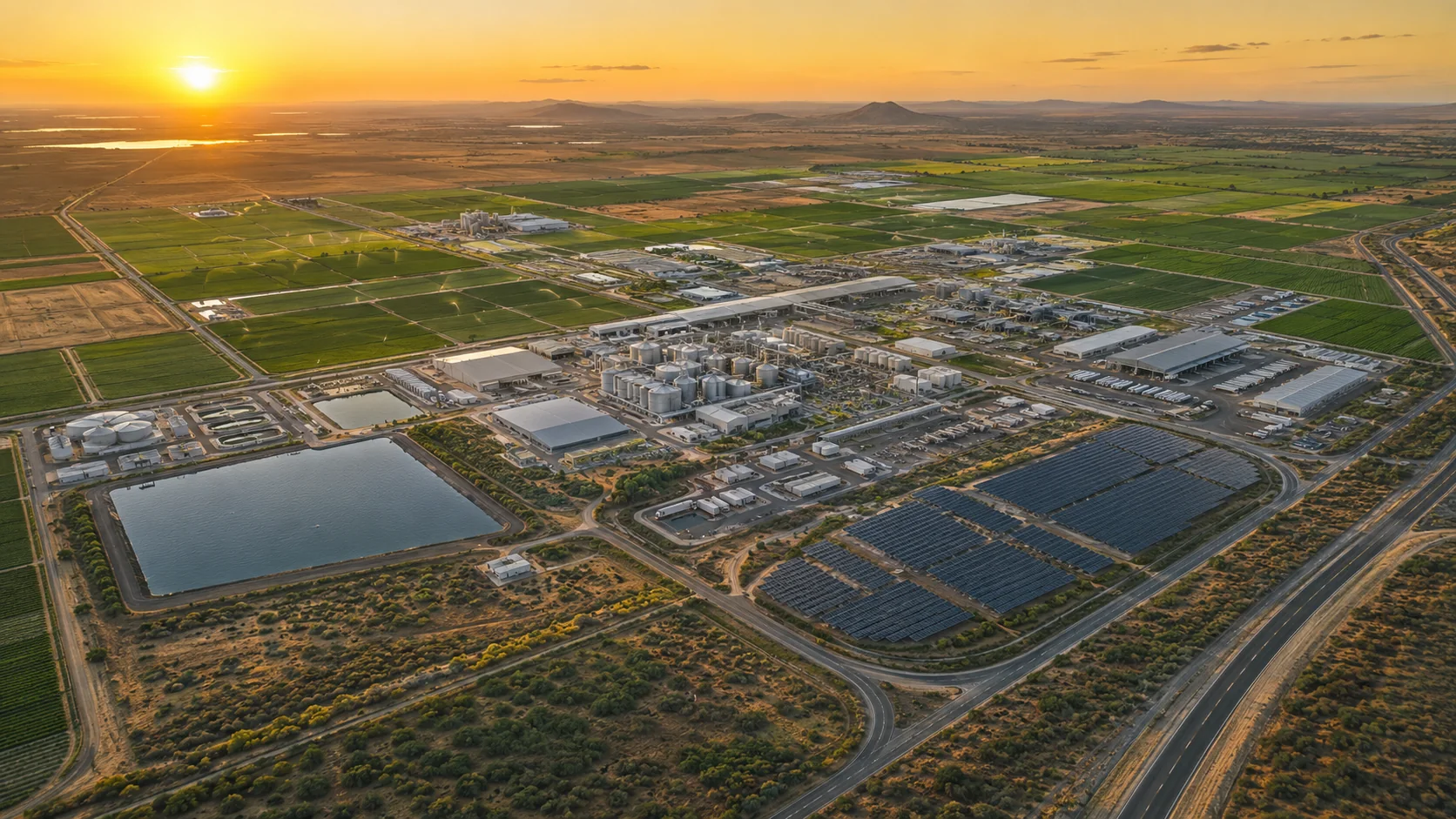 ILLUSTRATIVE PLATFORM VISUAL • NOT SURVEY / IFC
13 / BANKABILITY LOGIC
De-risk the platform
7Control principles 6Bankability levels 8Formal phase gates 1Capital discipline
De-risk the platform
before scaling the platform.
Seven control principles convert the integrated 50,000 ha vision into sequenced, financeable and diligence-ready packages.
VISION→DE-RISKING→BANKABLE PACKAGE→FINANCIAL CLOSE→OPERATIONS→SCALE
KAP-BL-001 • CONCEPT NOTE • Kgatleng District • Botswana
EXECUTIVE THESISBankability is a sequence,
Bankability is a sequence,
not a single funding event.
The platform remains integrated physically and digitally; capital exposure increases only as technical, commercial, legal and ESG uncertainty falls.
SEVEN CONTROL PRINCIPLES
The bankability operating system.
Each principle removes a different class of uncertainty before capital scales. The objective is not fragmentation; it is a portfolio of investable verticals operating as one system.
BANKABILITY ARCHITECTURE
Six levels move a concept toward financeability.
Capital exposure should rise as uncertainty falls.
PRINCIPLE 01 / PHASED DELIVERY
Scale only as evidence accumulates.
Phase-gate governance keeps capital deployment conditional, evidence-based and reversible until financial close.
0Concept→1Pre-feasibility→2Feasibility→3Bankability→4Financial close→5Construction→6Commissioning→7Operations
Proof of Platform
Production Base • FarmerConnect™ • WaterGrid™ • EnergyGrid™ • aggregation + packhouse • cold chain • FoodSafe™ • DataGrid™ • priority processing • domestic market
PRODUCTION → PROCESSING → TRADE → CASH FLOWCommercial Scale
More productive hectares • larger farmer network • priority processing • Food Trade City • warehousing • PackMat™ • LogisticsGrid™ • institutional + retail demand • utility expansion
RELEASE: UTILISATION EVIDENCERegionalisation
Regional trade • export aggregation • specialised processing • private label • scheduled corridors • air cargo • certification • advanced digital control
PRODUCT-MARKET FIT + STANDARDS + CONTRACTSFull Platform Maturity
Demand proven • infrastructure ready • operations performing • capital available • economics positive across the mature 50,000 ha ecosystem.
SUM OF VALIDATED CAPITAL DECISIONSPRINCIPLE 02 / COMMERCIAL SEGMENTATIONOne platform.
One platform.
Multiple cash flows.
Operating integration is preserved through interface agreements, SLAs, DataGrid™ and platform governance while asset economics remain transparent.
PRINCIPLE 03 / COMMON INFRASTRUCTURE CARVE-OUT
Finance enabling value appropriately.
Commercial assets should pay for commercially attributable infrastructure—not absorb every ecosystem-wide enabling cost.
FINANCING SPECTRUMPUBLICEnabling infrastructure CONCESSIONAL / DFIFood security • climate • infrastructure BLENDED / PPPCommercial + development capital PRIVATEStrong standalone cash flow
Low direct revenue / high economic value → higher contracted cash-flow visibility
PRINCIPLE 04 / ANCHOR OFFTAKE
Secure demand before commissioning capacity.
Preferred sequence: buyer requirement → product specification → production / processing requirement → capital requirement.
ProcessorsWholesalersRetailersInstitutional buyersHospitalityRegional distributorsExport buyersPrivate-label customers
OFFTAKE COMMITMENT LADDER
1Market interest
2Letter of intent
3Indicative volume
4Framework agreement
5Purchase agreement
6Long-term offtake
Higher commitment → stronger financing visibilityOFFTAKE QUALITY
Buyer credit qualityContract termVolume commitmentPricing formulaPayment termsTermination rightsCurrency / FXSecurity support
PRINCIPLE 05 / CONTROLLED FEEDSTOCK01Production SPVCentrally controlled hectares 02FarmerConnect™Contract farmers + cooperatives 03Commercial farmsStrategic third-party supply 04External supplyApproved contingency source
A processing plant is not bankable without managed supply.
FEEDSTOCK COVERAGE RATIO
CONTRACTED / CONTROLLED FEEDSTOCK÷REQUIRED FEEDSTOCK AT TARGET UTILISATION=COVERAGE RATIO
<70%High risk70–90%Mitigate90–110%Bankable range*>110%Buffer / scale
*Illustrative strategic thresholds only; lender thresholds must be set per SPV and product risk.
PRODUCTION-TO-PLANT INTEGRATION
01Plant demand→02Yield assumption→03Required hectares→04Farmer / SPV allocation→05Planting schedule→06Harvest schedule→07Factory intake
PRINCIPLE 06 / DFI-COMPATIBLE ESGESG is asset architecture,
ESG is asset architecture,
not a late-stage appendix.
Water • Energy • Climate resilience • Circularity • Farmer inclusion • Jobs + skills • Land + community • Food safety + traceability
TRACEABILITY AS BANKABILITY INFRASTRUCTURE
Farm→Field→Crop→Harvest→Batch→Processing→Packaging→Shipment→Buyer
Recall speed • buyer assurance • export compliance • supplier accountability • ESG verification • premium product claims

PRINCIPLE 07 / INVESTOR-GRADE REPORTING
Bankability depends on controlled evidence.
A project becomes financeable when its evidence is current, internally consistent, auditable and decision-ready.
Financial modelEngineeringDrawings + BoQsPermitsContracts + concessionsESGInsuranceExecution plan
CONTROLLED INVESTOR VDR
One data room. Multiple diligence workstreams.
MODEL GOVERNANCE + CAPEX EVIDENCE
Progressively replace assumptions with evidence.
Concept estimate→Pre-feasibility→Feasibility→Tendered→Financial close
Controlled assumptions • version history • input sources • scenarios • audit checks • sensitivities • change log
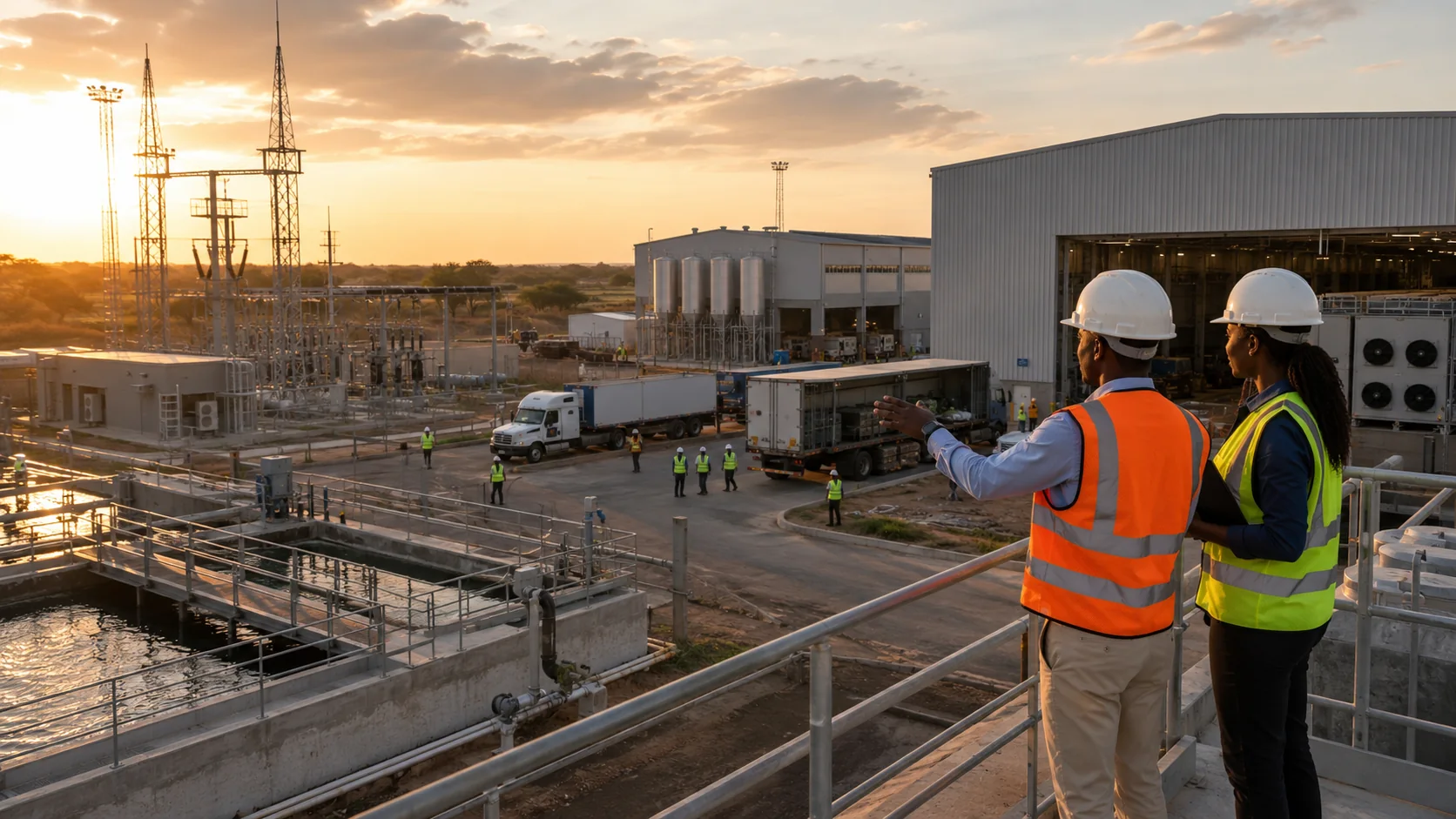
RISK ALLOCATION MATRIX
Risk sits with the party best able to manage it.
LandPlatform CompanyConstructionEPC / SPVCAPEX overrunEPC / Sponsor / SPVFeedstockProduction / FarmerConnect™ / ProcessorMarket demandCommercial SPV / OfftakerWaterWaterGrid™EnergyEnergyGrid™LogisticsLogisticsGrid™Food safetyOperator + FoodSafe™FX / ratesSPV / financing structure
BANKABILITY SCORECARD
Projects compete for capital on readiness—not ambition.
The source presentation’s profile is illustrative, not an audited project readiness score.

INVESTOR-TO-ASSET MATCHING
Capital structure follows risk.
Commercial banksCash-flow-backed projectsDFIsDevelopment + infrastructureInfrastructure fundsLong-duration contracted assetsPrivate equityGrowth businessesStrategic operatorsProcessing / logistics / utilitiesECAsEquipment-intensive projectsInstitutionsPredictable long-duration cash flowsClimate fundsWater / renewable / resilience
BANKABILITY INTERLOCKS
No SPV proceeds independently of the wider platform.
BANKABILITY CONTROL ROOM
Every capital package visible by stage, gap and risk.
Dashboard tracks CAPEX • funding gap • offtake • feedstock • water • power • permits • ESG • financial-close date.
ConceptPre-feasibilityFeasibilityBankabilityDiligenceCredit approvalFinancial closeConstructionCommissioningOperating
CAPITAL RELEASE LOGIC
Approvals and drawdowns are milestone-controlled.
01Business case→02Bankability review→03Capital Committee→04Board / investor approval→05Financial close→06Construction drawdown→07Milestone verification→08Subsequent drawdowns
DRAW ONLY AFTER VERIFIED MILESTONE COMPLETION.BANKABILITY DILIGENCE STACK
Independent diligence tests every capital-provider perspective.
13 / BANKABILITY LOGIC
De-risk the platform before scaling the platform.
Not “one mega-project seeking one funding solution”, but a masterplanned portfolio of bankable verticals progressing through controlled gates.
ONE PLATFORM • MULTIPLE CAPITAL PACKAGES • CLEAR RISK ALLOCATION
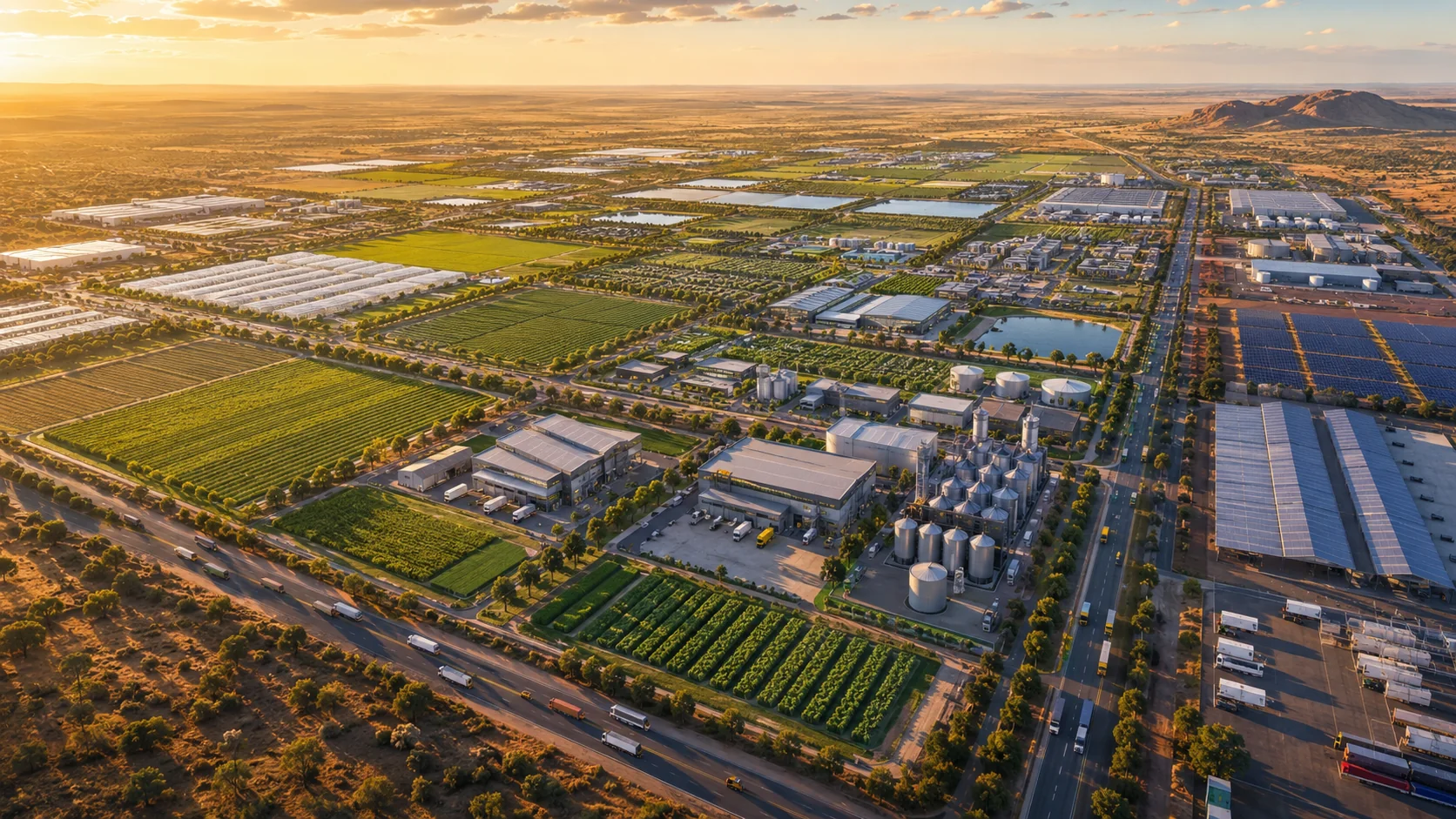
14 / DEVELOPMENT IMPACT
Food security +
Food security +
industrialisation + trade.
Kgatleng Agropark is structured as a national-scale agricultural transformation platform and regional food-industrial gateway — a food economy, not only a farming estate.
16IMPACT DOMAINS4TRANSMISSION CHANNELS1MEASURABLE SYSTEM
AGRICULTURE + INDUSTRY + INFRASTRUCTURE + TECHNOLOGY + MARKETS = INTEGRATED FOOD ECONOMY
16 IMPACT DOMAINS
A diversified development-impact portfolio.
Resilience, industrial capability, inclusion, market growth and circularity are treated as connected operating outcomes.
IMPACT TRANSMISSION
One platform investment transmits value through the economy.
The impact model distinguishes direct operating effects from wider supplier, household and structural outcomes.
Production • processing • logistics • utilities • trade
Suppliers • contractors • packaging • maintenance • professional services
Household spending from salaries • farmer income • SME revenue
Food security • industrial depth • import substitution • exports
System redundancy — not annual production alone.
Irrigated production, controlled agriculture, storage, processing, cold chain and institutional supply create complementary resilience across fresh, frozen, dry and processed categories.
Predictable supply→Inventory resilience→Shelf-life extension→Perishables protection
Retain more food value inside Botswana.
Match domestic demand to competitive local production and processing opportunities.

03 / EXPORT DEVELOPMENT
Build export capability from buyer specification backwards.
Target market → buyer specification → production → FoodSafe™ → PackMat™ → export logistics → buyer.
Regional trade + air cargo + downstream gatewaysAGRO-PROCESSING INDUSTRIALISATION
Move from agriculture to agriculture + manufacturing.
Industrial value-add converts crops and livestock into higher-value products while creating supplier, engineering, laboratory, packaging and logistics demand.
Fresh vegSaucesIQFDehydrationMillingPulsesDairyProteinBakeryBeveragesOilseedsFeed
Farm output → industrial feedstock → finished food → branded product
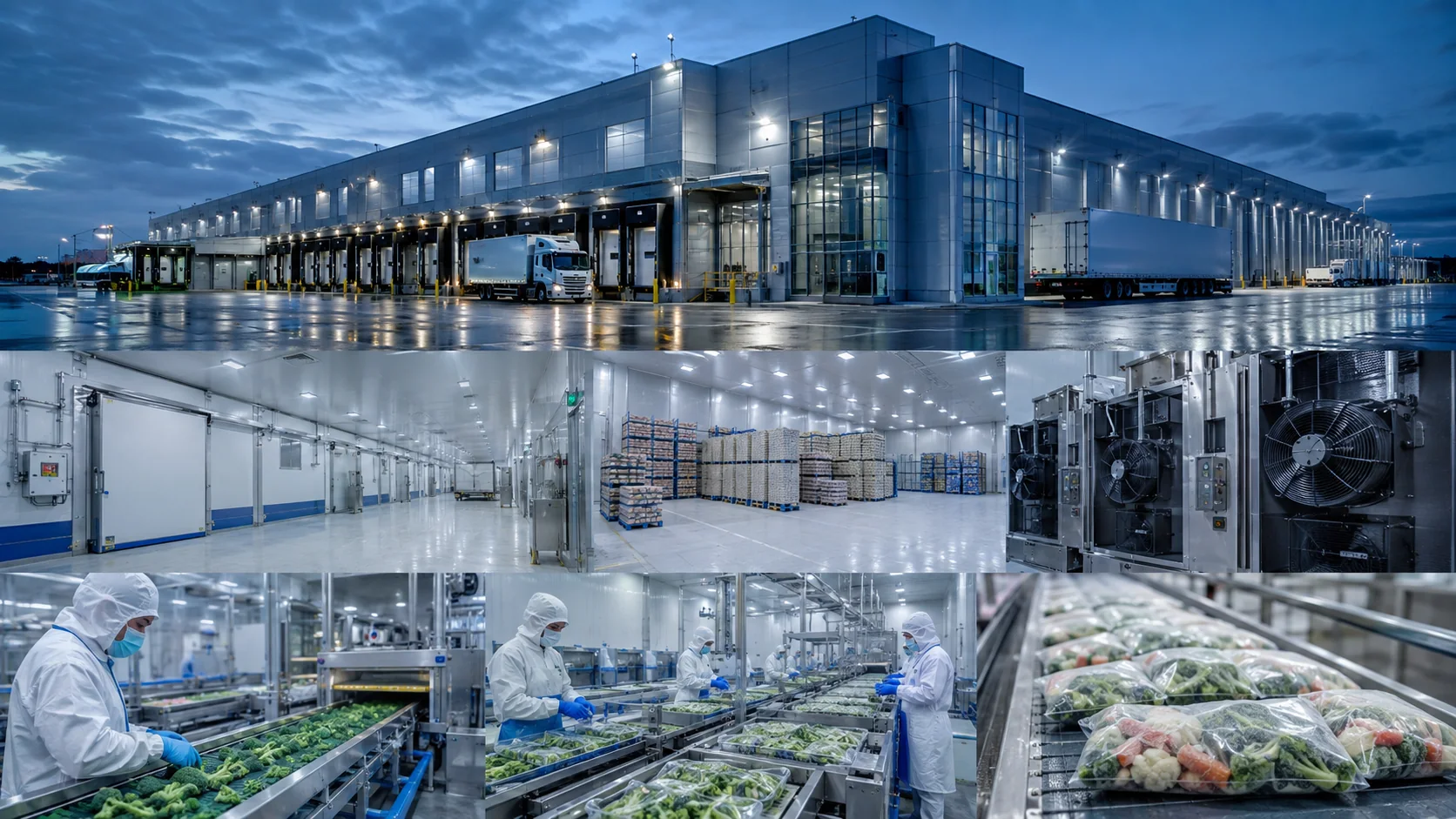
MANUFACTURING MULTIPLIERS
Processing demand extends far beyond the factory gate.
MachineryEngineeringMaintenanceRefrigerationPackagingIngredientsLaboratoriesWarehousingFinanceInsuranceICTProfessional services
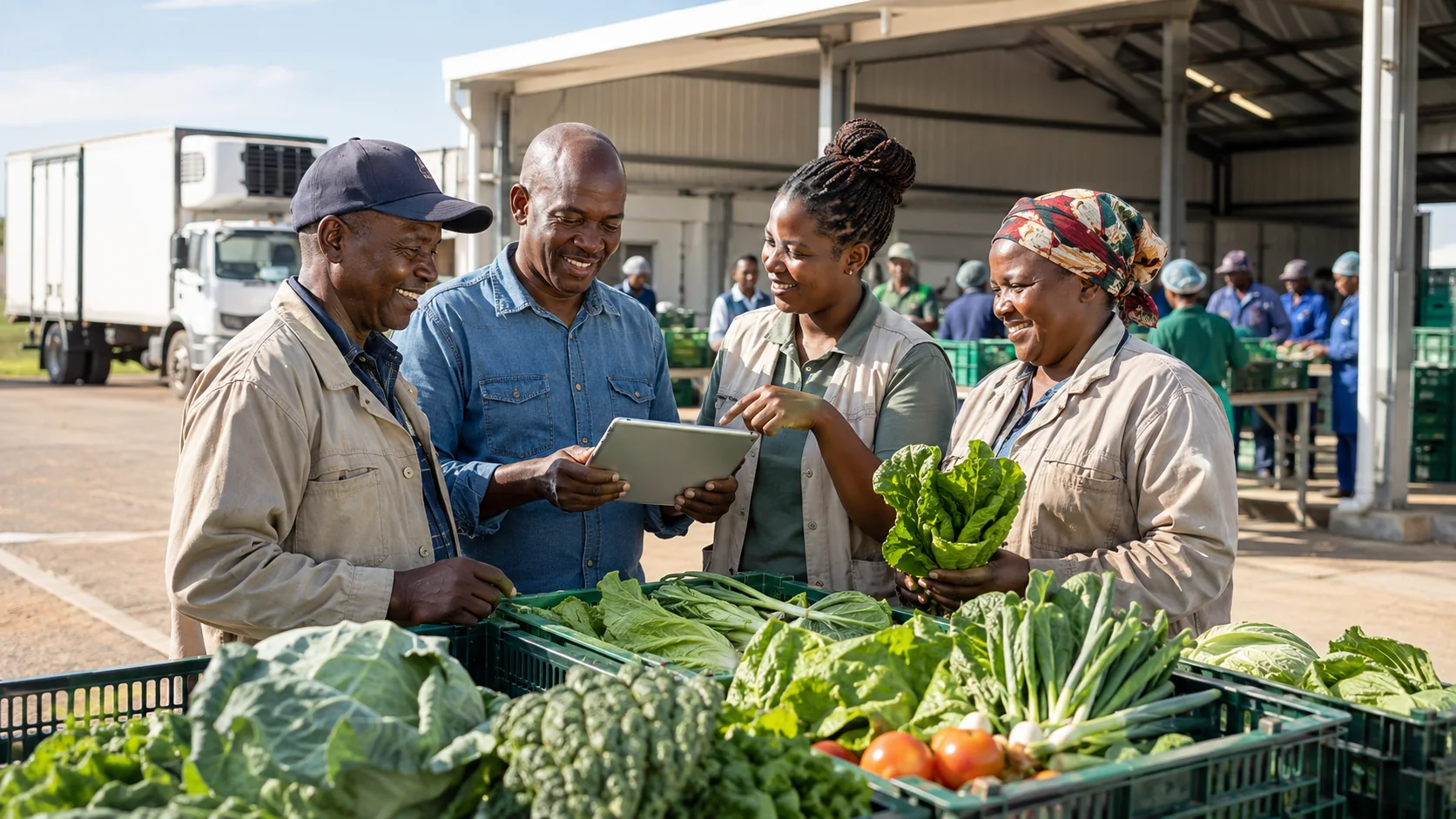
FARMERCONNECT™ + PEOPLEFARMERSRevenue • profitability • yield improvement • progression EMPLOYMENTConstruction • permanent operations • suppliers • farmer livelihoods SKILLSBasic skills → certification → apprenticeship → employment → management → entrepreneurship
Commercial integration, not programme participation.
Contracts • inputs • mechanisation • agronomy • aggregation • logistics • finance • market access.
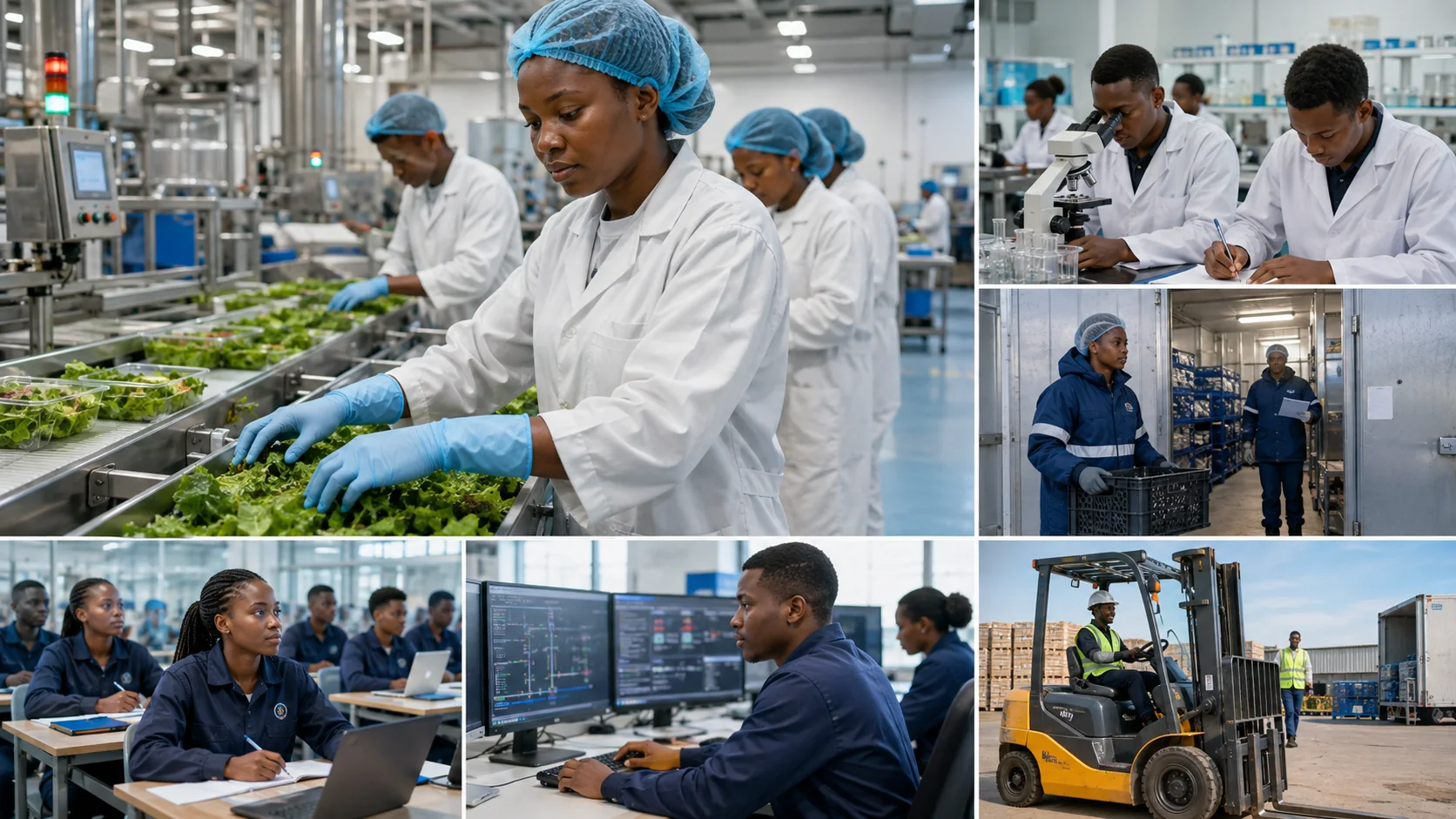
EMPLOYMENT + SKILLS ARCHITECTUREAGRICULTUREFarm workers • irrigation technicians • agronomists MANUFACTURINGOperators • engineers • quality personnel LOGISTICSDrivers • warehouse teams • fleet controllers DIGITAL + UTILITIESData / cyber • water / power technicians • control room operators
Throughput creates its own economic vertical.
PackMat™ can catalyse domestic packaging depth.
RESILIENT UTILITY SYSTEMS
Measure output supported — not only supply delivered.
WaterGrid™ and EnergyGrid™ are evaluated through reliability, efficiency, circularity and economic productivity.
Kgatleng as an inland food-trading and distribution node.
Botswana production+Regional production→Kgatleng: aggregate • process • trade→Southern African + export markets
Predictable base-load demand strengthens planning.
Move from commodity value to consumer relationship.
Commodity → Processed → Packaged → Branded → Consumer relationship
Botswana-owned food intellectual propertyREDUCED POST-HARVEST LOSSES
Maximise economic recovery per tonne produced.
1Prevent loss2Sell fresh3Process into food4Animal feed5Organic recovery6Dispose only if unavoidable
COLD-CHAIN INFRASTRUCTURE
Cold chain is market-access infrastructure.
Pre-cooling→Chilled / frozen storage→IQF→Refrigerated loading→Reefer transport→Temperature monitoring
ESG + CIRCULAR-ECONOMY GAINSWATEREfficiency + reuse ENERGYReliability + renewables WASTEReduce + recover PEOPLEFarmers + jobs + skills FOODSafety + traceability GOVERNANCEData + reporting
Make development performance measurable through operating systems.
Water, energy, waste, inclusion, food safety, traceability and governance become auditable performance dimensions.
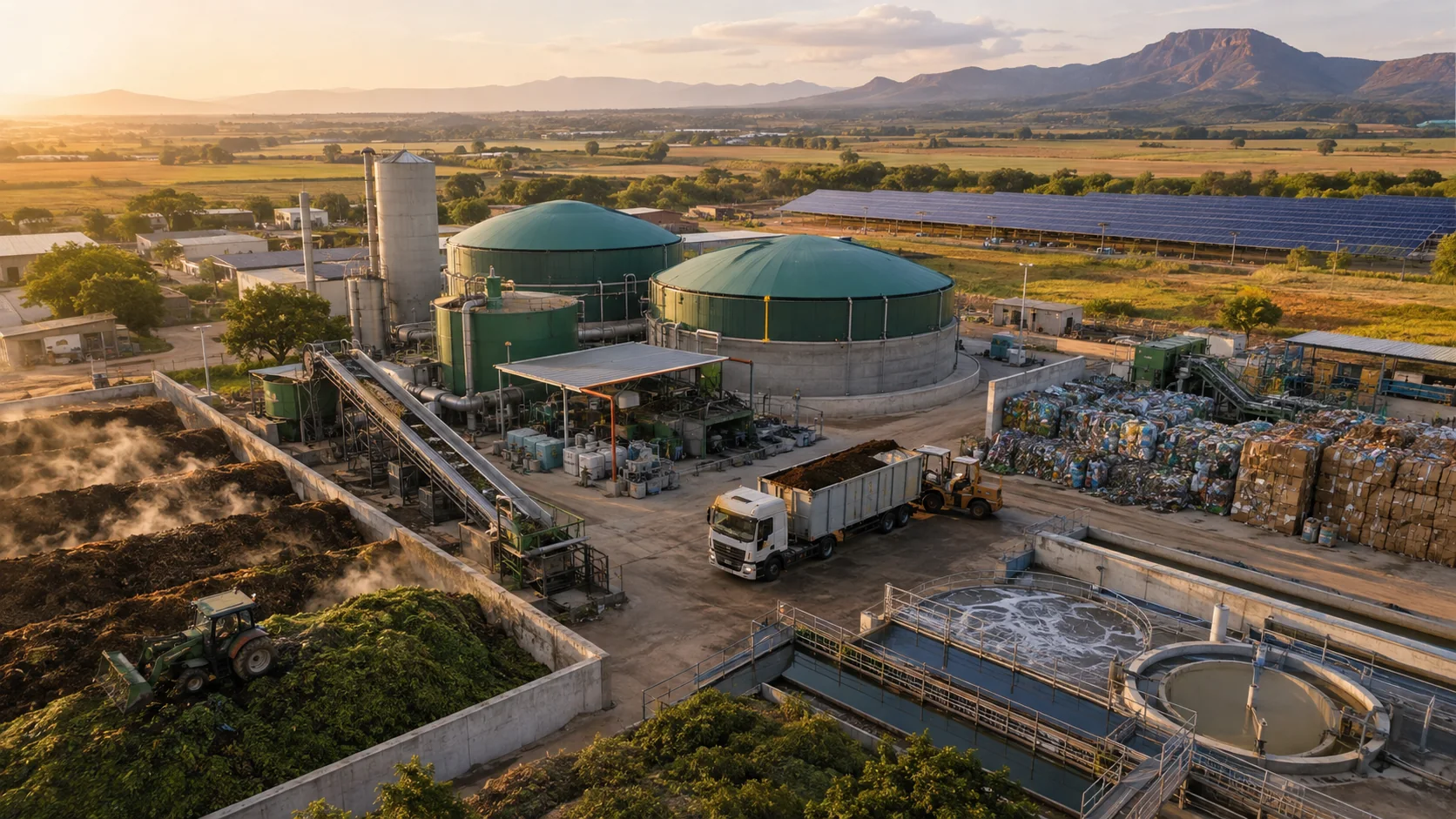
CIRCULARLOOP™
Waste becomes a resource stream.
The target is progressive reduction of material treated as waste across farm, factory and utility systems.
ORGANIC WASTE→COMPOST / FEED→BIOGAS / BIOFERTILISER→RECYCLING / REUSE→ENVIRONMENTAL REPORTING
Create a supplier ecosystem around the platform.
Operating value continues into households and the wider economy.
Agropark demand→Jobs / farmer / SME revenue→Household income→Consumption→Local economic activity
Fiscal channels include corporate and employee taxes, consumption taxes, licences, concession payments and wider economic activity.
Reliable productionProcessingStable demandFarmer investmentHigher productionLower importsIndustrial scaleExportsREINVESTMENT
Domestic productionProcessing scaleCompetitive productRegional accessHigher throughputLower unit costExport competitivenessAdditional investmentTRADE SCALE
DEVELOPMENT IMPACT DASHBOARD
DataGrid™ converts operating data into evidence.
Impact reporting should derive from the same systems used to run the platform.
DFI ALIGNMENT
Match development finance to specific additionality.
IMPACT GOVERNANCE + ASSURANCE
Claims must be measurable and defensible.
Board / ESG CommitteeStrategic oversightDevelopment Impact OfficeMeasurement + reportingDataGrid™Evidence infrastructureSPV ManagementAsset-level reportingFarmerConnect™Farmer outcomesCircularLoop™Resource recoverySkills CampusTraining outcomesIndependent AssurancePeriodic verification
IMPACT DEVELOPMENT PHASING
Prove impact. Scale it. Regionalise it. Mature the system.
Development impact grows in parallel with commercial and infrastructure maturity.
14 / DEVELOPMENT IMPACTProduce more. Process more.
Produce more. Process more.
Trade more. Waste less.
Retain more value.
Food security • Industrialisation • Farmer inclusion • Jobs • Skills • Logistics • Packaging • Regional trade • Circularity
KAP-DI-001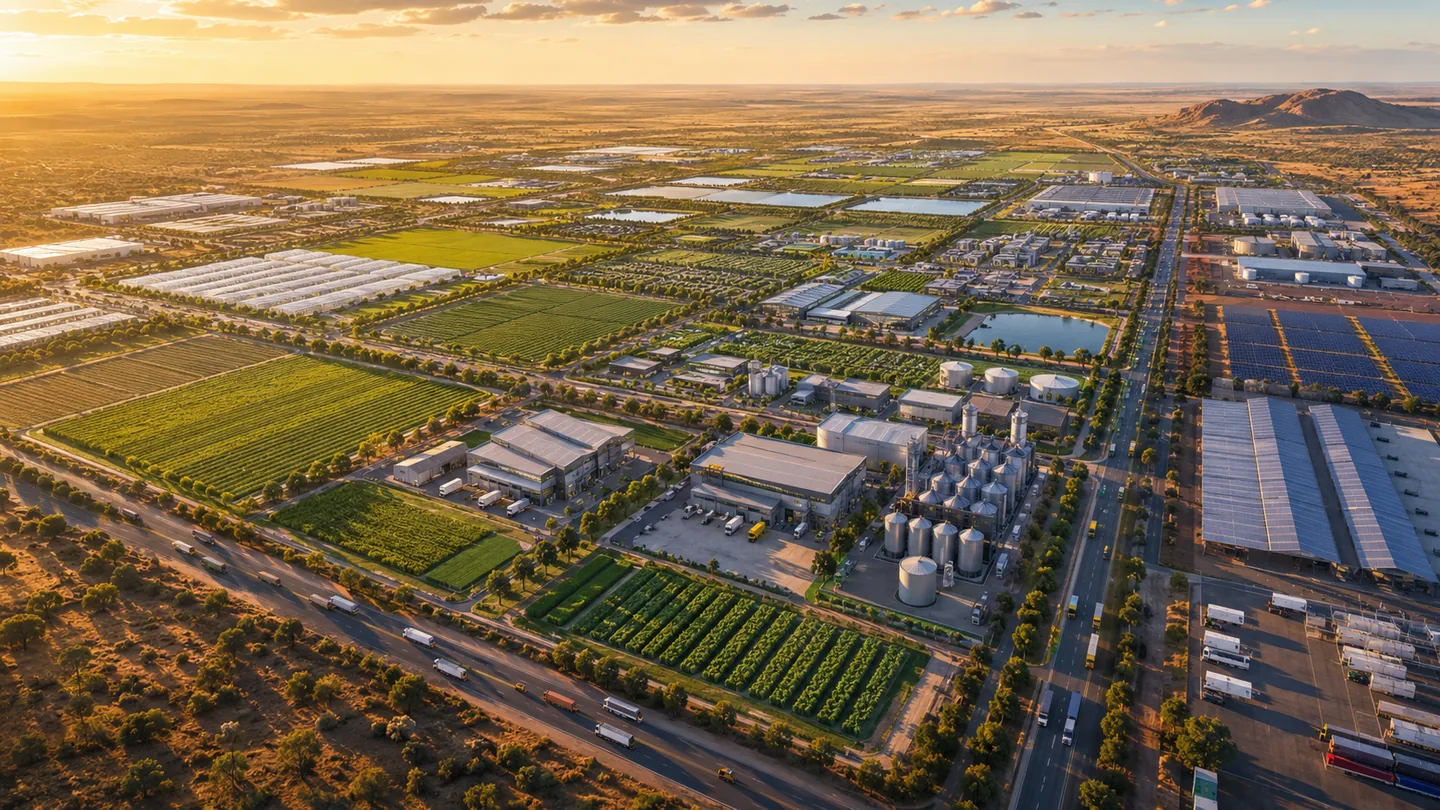
15 / IMPLEMENTATION ROADMAP
Build proof.
Build proof.
Scale commerce.
Activate export.
A four-phase sequence aligning infrastructure readiness, demand, offtake, operating capacity and investor packaging.
KAP-IR-001 • Strategic Concept NoteROADMAP THESIS
Successive proof points — not one construction event.
Each phase creates enough operating evidence, market depth and infrastructure readiness to justify the next capital tranche.
PROVEOperating loop→SCALEDomestic commerce→EXPORTRegional access→OPTIMISEMature platform
FOUR-PHASE DEVELOPMENT ARCHITECTURE
One masterplan. Four risk-reducing development horizons.
Capital intensity increases only as commercial evidence strengthens.
DEVELOPMENT RELEASE EQUATION
Every major expansion must satisfy five conditions.
If one condition is missing, the relevant capital package should not automatically proceed.
DEMAND+INFRASTRUCTURE+FEEDSTOCK+OPERATOR+CAPITAL=DEVELOPMENT RELEASE
PHASE 1 / 4
PROOF
Proof-of-Platform + Priority Infrastructure
Establish the controlled operating baseline, essential utilities, first production blocks and anchor commercial flows.
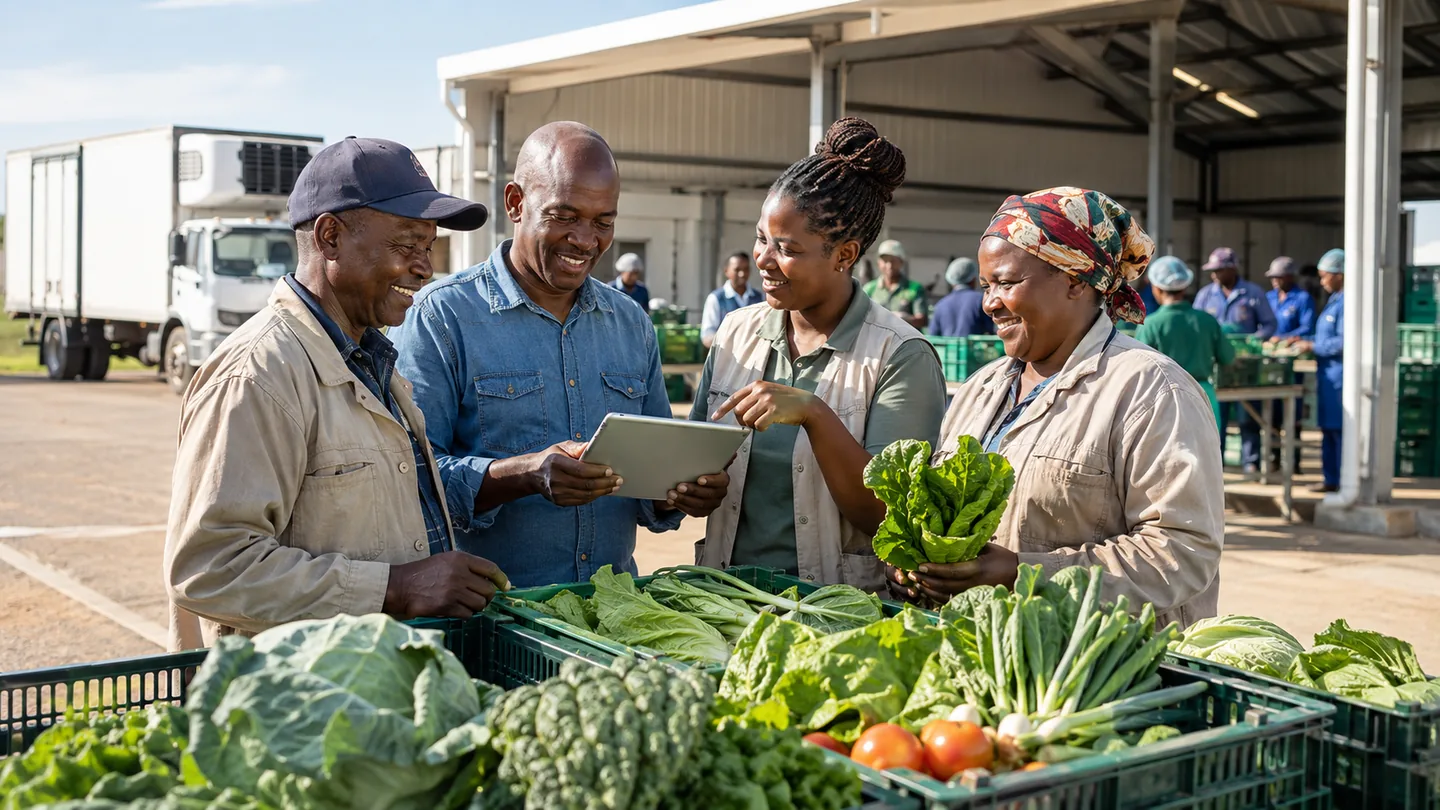 PHASE 1 • PRODUCTION + MARKET PROOF
LAND + PRODUCTION CONTROLS
Physical definition first. Productive hectares second.
Capital follows a sufficiently defined land envelope, surveys, servitudes and development controls. Production starts with crops that prove the commercial system.
Market requirement→Required tonnes→Required hectares→Planting programme
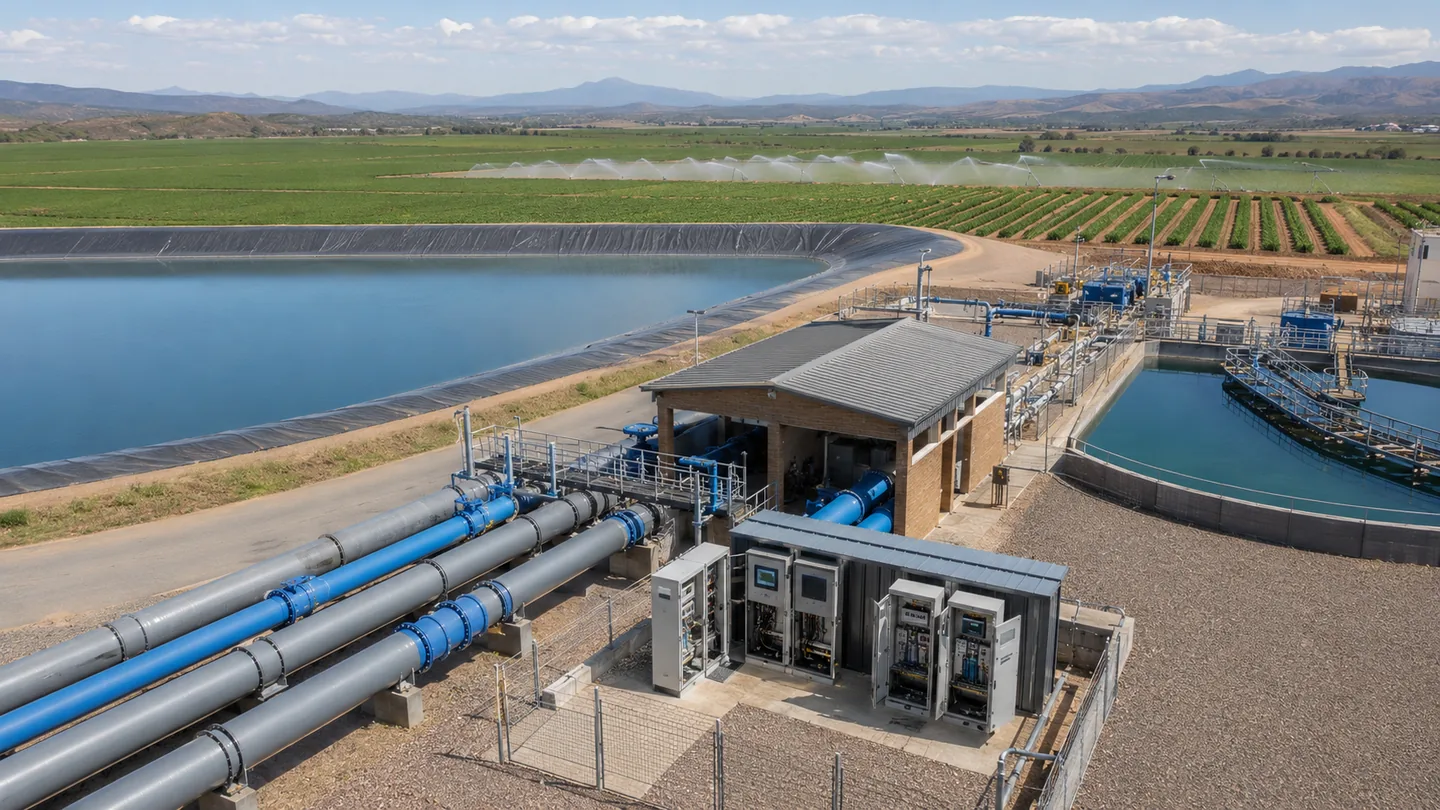
PHASE 1 • WATERGRID™
Water before hectares.
Initial capacity serves irrigation, packhouse, processing, potable demand, hygiene and firewater.
Source→Storage→Treatment→Pumping→Distribution→Metering→SCADA
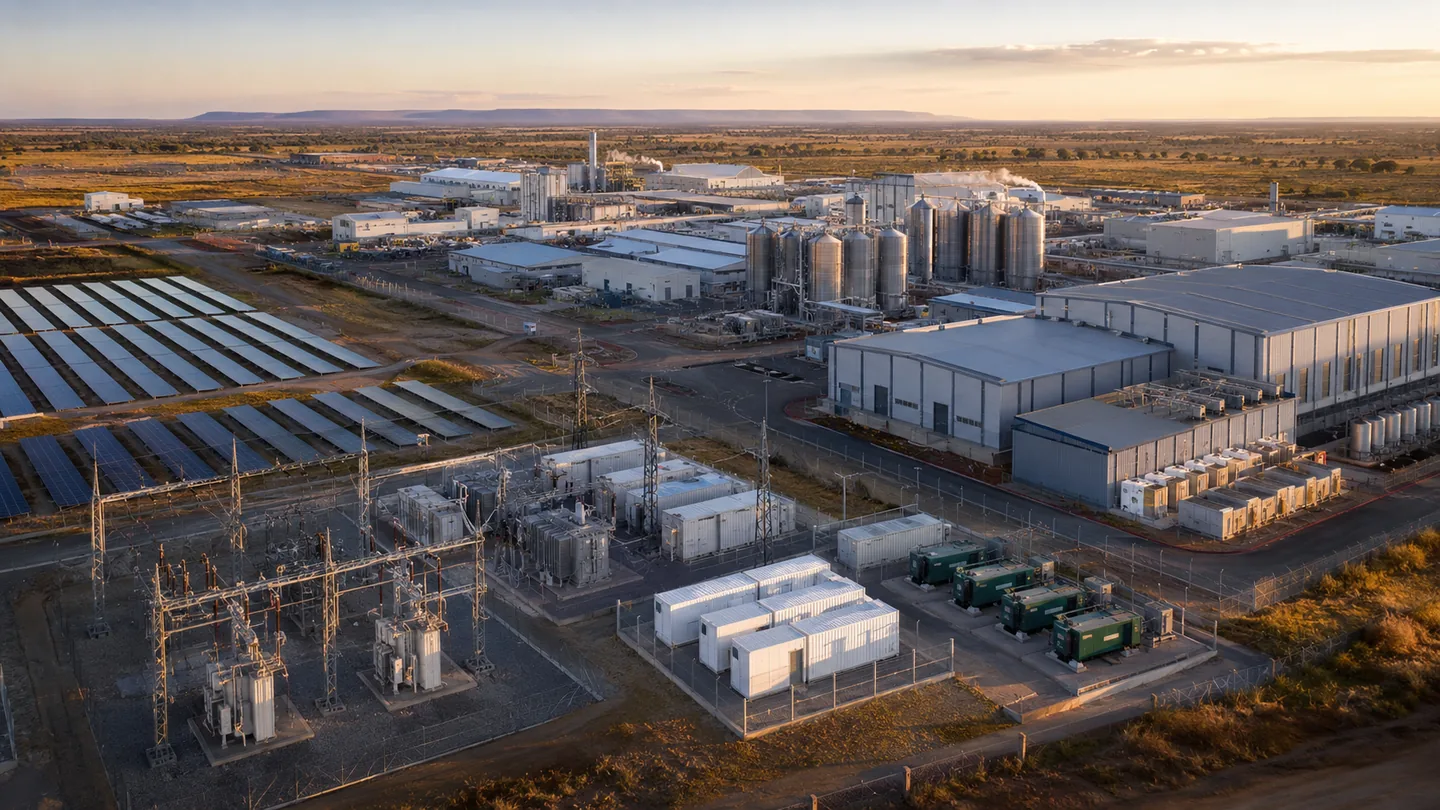
PHASE 1 • ENERGYGRID™
Firm power before industrial load.
Irrigation, packhouse, cold chain, processing, WaterGrid™ and DataGrid™ receive capacity before commissioning.
Bulk intake→Substations→33/11 kV→Critical loads→Backup→Metering
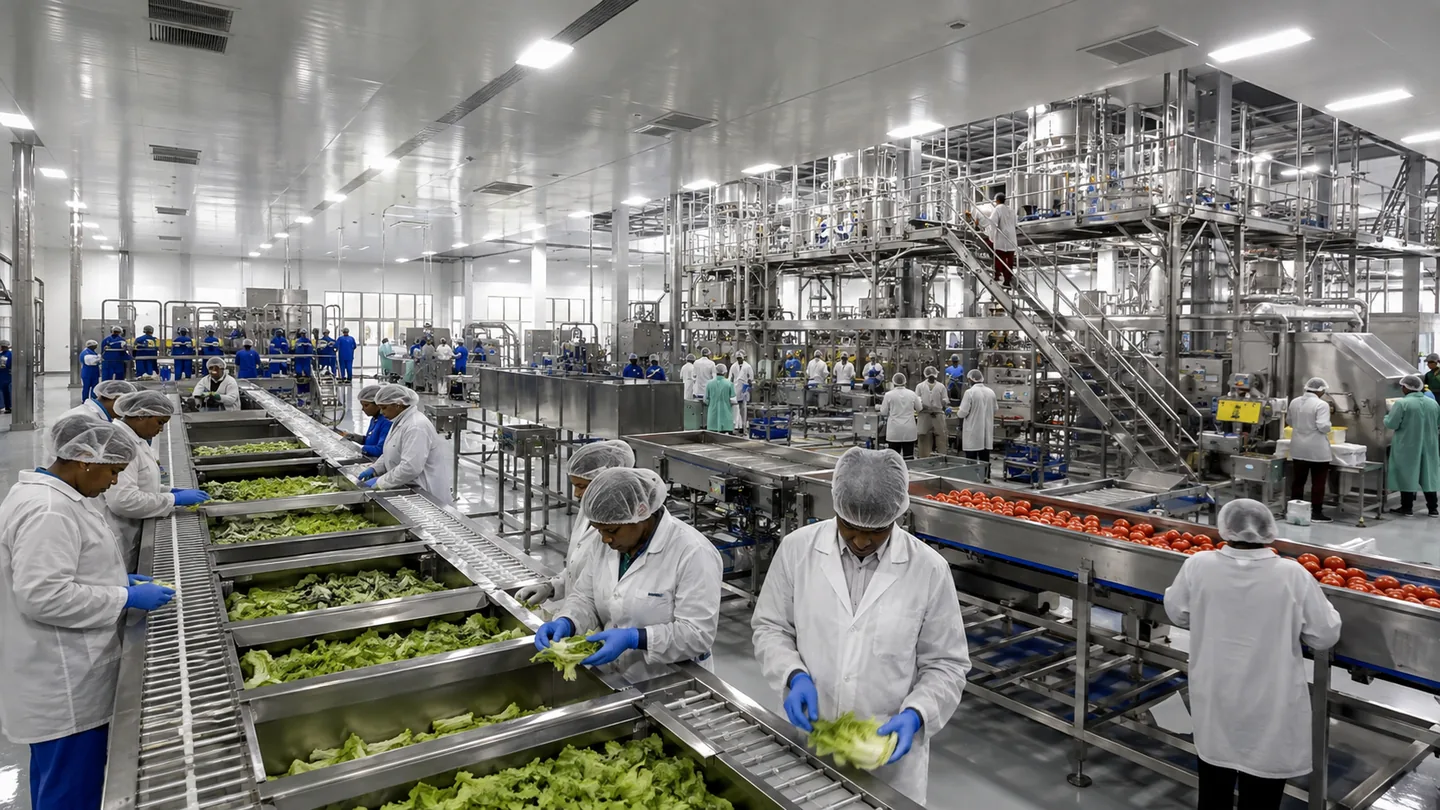 PHASE 1 • SELECTED PROCESSING
FIRST PACKHOUSE + PROCESSING
Close the first industrial conversion loop.
The packhouse proves intake, grading, cooling, packing, palletisation and dispatch. Processing launches only where feedstock visibility and credible demand can support early utilisation.
PHASE 1 PROOF TEST
Construction completion is not proof-of-platform.
Phase 1 is complete only when the end-to-end food value chain operates commercially.
LANDWATERPOWERPRODUCTIONPACKHOUSEFOODSAFE™PROCESS / FRESHBUYERLOGISTICSREVENUE
PRODUCTION → SALEABLE PRODUCT → BUYER → DELIVERY → INVOICE → COLLECTION
PHASE 1 DIGITAL FOUNDATION
Minimum viable integration. Full expandability.
Digital investment supports practical operations first and scales with the physical platform.
Farmer registryCrop recordsBatch traceabilityFoodSafe™InventoryBasic ERPDispatchUtility telemetryInvestor VDR
PHASE 2 / 4
SCALE
Commercial Scale-Up + Food Trade City Activation
Convert Phase 1 proof into scaled domestic and institutional commerce.
Operating proof → utilisation evidence → capital release → scale
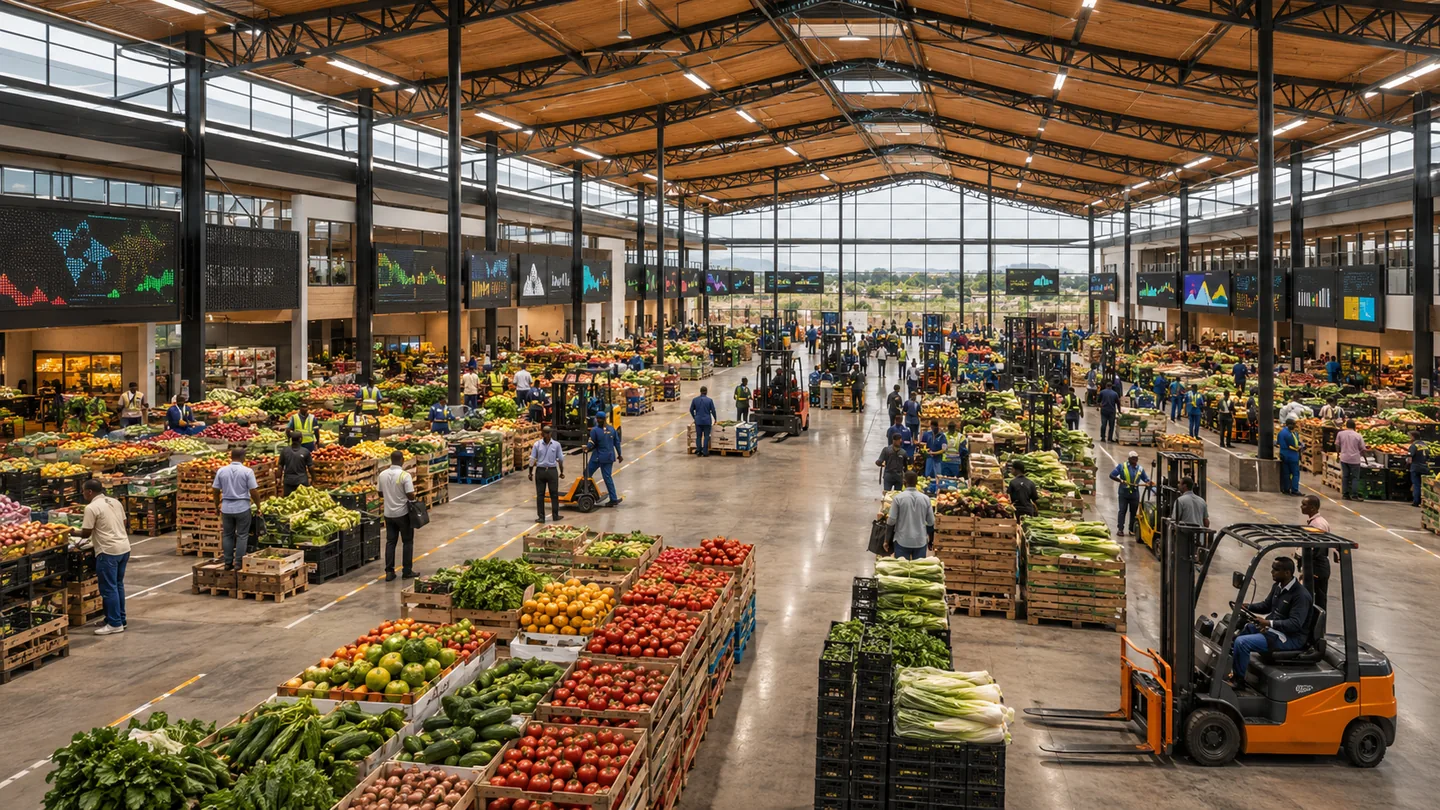 PHASE 2 • FOOD TRADE CITY
ACTIVATE THE COMMERCIAL HEART
Scale what already works.
Priority expansion goes to value chains demonstrating demand, feedstock, attractive economics and operating capability.
PROCESSING SCALEIQF • dehydration • pulses • dairy • bakery • beverages • milling • saucesPACKMAT™Cartons • trays • labels • films • crates • contract packingINSTITUTIONAL MARKETSchools • hospitals • universities • mines • government • hotels • catering
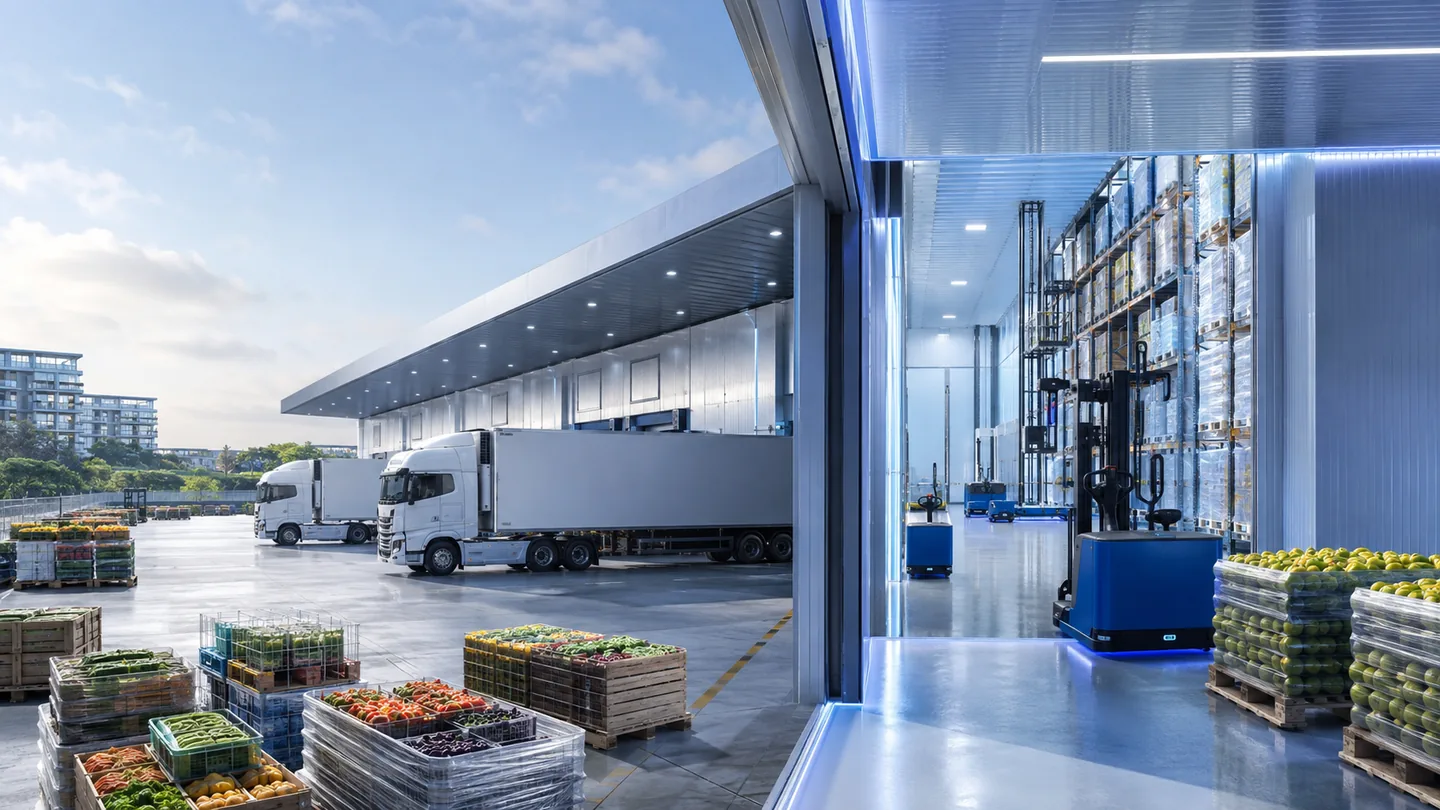 PHASE 2 • LOGISTICSGRID™
COMMERCIAL TARGET
Establish Kgatleng as a major domestic food-supply platform.
Scale storage, fleet and dispatch around commerce: distribution centres, dry warehouses, cold stores, cross-docks, truck lanes, reefer operations and yard management. MobilityGrid™ expands worker and public movement in parallel.
Production→Processing→Food Trade City→Institutional supply→Retail distribution→Logistics
PHASE 3 / 4
EXPORT
Regional Trade + Export Activation
Transform Kgatleng Agropark into a regional food-industrial gateway.
Target market→Buyer→Specification→Certification→Production→Processing→Packaging→Logistics→Delivery
Export development is buyer-led: destination-market requirements shape product, certification, price, currency, shelf life and logistics before capacity is released.
 PHASE 3 • AIR CARGO
REGIONAL + EXPORT GATEWAY
Activate air cargo when premium demand supports it.
The Food Trade City evolves from a national market into a regional trading platform while air cargo adds time-sensitive export capability.
FOODSAFE™ — EXPORT GRADEAdvanced labs • export certification • market standards • residue controls • rapid recallLOGISTICSGRID™ — REGIONALCross-border cold chain • road freight • export consolidation • customs-controlled movement
ADVANCED PROCESSING + BRANDS
Shift from import substitution toward export competitiveness.
Advanced proteinPortioned + preparedReady mealsConvenience foodsPremium dairyHigher-value categoriesExport beveragesShelf-stable productsEdible oilsFood + feed linkageBotswana brandsConsumer IP
PHASE 3 COMMERCIAL TARGETMaterial regional + export revenueRegional sales • export sales • private label • branded foods • foreign-currency earnings • value / tonne
PHASE 4 / 4
OPTIMISE
Full Platform Maturity + Intelligent Operations
Complete and optimise only commercially justified capacity across the wider 50,000 ha ecosystem.
Production • 12 processing lines • Food Trade City • utilities • mobility • circularity • intelligent operations
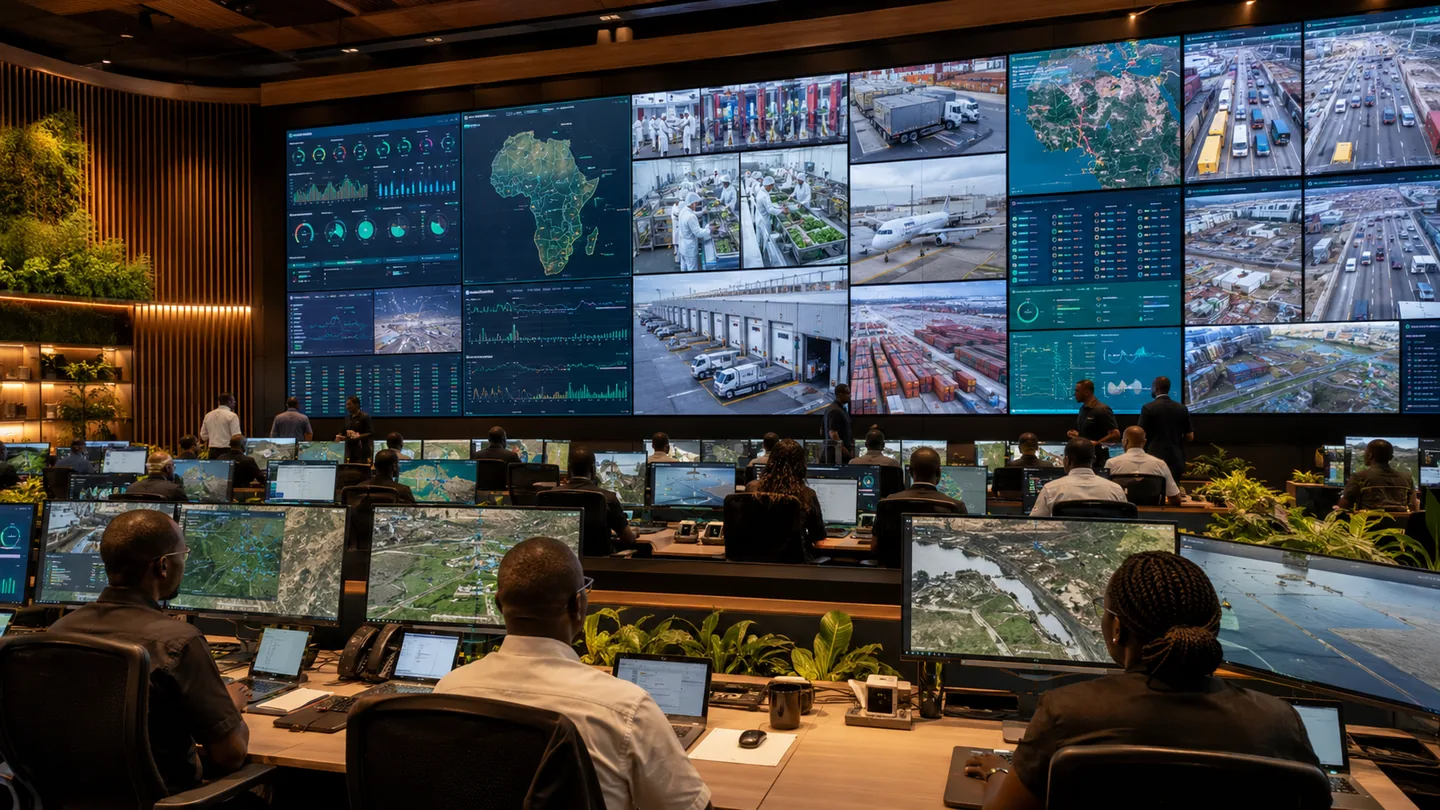 PHASE 4 • EXECUTIVE CONTROL ROOM
DATAGRID™ INTELLIGENCE
Move from system integration to predictive platform operations.
The mature digital layer optimises production, assets, utilities, logistics, quality and working capital.
Digital twinAI crop forecastingPredictive maintenanceDemand forecastingMarket allocationUtility optimisationLogistics optimisationQuality anomaly detectionWorking-capital analytics
Reliability, utilisation and resource productivity.
UTILITIESWater: source → storage → treatment → reuse
Energy: grid → storage → load managementMOBILITYFreight corridors • BRT • LRT-ready • TOD • active mobility • emergency ring roadsCIRCULARLOOP™Organic recovery • biogas • biofertiliser • water recovery • packaging recycling
Energy: grid → storage → load managementMOBILITYFreight corridors • BRT • LRT-ready • TOD • active mobility • emergency ring roadsCIRCULARLOOP™Organic recovery • biogas • biofertiliser • water recovery • packaging recycling
Match capital classes to development maturity.
PHASE 1Sponsor • DFI • blended • public enablingPHASE 2Banks • project finance • strategic • infrastructure fundsPHASE 3Trade finance • ECA • strategic operators • regional investorsPHASE 4Institutional • refinancing • monetisation • recycling
PHASE-GATE CAPITAL RELEASE
Capital exposure increases as development risk falls.
Development stages correspond to financing maturity; evidence must improve before capital steps up.
CONCEPTPRE-FEASIBILITYFEASIBILITYENGINEERINGCONTRACTSPERMITSBANKABILITYFINANCIAL CLOSECONSTRUCTIONCOMMISSIONINGOPERATIONS
IMPLEMENTATION DEPENDENCIES
Control the interlocks explicitly.
The master schedule is only as strong as the dependencies between infrastructure, production, commerce and finance.
INITIAL CRITICAL PATH
LAND→WATER→ENERGY→PRODUCTION→PACKHOUSE→FOODSAFE™→PROCESSING→OFFTAKE→LOGISTICS
PROGRAMME MANAGEMENT OFFICE
One PMO controlling schedule, interfaces, budgets, risks and readiness.
A 50,000 ha platform requires integrated programme governance across specialist workstreams.
Land + planningProductionWaterGrid™EnergyGrid™ProcessingFood Trade CityPackMat™LogisticsGrid™MobilityGrid™FoodSafe™DataGrid™CircularLoop™Commercial + offtakeFinance + investmentESGSkills + workforce
DEVELOPMENT READINESS DASHBOARD
Leadership sees blockers before they affect delivery.
Each phase is managed through one readiness view across physical, commercial and financial gates.
IMPLEMENTATION FLYWHEEL
Proof makes the next phase more financeable.
Infrastructure→Production→Trade→Revenue→Operating evidence→Investor confidence→Capital→Additional capacity
Build proof. Scale commerce. Activate export. Optimise the platform.
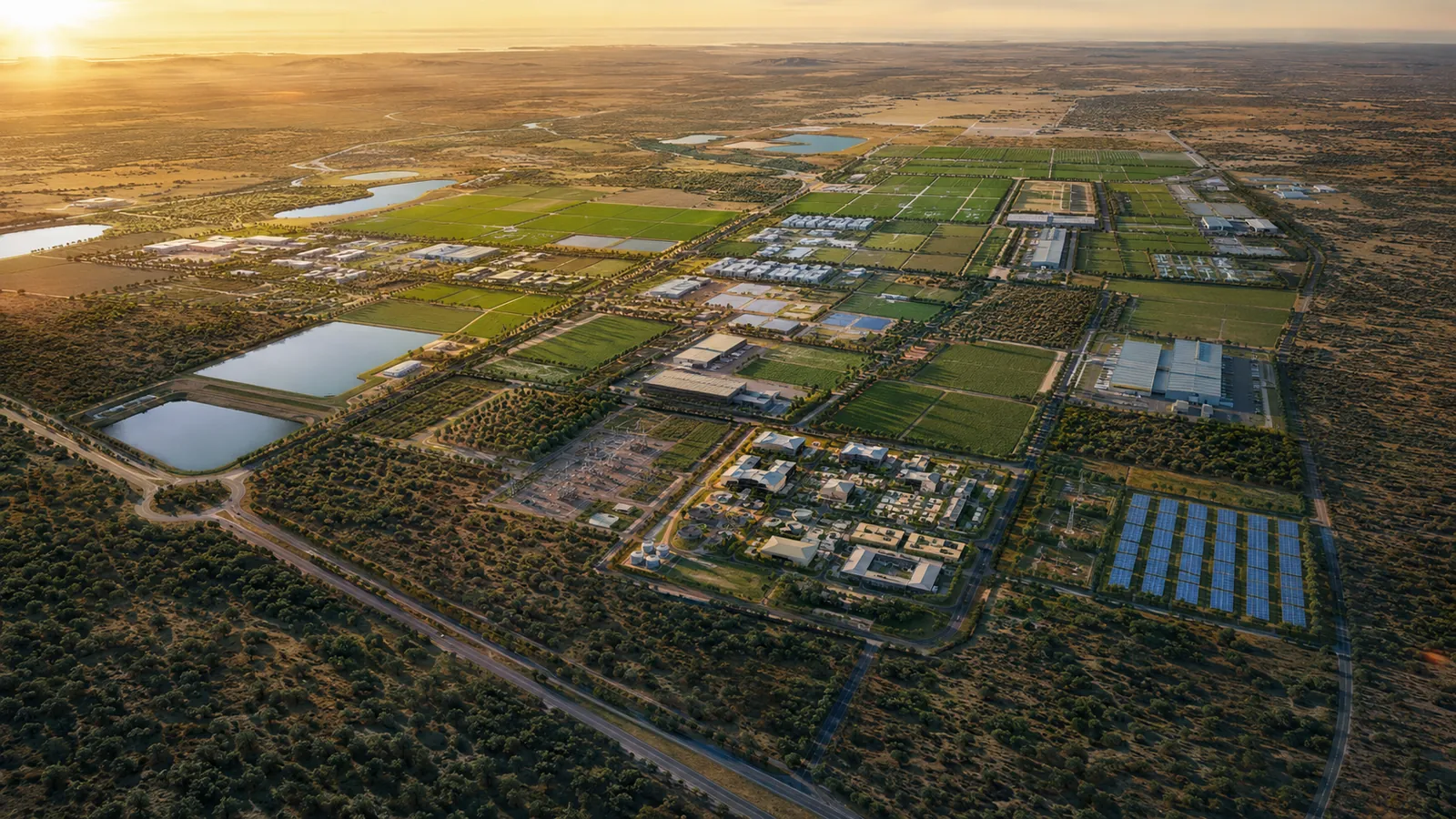
16 / NEXT CONTROLLED STAGE · KAP-C1-001
Priority Class 1
19Priority deliverables
6Integrated workstreams
5Dependency waves
6Readiness gates
Priority Class 1
Deliverables.
Convert the concept baseline into survey-controlled, engineering-controlled, financially validated and investor-ready work packages.
CONCEPT BASELINEStrategic assumptions
→
CLASS 1 PLANNINGDefinition + evidence
→
FEASIBILITY + BANKABILITYValidated investment case
→
PHASED INVESTMENTControlled execution
THE CONTROLLED TRANSITION
Define before designing. Validate before financing. Finance before building.
Surveyed land, masterplan, zoning, parcel IDs and development controls.
Defined capacities, interfaces, equipment schedules and infrastructure concepts.
Validated CAPEX, OPEX, revenue, phasing and financial returns.
ESG, SPV/PPP, risk allocation, VDR and capital-ready packages.
SIX INTEGRATED WORKSTREAMS
One design-and-investment system — not 19 disconnected documents.
The workstreams remain cross-linked through common spatial control, capacity assumptions, commercial demand and investment gates.
Spatial Planning
01 Masterplan · 02 Land-use · 03 Zoning · 04 Production blocks
Commercial Assets
05 Food Trade City · 06 Processing · 07 Packhouse + cold chain · 13 Air cargo
Infrastructure
08 MobilityGrid™ · 09 WaterGrid™ · 10 EnergyGrid™ · 12 LogisticsGrid™
Digital + Control
11 DataGrid™ · GIS · BIM · Digital Twin · control standards
Economics + Finance
14 CAPEX + BoQ · 15 OPEX + Revenue · 16 Financial Model · 18 PPP/SPV
ESG + Investor
17 ESG + Impact · 19 Investor VDR · permits · diligence
SEQUENCE BY DEPENDENCY
Five waves control what must be known first.
Masterplan → land allocation → zoning → production blocks
Mobility → water → energy → digital → logistics
Trade City → processing → cold chain → air cargo
CAPEX → OPEX/revenue → phased financial model
ESG → PPP/SPV → investor data room
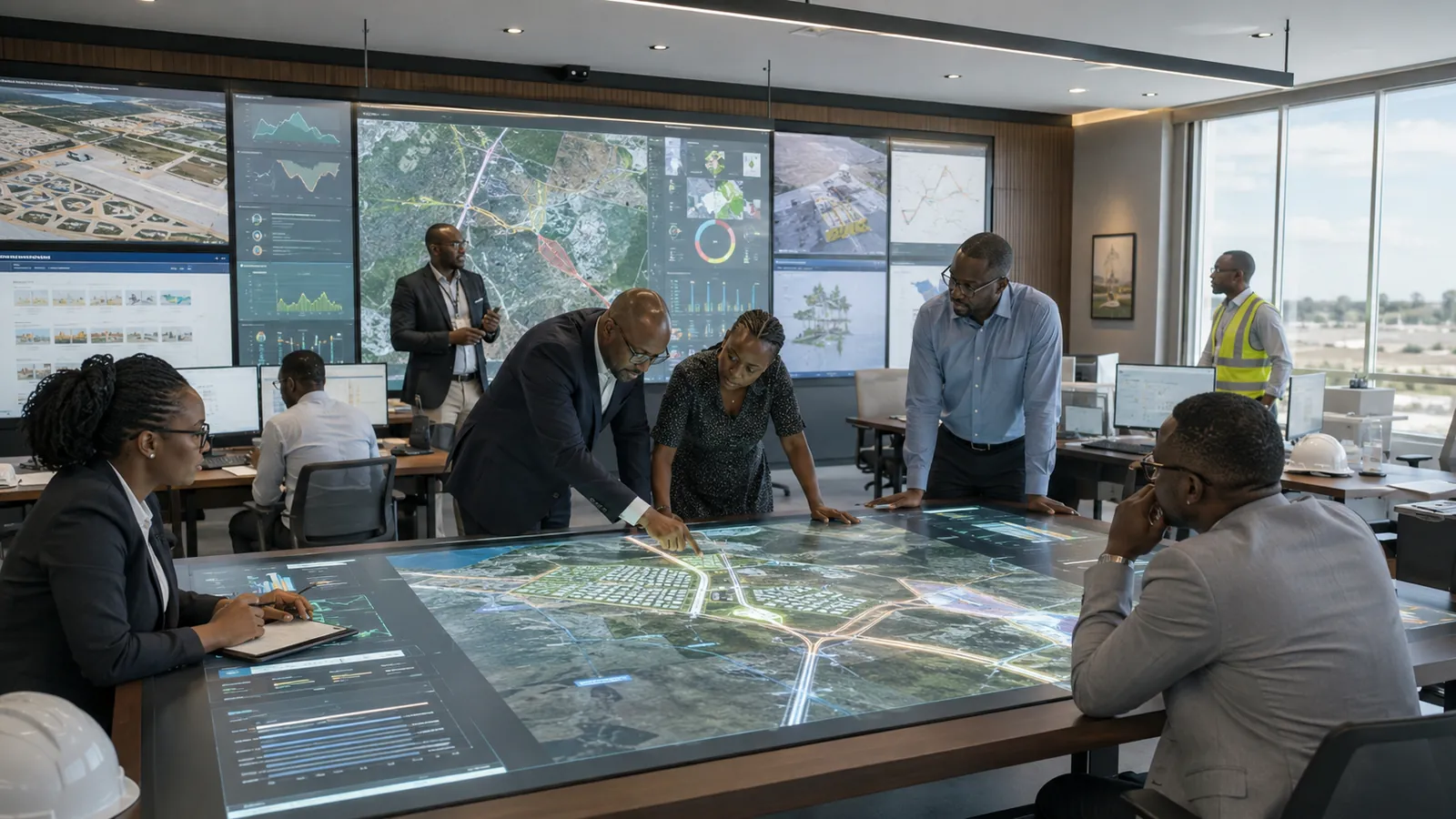 PROGRAMME CONTROL · DESIGN + COMMERCIAL + CAPITAL
CLASS 1 GOVERNANCE
Programme Steering CommitteeStrategic decisions · scope · phase gates
Design AuthoritySpatial + engineering control
Commercial CommitteeDemand + offtake
Capital CommitteeCAPEX + investment approval
Utility Capacity CommitteeWater + power allocation
ESG CommitteeEnvironmental + social controls
Digital GovernanceDataGrid™ + standards
PMO + Document ControlSchedule · registers · decisions · VDR
A dedicated Programme Office coordinates definition, evidence and investment readiness.
DATA MATURITY LADDER
Move from strategic assumptions toward evidence-backed engineering and commercial data.
- Concept allowance
- Parametric estimate
- Quantity-based estimate
- Vendor-supported estimate
- Tendered cost
- Contracted cost
- Concept revenue
- Market study
- Product forecast
- Buyer engagement
- Indicative offtake
- Contracted offtake
- IR-0 Concept
- IR-1 Pre-feasibility
- IR-2 Feasibility
- IR-3 Bankability
- IR-4 Investor diligence
- IR-5 Financial-close ready
CONTROLLED DELIVERABLE REGISTER
Nineteen priority Class 1 packages.
Each package is spatially defined, quantified, traceable and finance-linked.
Overall 50,000 ha Masterplan
Verified boundary + parcels · constraints · platform zones · utility/mobility corridors · development phases.
A / Spatial PlanningLand-Use Allocation Plan
Gross/net land budget · production · industry · logistics · utilities · buffers · strategic reserves.
A / Spatial PlanningFunctional Platform Zoning Plan
Zone codes · permitted uses · intensity · setbacks · freight/service rules · environmental conditions.
A / Spatial PlanningProduction Base Block Plans
Cultivated area · soils · irrigation · crop/yield basis · roads · aggregation · energy · block economics.
A / Spatial PlanningFood Trade City Layout + Market Architecture
Market districts · halls · warehouses · buyer/trader facilities · cold rooms · docks · tonnes/day capacity.
B / Commercial AssetsProcessing-Line Drawings + Equipment Schedules
12 lines · process flows · plant layouts · equipment IDs/capacity · utility/labour/storage demand.
B / Commercial AssetsPackhouse + Cold-Chain Plans
Receiving/grade/pack flows · pre-cooling · chilled/frozen storage · reefer interfaces · peak capacity.
B / Commercial AssetsMobilityGrid™ Road + Transit Plans
Freight roads · farm/service roads · BRT/LRT-ready corridors · mobility hubs · traffic and gate capacity.
C / InfrastructureWaterGrid™ Infrastructure Concept
Source · storage · treatment · pumping · irrigation · process/potable/firewater · reuse · drought reserve.
C / InfrastructureEnergyGrid™ Power-Distribution Concept
Demand/load centres · bulk intake · substations · 33/11 kV · backup · solar/storage · SCADA.
C / InfrastructureDataGrid™ Digital Architecture
FarmerConnect™/GIS/ERP · MES/WMS/TMS · FoodSafe™ · SCADA · cyber · governance · twin/control room.
D / Digital + ControlLogisticsGrid™ Warehousing + Dispatch Model
Dry/cold warehouses · DCs · cross-docks · yards · fleet · docks · handling · throughput-to-CAPEX model.
C / InfrastructureAir Cargo Gateway Concept Plan
Cargo forecast · perishables terminal · cold rooms · customs/inspection/security · landside/airside interfaces.
B / Commercial AssetsCAPEX + BoQ Validation
Quantities/rates · civil/equipment/utilities · fees · contingency/escalation · package/SPV/platform reconciliation.
E / Economics + FinanceOPEX + Revenue Models
Volume/price drivers · fixed/variable cost · production/processing economics · tariffs · breakeven/margins.
E / Economics + FinancePhased Financial Model
CAPEX/funding · revenue/OPEX/EBITDA · working capital · debt/tax/FCF · IRR/NPV/DSCR · sensitivities.
E / Economics + FinanceESG + Social-Impact Framework
Land/water/climate/biodiversity · circularity/energy · farmers/jobs/skills · H&S/community · assurance.
F / ESG + InvestorPPP / SPV Structuring
SPV/JV/concession · PPP/BOT/BOO/DBFO · asset-structure matrix · risk allocation · governance/capital fit.
E / Economics + FinanceInvestor Data-Room Index
20-section VDR · version/confidentiality control · technical/commercial/financial/ESG/legal/execution evidence.
F / ESG + Investor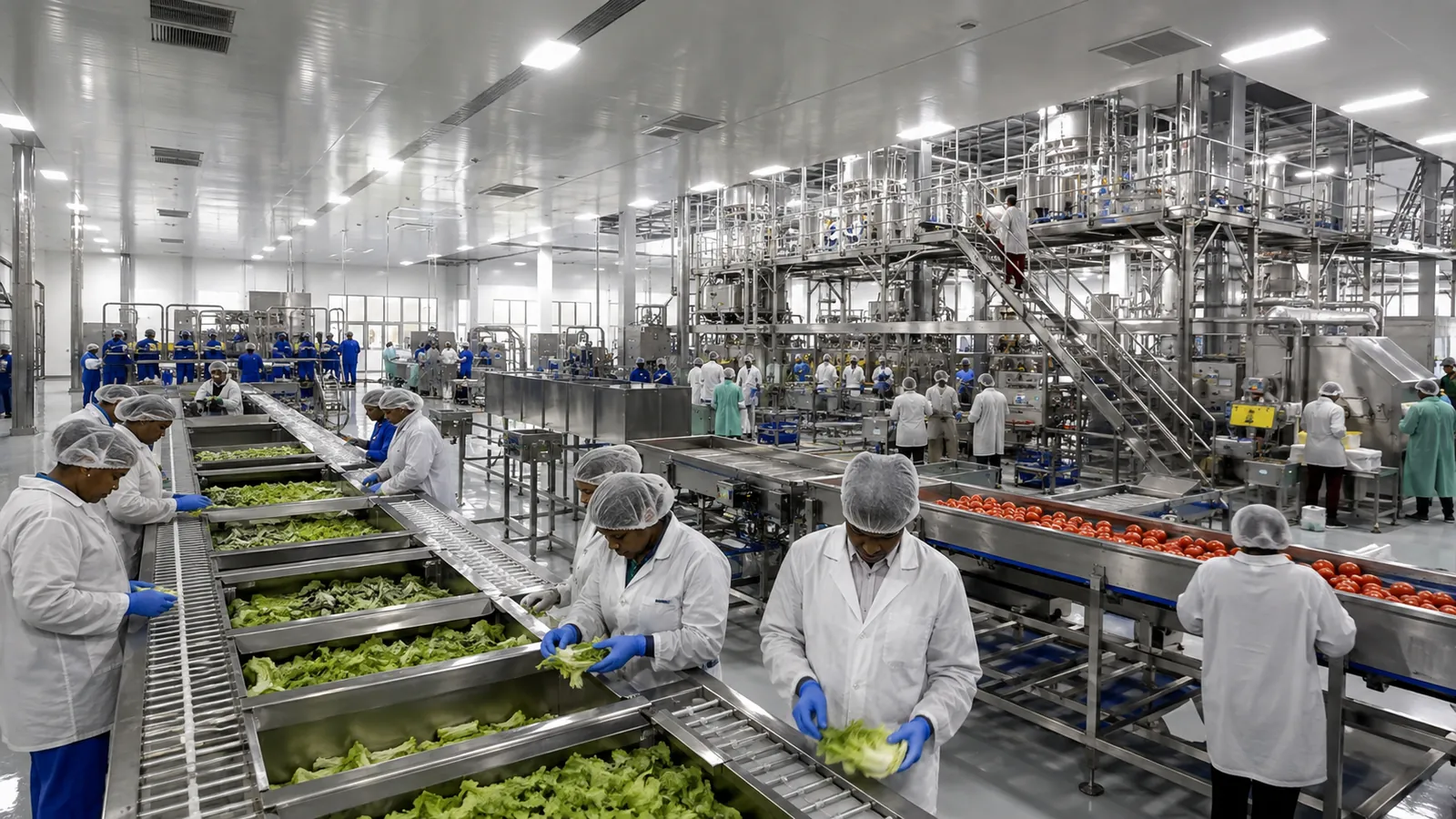
COMMERCIAL ASSET DEFINITIONProcessing lines become standalone investment packages.
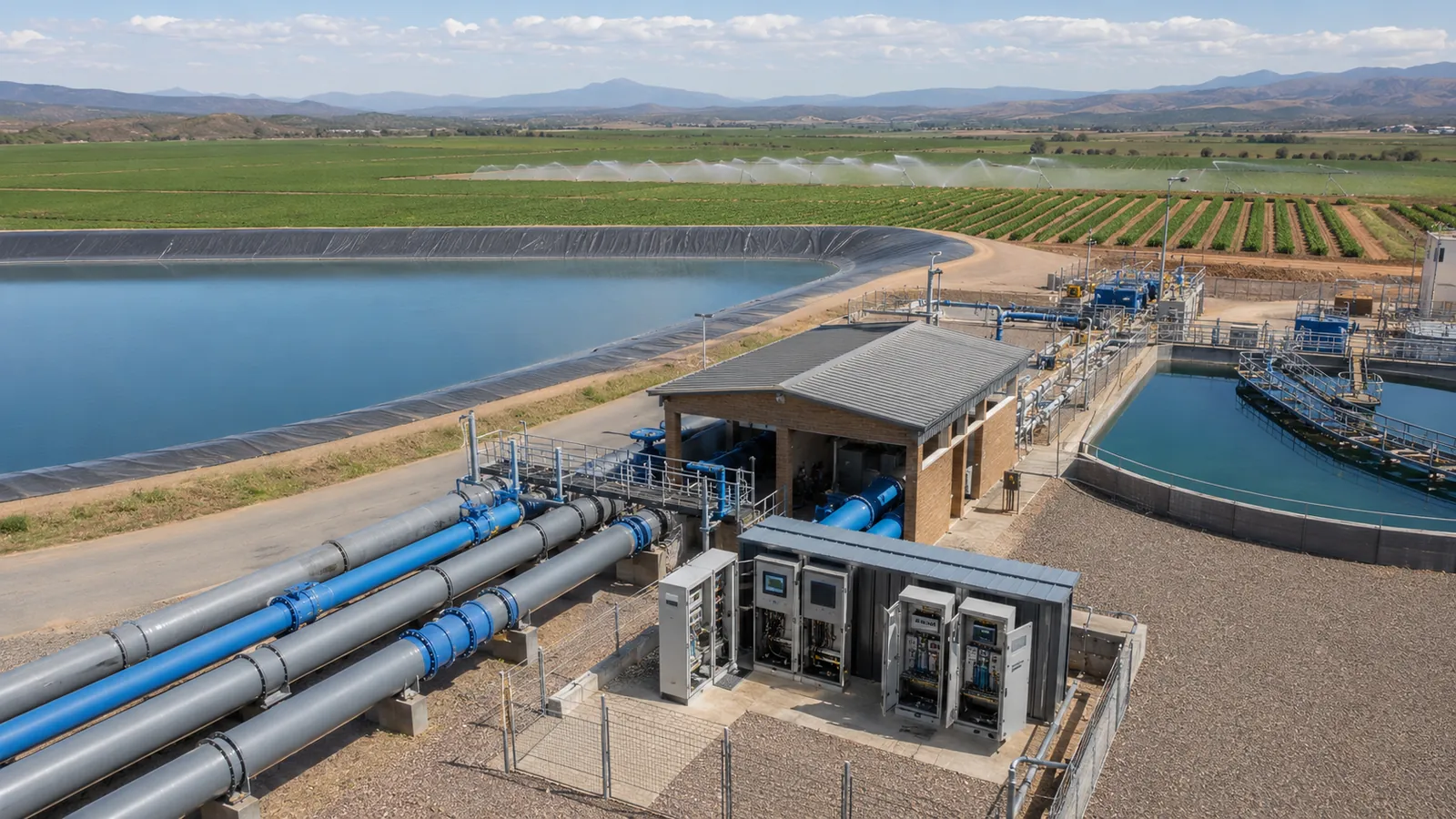
INFRASTRUCTURE GATEWaterGrid™ quantifies development-enabling capacity.
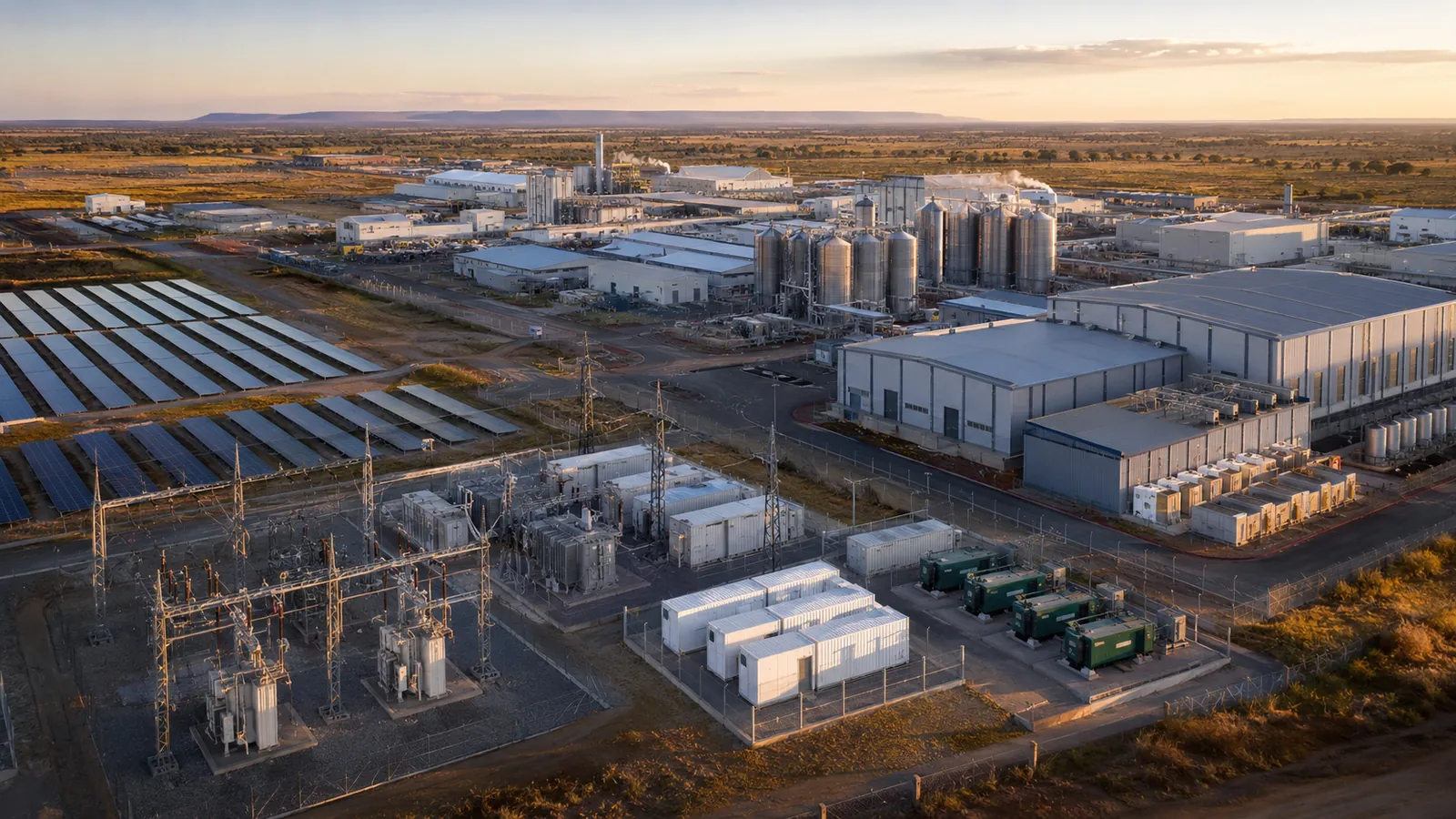
CRITICAL-LOAD RESILIENCEEnergyGrid™ defines firm load, redundancy and control.
CLASS 1 INTEGRATION MATRIX
Every major component is tested against the dependencies that determine real readiness.
COMPONENTCRITICAL DEPENDENCIES
ProductionLand · Water · Energy · Market
PackhouseHarvest · Power · Cold chain · Logistics
ProcessingFeedstock · Water · Power · Packaging · Buyer
Food Trade CitySupply · Buyers · Logistics · Utilities
Cold ChainEnergy · Throughput · Logistics
Air CargoExport demand · Certification · Logistics
WaterGrid™Source · Storage · Power
EnergyGrid™Load · Grid intake · Redundancy
DataGrid™Connectivity · Systems · Governance
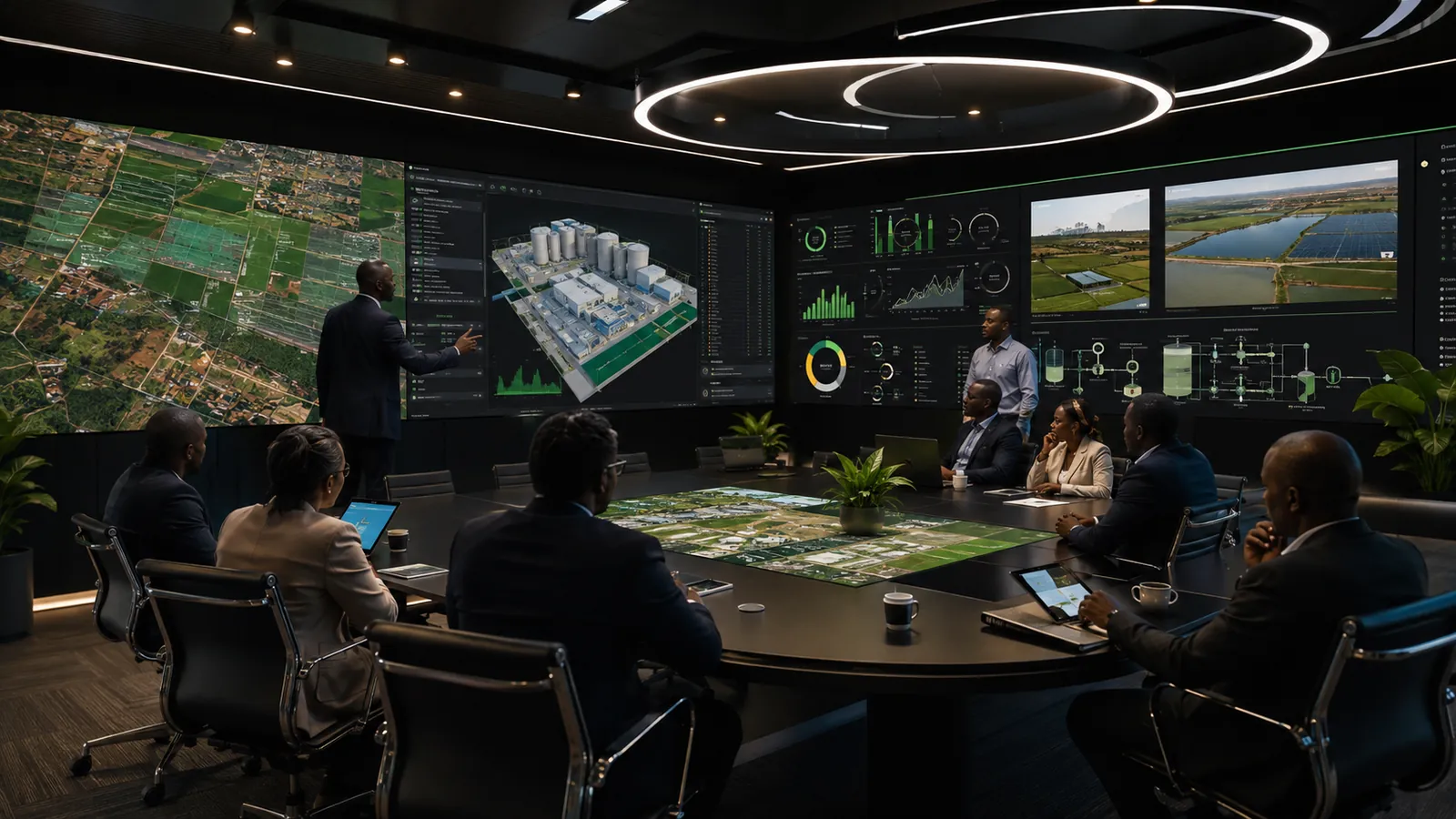
SURVEY + GIS + BIM CONTROL
Survey programmeCadastral · topographical · geotechnical · hydrological · soils · environmental · traffic · utilities · drainage · groundwater
GIS backboneParcels · elevations · roads · utilities · production blocks · environmental areas · phases · asset ownership
CAD / BIM standardsCoordinate reference · drawing numbering · common design environment · clash coordination · issue control
One coordinate system. One asset numbering logic. One controlled issue protocol.
Design Basis Memorandum
Scope · capacity · codes/standards · design conditions · input data · interfaces · resilience · future expansion.
Commercial Basis Memorandum
Target market · product/service · customer · capacity · price basis · demand · offtake · operating model · revenue logic.
SIX DEVELOPMENT GATES
Readiness is evidenced in sequence.
Spatial Readiness
Land · survey · masterplan · zoning · development parcel
Technical Readiness
Design basis · capacity · engineering · utilities · access · equipment · programme
Commercial Readiness
Demand · customer · feedstock · price · offtake · competition · route to market
Financial Readiness
CAPEX · OPEX · revenue · EBITDA · working capital · financing · IRR/NPV/DSCR · sensitivities
ESG + Regulatory
Environment · permits · social · water/food safety · labour/community · mitigation
Investor Readiness
SPV · operator · contracts · risk allocation · VDR · financial model · legal review · financing plan
STANDARD CONTROLLED WORK PACKAGE
Repeatable packaging converts platform complexity into comparable financeable opportunities.
01 Executive concept→02 Market + demand→03 Technical design→04 CAPEX + BoQ→05 OPEX + commercial→06 Financial model→07 ESG→08 Legal / SPV / PPP→09 Execution plan→10 Investor memorandum + VDR
PHASE 1 BANKABILITY FIRST
Prioritise the assets that create the earliest end-to-end operating proof.
01 Initial Production Base02 WaterGrid™ Phase 103 EnergyGrid™ Phase 104 First packhouse05 First cold store06 Initial processing lines07 First logistics node08 FoodSafe™ baseline09 DataGrid™ baseline10 First commercial offtake11 First investor packages
CLASS 1 EXECUTIVE DASHBOARD
One control view shows exactly where every capital package stands.
Leadership should see maturity, gaps and blockers across spatial, engineering, commercial, financial, ESG and investor dimensions before capital is committed.
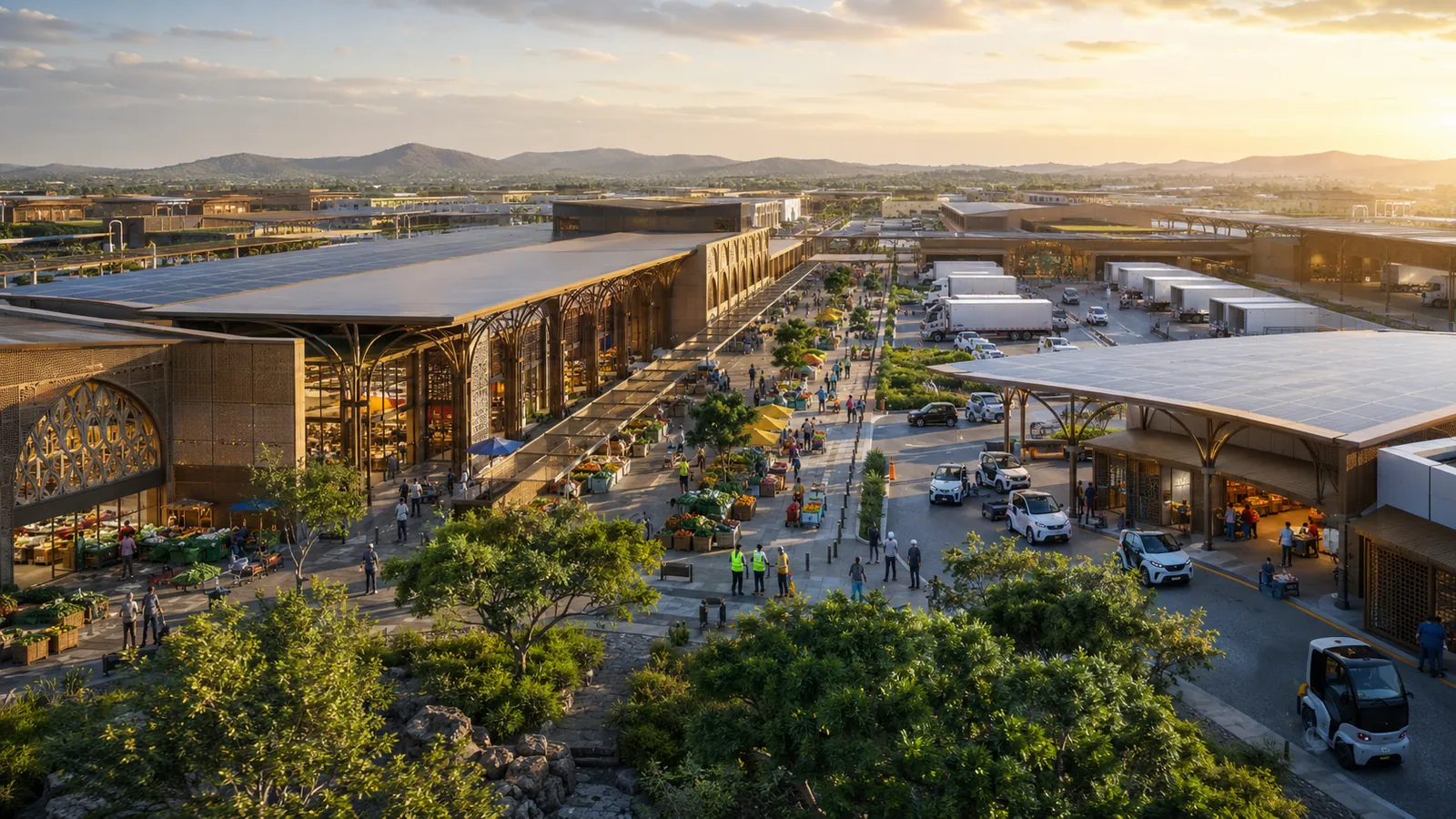
16 / NEXT CONTROLLED STAGE
Define every major asset before capitalising every major asset.
Vision → Definition → Evidence → Bankability → Capital → Execution
CONCEPT BASELINE → CLASS 1 PLANNING → FEASIBILITY + BANKABILITY → PHASED INVESTMENT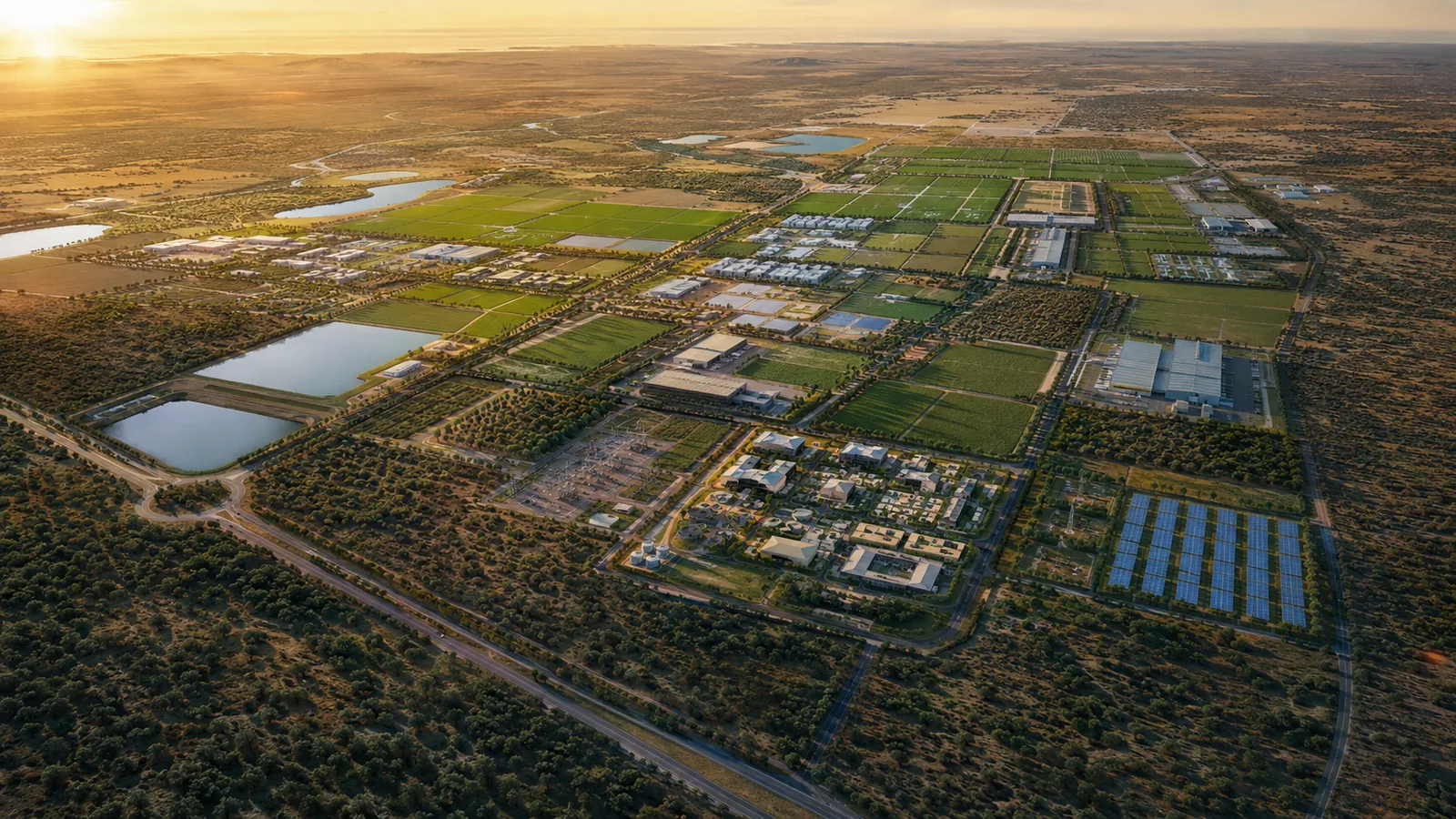
17 / EXECUTIVE ROADMAP · KAP-ER-001
Advance the Agropark
5Executive controls
6Programme gates
12Immediate priorities
1Execution release
Advance the Agropark
as a controlled platform programme.
The next management gate is to control land, utilities, offtake, engineering and capital architecture — in sequence.
01LANDWhere can we build?
→
02UTILITIESHow much can operate?
→
03OFFTAKEWho will buy?
→
04ENGINEERINGWhat exactly must be built?
→
05CAPITALHow will it be financed?
→
06EXECUTION RELEASEFinancial close + build
EXECUTIVE MANDATE
Five controls convert ambition into execution.
One management architecture aligns spatial control, infrastructure capacity, demand, engineering definition and capital readiness.
CONTROL THE LAND
Confirm the development envelope, surveys, planning controls and functional zoning.
Defined development parcelsCONTROL THE UTILITIES
Validate WaterGrid™ and EnergyGrid™ capacity as hard gating constraints.
Confirmed productive capacityCONTROL THE OFFTAKE
Secure anchor buyers across wholesale, retail, institutional and export channels.
Credible revenue visibilityCONTROL THE ENGINEERING
Advance Class 1 plans, BoQs, plant designs and logistics architecture.
Defined assets + validatable CAPEXCONTROL THE CAPITAL
Package SPVs, PPPs, concessions, ESG and investor diligence materials.
Bankable investment packagesPROGRAMME CONTROL THESIS
Build the food economy as one integrated platform.
Physical and commercial integration is preserved even while projects are segmented for bankability.
PRODUCTION→PROCESSING→PACKAGING→COLD CHAIN→TRADE→LOGISTICS→EXPORT
ONE PLATFORM · ONE DIGITAL THREAD · ONE QUALITY LAYER · MULTIPLE BANKABLE INVESTMENT PACKAGES
MANAGEMENT GATE
Move forward only when each control clears its release test.
The roadmap becomes a management-by-exception system with objective evidence, owners and release outputs.
01 / EXECUTIVE ROADMAP
CONTROL THE LAND
Confirm the land envelope, surveys, planning controls and functional zoning before advanced engineering or capital mobilisation.
Survey-controlled development envelope
100% Gross envelope→Constraints + buffers→Infrastructure reservations→Net developable land→Future reserves
Executive test: Which parcels are physically, legally and environmentally ready for Phase 1 release?Survey first. Integrate once. Govern spatially.
All survey disciplines feed one GIS environment, coordinate reference, controlled parcel index and versioned spatial layers.
FUNCTIONAL ZONING
Give every strategic activity a defined spatial home.
Zoning protects land-use integrity, freight separation, utility corridors and future scalability.
AGRI-PProductionAGRI-CControlled agricultureIND-FFood processingCOM-TFood Trade CityLOGLogisticsUTIL-WWaterUTIL-EEnergyDIGDataRES-WWorkforceECOEnvironmental
GATE 1 · LAND-CONTROLLEDDevelopment envelope confirmedPriority surveys completedMasterplan adoptedLand-use budget definedFunctional zoning controlledUtility + mobility corridors reservedPhase 1 parcels identifiedGIS parcel register activeOUTPUT · Defined development parcels
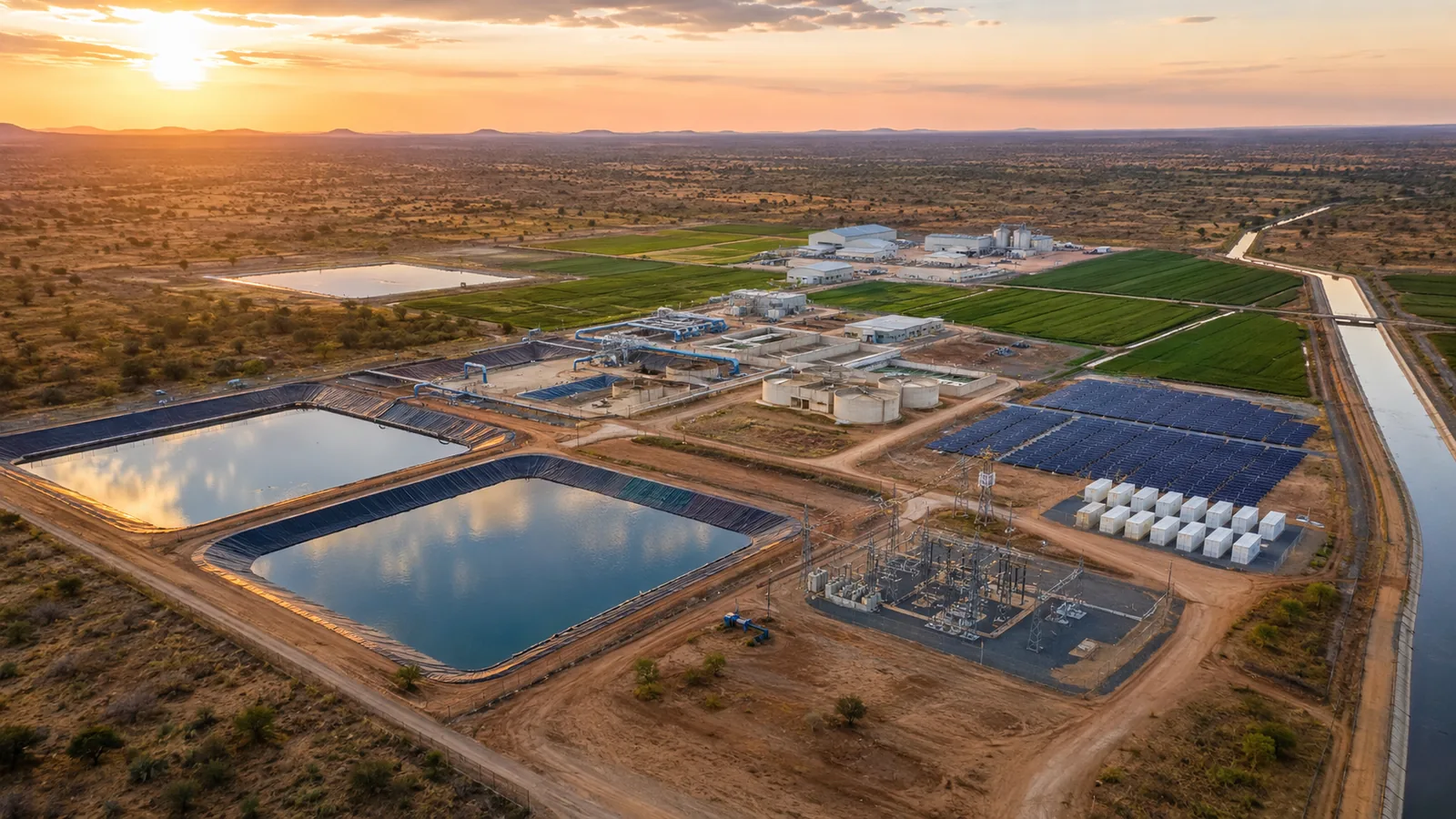 CONTROL 02 · WATER + POWER AS HARD GATES
02 / EXECUTIVE ROADMAP
CONTROL THE UTILITIES
WaterGrid™ and EnergyGrid™ define the true productive capacity of the Agropark — they are hard gates, not support services.
NO CAPACITY → NO EXPANSIONTranslate source security into hectares and industrial throughput.
SOURCE→STORAGE→TREATMENT→DISTRIBUTION→USE→RECOVERY→REUSE
Firm source capacity − existing demand − committed demand − resilience reserve = available development capacity
m³/day · capacity basisha · irrigation releasem³/t · process intensity% · reuse targetdays · reserve cover
Classify loads, secure firm supply and protect the cold chain.
TIER 1Mission critical
Cold chain · control rooms · pumps · emergencyTIER 2Industrial critical
Processing · packhouses · refrigerationTIER 3Commercial
Warehousing · offices · servicesTIER 4Flexible
Pumping · EV charging · interruptible loads
Cold chain · control rooms · pumps · emergencyTIER 2Industrial critical
Processing · packhouses · refrigerationTIER 3Commercial
Warehousing · offices · servicesTIER 4Flexible
Pumping · EV charging · interruptible loads
Firm capacity stack: bulk grid intake · 33/11 kV distribution · solar · battery storage · standby/alternate feed · smart load management.
Loss of grid power must not mean loss of product.UTILITY CAPACITY RELEASEWATERAllocated flow / volumePOWERFirm kVA / MWWASTEWATERTreatment headroomDIGITALConnectivity + controlACCESSFreight + emergencyGATE 2 OUTPUT · CONFIRMED PRODUCTIVE CAPACITY
03 / EXECUTIVE ROADMAP
CONTROL THE OFFTAKE
Secure credible demand early so crop plans, processing assets and investment packages are driven by market requirements rather than speculative capacity.
DEMAND-BACKWARDS PLANNING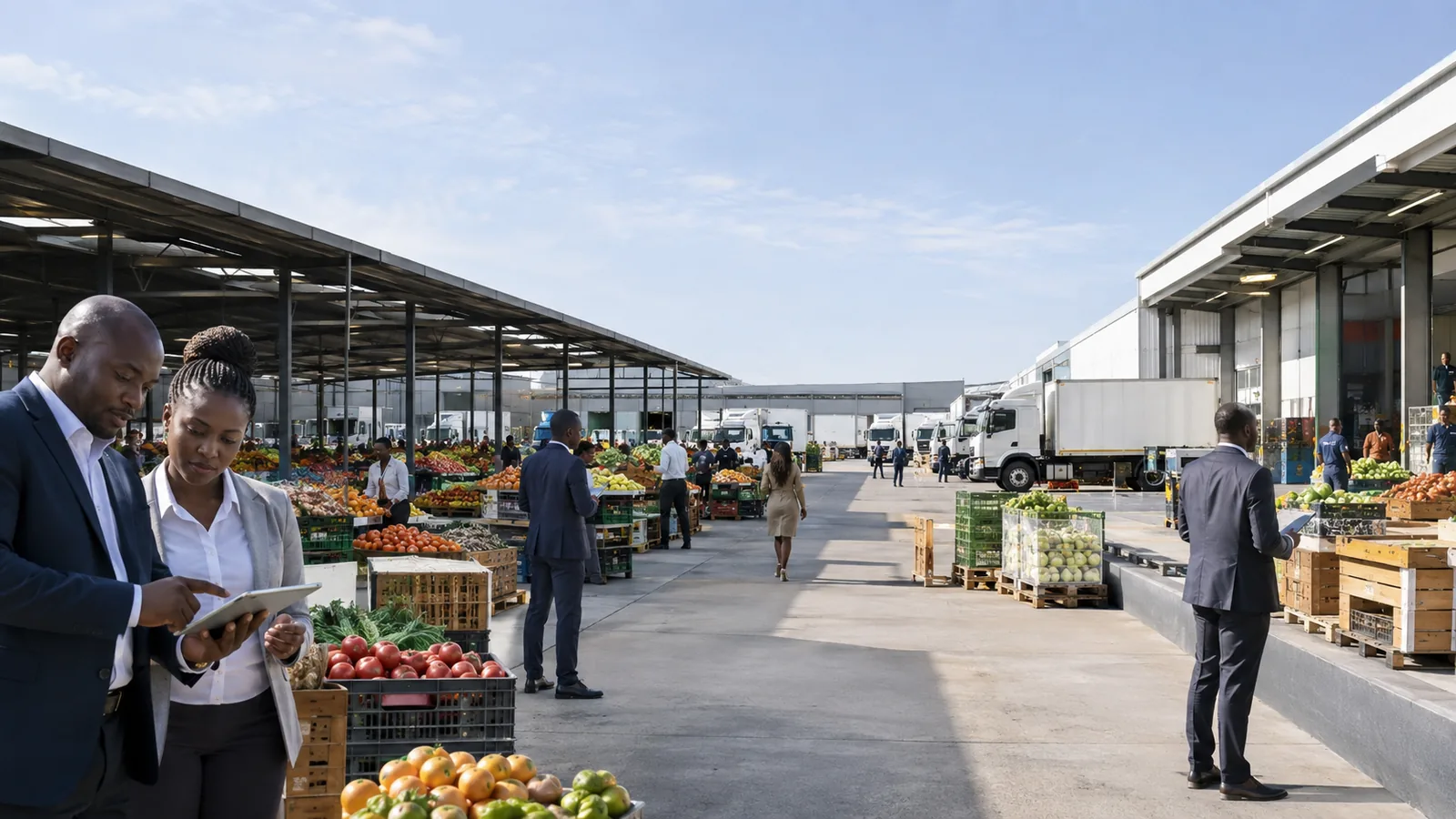 CONTROL 03 · BUYER-LED COMMERCIAL RELEASE
BUYER→PRODUCT→SPECIFICATION→VOLUME→PROCESSING→FEEDSTOCK→HECTARES
Diversify base-load demand.
WHOLESALETrade City traders · B2B distributorsRETAILSupermarkets · food retailersINSTITUTIONALSchools · hospitals · mines · governmentPROCESSINGFeedstock users · industrial buyersREGIONALWholesalers · retail chainsEXPORTInternational buyers · trading houses
Desired mix: contracted base-load + recurring commercial demand + market upside.Buyer interest is not the same as bankable demand.
- 0 · Market research
- 1 · Buyer engagement
- 2 · EOI
- 3 · LOI
- 4 · Volume commitment
- 5 · Framework
- 6 · Binding offtake
Turn demand into a financing control.
Credible / contracted demand÷Planned output at target utilisation=OFFTAKE COVERAGE
Used for plant financial close, crop-plan release, processing expansion, working-capital planning and investor downside analysis.
Higher coverage → stronger revenue visibility.GATE 3 · COMMERCIALLY CONTROLLEDTarget segments definedAnchor buyers engagedProduct specifications capturedVolume requirements quantifiedPricing benchmarks validatedInstitutional channels structuredRegional/export priorities rankedProduction plans linked to demandOUTPUT · Credible revenue visibility
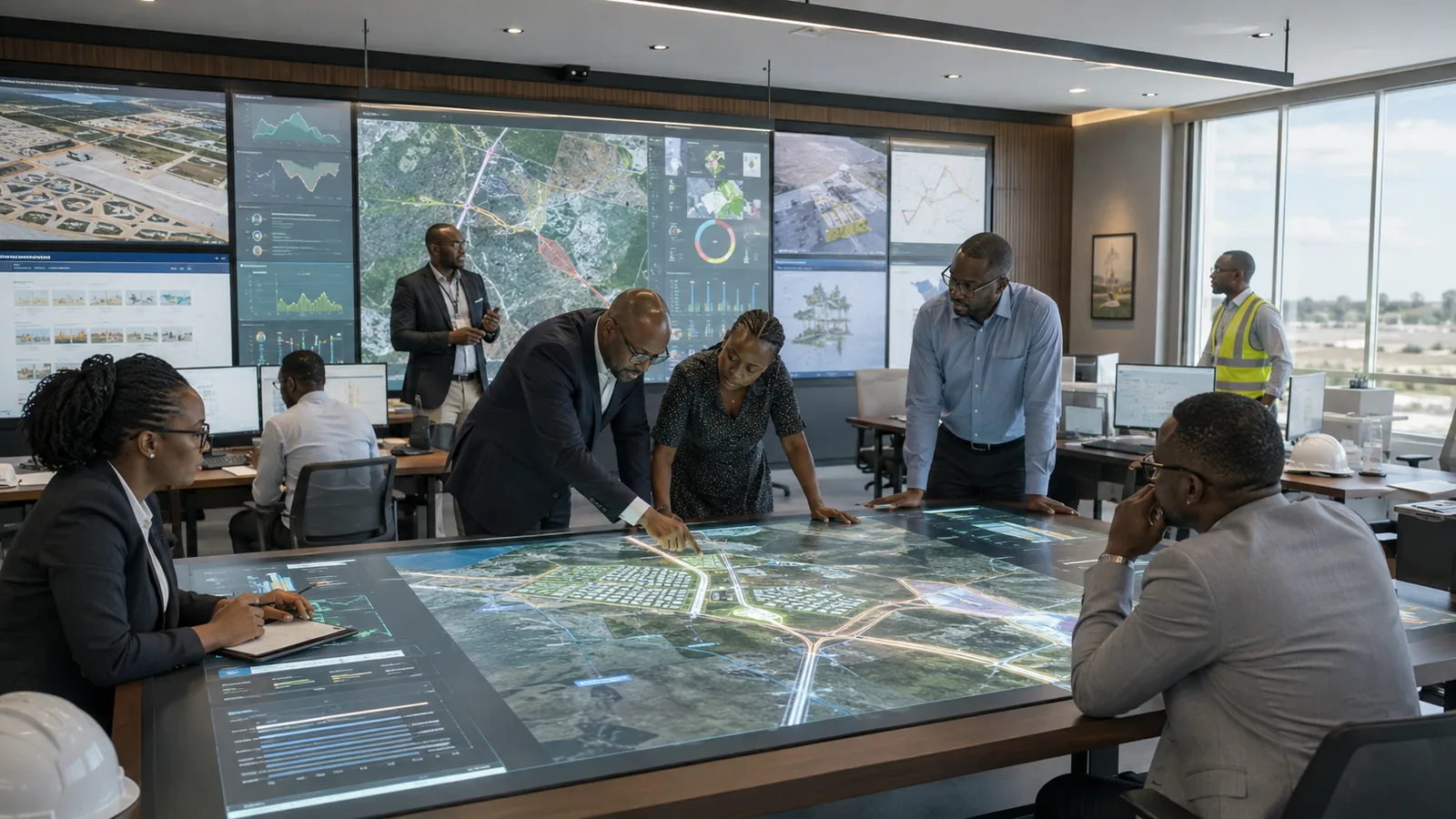 CONTROL 04 · CLASS 1 DEFINITION + INTERFACE CONTROL
04 / EXECUTIVE ROADMAP
CONTROL THE ENGINEERING
Translate the strategic platform into Class 1 plans, defined capacities, equipment schedules, BoQs and interface-controlled work packages.
DEFINE BEFORE DESIGNING · VALIDATE BEFORE FINANCINGOne common capacity basis.
PRODUCTION BASEIrrigation layout · water demand · crop blocks · farm roads · drainage · aggregation · machinery · CAPEX/blockPROCESSING SPVProcess flow · preliminary layout · equipment schedule · throughput · utilities · packaging · refrigeration · waste · quality
COMMON OUTPUT · Defined capacity + costable assetEngineer throughput — not just buildings.
Peak harvest t/day→Packhouse t/hour→Cold-store pallets→Warehouse m²→Truck movements/day→Reefer fleet + docks
Product-flow forecasts drive warehouse area, docks, fleet, truck staging, road capacity and CAPEX.
BOQ + COST MATURITY1 · Concept allowance→2 · Parametric→3 · Quantity-based→4 · Vendor-supported→5 · Tendered→6 · ContractedItem → Work package → SPV → Platform CAPEX
ENGINEERING INTERFACE CONTROL
One design change can alter multiple platform economics.
PROCESSING DESIGN↔WATERGRID™↔ENERGYGRID™↔PACKMAT™↔LOGISTICSGRID™↔CIRCULARLOOP™
GATE 4 OUTPUT · DEFINED ASSETS + VALIDATABLE CAPEX05 / EXECUTIVE ROADMAP
CONTROL THE CAPITAL
Package each bankable vertical around the right owner, operator, revenue model, financing instrument, ESG case and investor diligence pathway.
ONE PLATFORM COMPANY · MULTIPLE BANKABLE VERTICALS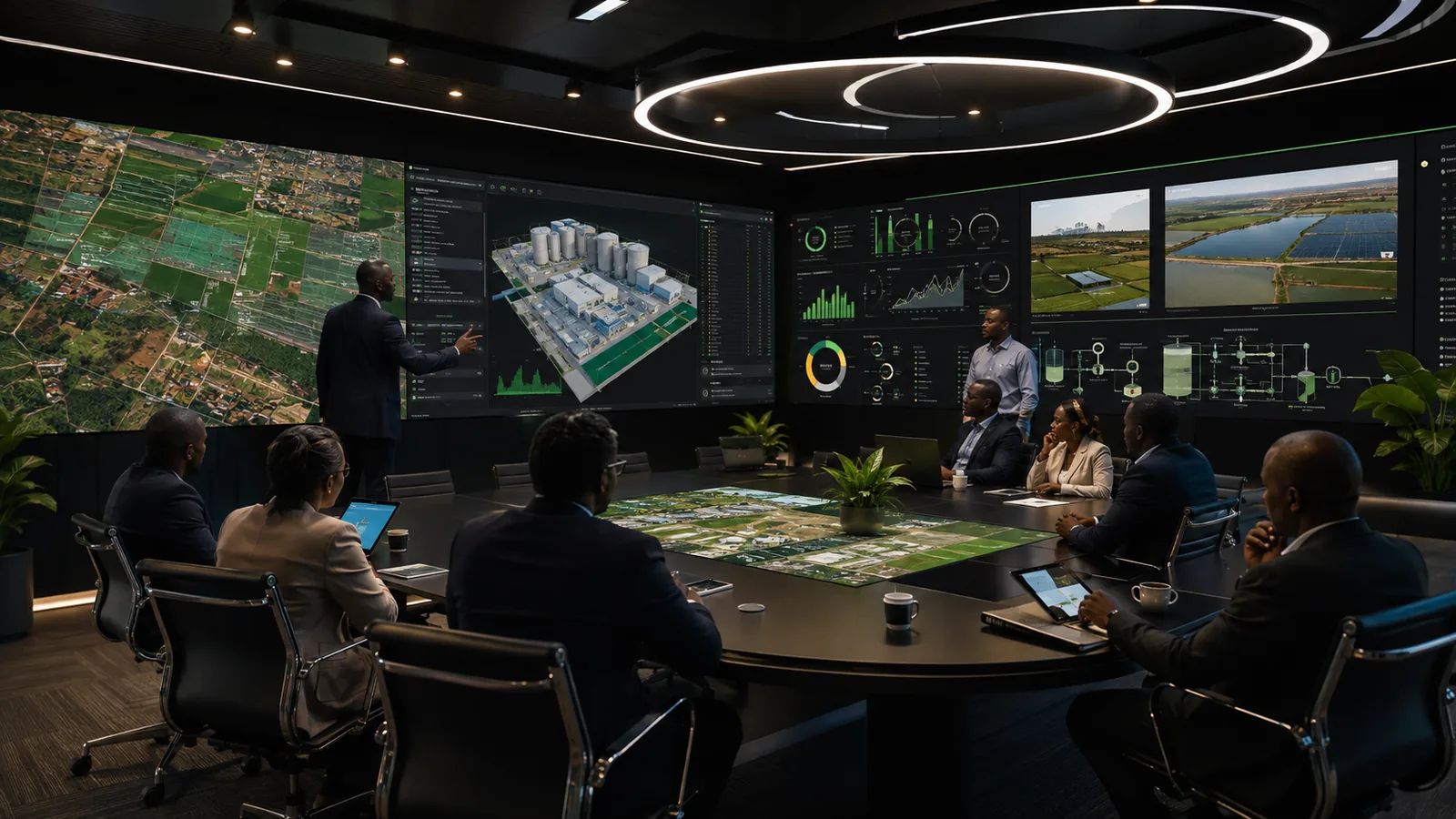 CONTROL 05 · PORTFOLIO CAPITAL + DILIGENCE CONTROL
PRODUCTIONCommercial SPVFOOD TRADE CITYCommercial SPVPROCESSINGMultiple SPVsWATERGRID™Utility / PPPENERGYGRID™Utility / PPPLOGISTICSGRID™Operator / concessionDATAGRID™Platform operatorAIR CARGOJV / concession
PRODUCTIONEquity · equipment finance · seasonal facilitiesPROCESSINGStrategic equity · project finance · ECAUTILITIESDFI · PPP · infrastructure funds · long-duration debtLOGISTICSOperator capital · infrastructure debt · fleet financeDIGITALTechnology partner · operating-company capitalCOMMON INFRAPublic · DFI · concessional · blended finance
Water security + efficiency · renewables + climate resilience · farmer participation · jobs + skills + local procurement · CircularLoop™ + recovery · traceability + food safety.
Corporate + land · engineering + BoQs · market + offtake · financial models · ESG + permits · SPV/PPP + execution.
CAPEX · OPEX · revenue · EBITDA · working capital · debt · IRR / NPV · DSCR · sensitivity · breakeven.
CAPITAL RELEASE TESTSPV definedOperator identifiedModel controlledESG diligence-readyVDR completeFinancing route credibleGATE 5 OUTPUT · BANKABLE INVESTMENT PACKAGES
FIVE-CONTROL MANAGEMENT BOARD
One executive view should show where the platform is controlled — and where it is not.
Status is evidence-based, not opinion-based. Each control carries an owner, action and release criterion.
GREENAMBERREDUse against objective gate evidence.
EXECUTIVE DECISION DASHBOARDLANDWhere can we build next? →UTILITIESHow much productive capacity remains? →OFFTAKEWhat demand is secured? →ENGINEERINGWhich assets are priceable / tenderable? →CAPITALWhich packages are diligence-ready? →EXECUTION RELEASE
Leadership should be able to answer five questions immediately.
IMMEDIATE EXECUTIVE PRIORITIES
Focus management attention on the decisions that unlock the next bankable phase.
01Finalise survey-controlled 50,000 ha envelope02Complete controlled masterplan + land budget03Define Phase 1 WaterGrid™ + EnergyGrid™ capacities04Lock Phase 1 crop + feedstock plan05Accelerate anchor buyer / institutional offtake06Advance 19 Priority Class 1 Deliverables07Validate Phase 1 CAPEX + BoQs08Build SPV-level OPEX + revenue models09Establish phased financial model10Open controlled investor VDR11Package first bankability workstreams12Activate Five-Control Executive Dashboard
PROGRAMME GATES
No phase escalation without gate evidence.
Each control produces a specific management output before execution release.
GOVERNANCE CADENCE
Control requires a repeatable executive rhythm.
WEEKLYWorkstream + execution reviewMONTHLYFive-Control Executive ReviewQUARTERLYCapital + Investment CommitteePHASE GATEBoard approval before escalation
EXECUTIVE RISK REGISTER
One risk language across the programme.
Land / permittingWater / power capacityDemand / buyer concentrationEngineering / technology / CAPEXFunding / FX / interest / covenant
Owner · probability · impact · mitigation · target resolution · residual rating
17 / EXECUTIVE ROADMAPControl the inputs
LAND → UTILITIES → OFFTAKE → ENGINEERING → CAPITAL
Control the inputs
to control the outcome.
LAND → UTILITIES → OFFTAKE → ENGINEERING → CAPITALBuild the food economy as one integrated platform: Production → Processing → Packaging → Cold Chain → Trade → Logistics → Export.